

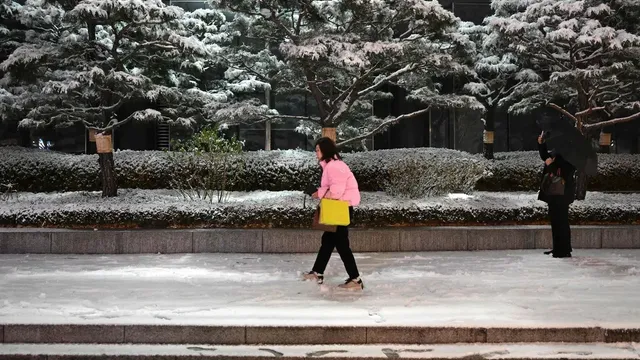
South Korea faces extreme cold temperatures as chill sets in
South Korea faces extreme cold temperatures as chill sets in
- South Korea saw record low temperatures of minus 17 degrees Celsius on January 30.
- The severe cold has been ongoing for nearly 10 days.
- Weather experts predict a gradual easing of cold temperatures starting February 1.
Story
On January 30, 2026, South Korea was gripped by an intense cold wave that saw temperatures plummet to minus 17 degrees Celsius. This severe weather also brought strong winds, resulting in wind chills that further exacerbated the bitter cold. The weather agency reported morning lows ranging between minus 17 degrees Celsius and minus 2 degrees Celsius, while daytime highs hovered between minus 4 degrees Celsius and 6 degrees Celsius, significantly below normal seasonal averages. The situation has been exacerbated by a prolonged cold spell lasting nearly 10 days. The Korea Meteorological Administration anticipated a gradual easing of the cold conditions beginning February 1, as cold air from the north is expected to move eastward. An increase in high pressure over southern China was forecasted, which would allow milder, westerly winds to flow into the Korean peninsula. Such weather changes would help raise temperatures back closer to seasonal norms, with average low temperatures expected to be between minus 10 degrees Celsius and 0 degrees Celsius, while daytime highs could improve to a range of 3 to 9 degrees Celsius. Meanwhile, in Ukraine, civilians faced hardships due to electricity cuts resulting from ongoing conflicts. The war has left many homes without central heating, especially after recent Russian airstrikes targeted the power grid. With temperatures set to drop to minus 20 degrees Celsius in some areas, Ukrainians braced for what many feared would be catastrophic conditions. The disruption has made it incredibly difficult for people to stay warm, leading to increasing concerns about infrastructure damage, particularly with heating pipes potentially bursting in the intense cold. The Geneva Convention prohibits attacks on civilian infrastructure which cause excessive suffering. The international community's response to these conditions remains uncertain, and negotiations for peace have begun, yet many officials worry about the reliability of such efforts. The stark contrast between the weather difficulties in South Korea and the ongoing humanitarian crisis in Ukraine highlights the varying but critical issues faced by populations across the globe in winter 2026.
Context
Winter inherently impacts civilian life in Ukraine, a country that experiences harsh weather conditions during the cold months. The extreme cold, accompanied by snowstorms and icy winds, presents significant challenges to the daily lives of Ukrainians. Homes and infrastructure are often unprepared for the severity of winter, leading to increased heating costs, power outages, and difficulties in commuting. In rural areas, snow accumulation can isolate communities, making access to essential services precarious. The social and economic effects are compounded by any ongoing conflict, which may damage infrastructure further and impede timely preparations for winter weather. Health risks also escalate during the winter months, as exposure to low temperatures can lead to hypothermia and frostbite, particularly among vulnerable populations, including the elderly and the homeless. The lack of adequate shelter and heating exacerbates health problems and can lead to increased hospital visits. Moreover, the cold season often sees a surge in respiratory illnesses, as crowded living conditions and stagnant indoor air contribute to the spread of viruses. Public health systems face additional strain as they work to accommodate these seasonal health concerns. The impact on transportation systems is profound, as heavy snowfall and ice can disrupt travel, leading to delays and accidents. Public transportation may struggle to maintain schedules during severe winter weather, and road safety becomes a significant concern. Essential supply chains can be interrupted, affecting access to food, medicines, and other resources. The government and local authorities often mobilize emergency services to manage snow removal and ensure that critical infrastructure remains operational, but the effectiveness of these efforts can vary depending on available resources and the severity of the weather. Winter weather also influences societal dynamics, creating a sense of community as people often come together to help one another cope with the severity of the season. Outreach programs may emerge, focusing on providing assistance to those in need, such as distributing blankets, food, and heating supplies. Local organizations and volunteers become essential in supporting the more vulnerable segments of the population. However, the resilience required for coping with winter in Ukraine highlights ongoing challenges related to poverty, health care, and infrastructure, which must be addressed to improve civilian life not only during winter but throughout the year.


