

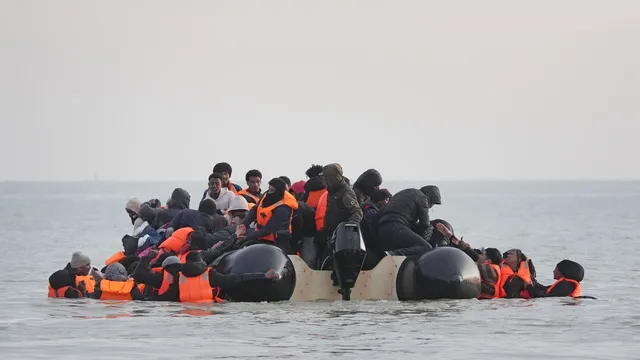
Rescue operation saves dozens of migrants from perilous Channel crossing
Rescue operation saves dozens of migrants from perilous Channel crossing
- French authorities rescued 66 migrants from a small boat in the English Channel after its engine failed.
- The rescue operation occurred on February 9, 2026, off the coast of Pas-de-Calais, France.
- This incident underscores the ongoing dangers of maritime crossings and the need for safe routes for migrants.
Story
On Sunday night, February 9, 2026, French authorities carried out a rescue operation in the English Channel, successfully saving 66 individuals who were stranded on a small boat after its engine failed. The incident occurred off the coast of Pas-de-Calais and highlights the ongoing risks associated with attempting such dangerous maritime crossings. The French prefecture confirmed the operation, detailing how the patrol vessel launched a rescue boat to reach the stranded migrants. Once contact was made, all individuals on board were progressively rescued and taken to the port of Calais for medical assistance. This unfortunate event underscores the persistent dangers of the Channel, which remains one of the most trafficked maritime areas globally, with challenging navigation conditions that affect smaller vessels. Authorities have consistently warned against these dangerous crossings, noting that makeshift boats are particularly vulnerable, especially in adverse weather conditions. Despite years of governmental warnings and tragic incidents, including a notorious disaster from November 2021 that resulted in the deaths of 27 people, the flow of migrants continues, driven by the desperate search for safety. In light of the ongoing crises driving migration, such as conflict and poverty in home countries, many individuals risk dangerous crossings hoping to find asylum and a chance for a better life. For example, in 2025, small boat crossings reached record highs, and as of early February 2026, Home Office figures indicated that 1,208 people had successfully made the crossing this year alone. Gunes Kalkan from the charity Safe Passage International expressed relief that no lives were lost during this latest rescue but also emphasized the ongoing risks associated with such crossings. Authorities and aid organizations continue to call for the establishment of safe and legal pathways for those seeking refuge, emphasizing that people do not undertake these hazardous journeys without a compelling need. The lack of alternatives leaves many with no choice but to attempt such dangerous sea crossings, reiterating the need for systemic solutions to migration challenges. The safety of asylum seekers remains a critical focus, prompting ongoing discussions about humanitarian responses and policy reforms.
Context
The history of migration policies in the UK reflects a complex interplay of social, economic, and political factors over the centuries. Initially, the UK was characterized by open borders, allowing for the free movement of people, especially during the British Empire when subjects of the Commonwealth were permitted to settle in the UK. However, after World War II, the landscape of migration began to change dramatically, influenced by the burgeoning demand for labor in the post-war economy and the increasing awareness of the social repercussions of migration. The arrival of significant numbers of immigrants from the Caribbean, India, and Pakistan during this period reshaped the demographic makeup of the country and sparked debates over integration, identity, and race relations. In 1962, the Commonwealth Immigration Act marked a pivotal shift in UK migration policy, effectively ending the unrestricted immigration that had been enjoyed by Commonwealth citizens. This act introduced a system of immigration control and laid the groundwork for subsequent policies focused on limiting access for non-white immigrants and emphasizing the connection to the UK through lineage or nationality. The Immigration Act of 1971 further restricted rights, instituting a tougher enforcement approach. These legislative changes reflected both a governmental response to public sentiments about immigration and the emerging landscape of global migration patterns, as political and economic conditions morphed in various regions around the world. Towards the turn of the 21st century, public attitudes towards migration were challenged by globalization, with the UK becoming a destination for migrants from Eastern Europe following the enlargement of the European Union in 2004. This period of unrestricted EU migration led to further changes in policies under both Labour and Conservative governments, emphasizing the need for management and control over immigration, while also addressing the economic contributions of migrants. Measures taken included the introduction of a points-based immigration system designed to prioritize skilled labor, alongside an increasingly vocal discussion regarding public services and cultural integration. In recent years, migration policies have continued to evolve, especially in light of the 2016 Brexit referendum, which brought issues of sovereignty, national identity, and immigration to the forefront of UK political discourse. The Immigration and Social Security Co-ordination (EU Withdrawal) Act 2020 established the framework for the post-Brexit migration landscape, switching from free movement for EU citizens to a new points-based system that applies to all migrants. This transition aims to reduce low-skilled immigration while attracting high-skilled workers. The complexities of migration policies in the UK demonstrate the ongoing challenge of balancing economic needs, social cohesion, and the historical commitments to human rights, necessitating a nuanced and responsive approach to the ever-evolving nature of migration.


