

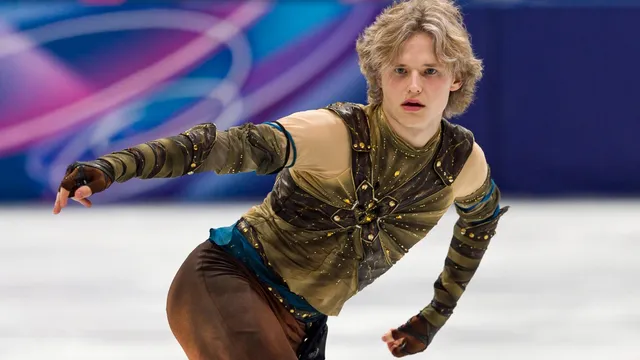
Ilia Malinin falls short, takes second place in Olympic debut
Ilia Malinin falls short, takes second place in Olympic debut
- Ilia Malinin made his Olympic debut in the men's short program and scored 98.00 points.
- Despite landing two quad jumps and executing a backflip, he finished second to Yuma Kagiyama, who scored 108.67 points.
- Malinin emphasized that competing in the Olympics is a lifelong dream and looked forward to the upcoming individual competition.
Story
In the Milano Cortina Games held in Italy, Ilia Malinin, a 21-year-old figure skating talent from the United States, made his Olympic debut in the highly anticipated team event. The competition took place on February 7, 2026, and featured a fierce showdown between Malinin and Japan's Yuma Kagiyama, the silver medalist from the previous Olympics in Beijing. Leading up to the event, Malinin had been regarded as a strong contender for gold, holding a remarkable undefeated streak over two years. However, as the competition unfolded, he faced unexpected challenges. Yuma Kagiyama performed exceptionally well, achieving a score of 108.67 points, which significantly outpaced Malinin's score of 98.00 points, despite Malinin's notable execution of a backflip and two quadruple jumps. Malinin appeared visibly frustrated upon hearing his score, as it fell short of his expectations and previous personal best of 110.41 points, set at the World Championships. After his performance, Malinin emphasized that stepping onto Olympic ice was a monumental achievement, despite not achieving the perfect skate he had hoped for. He acknowledged the pressure of competing at the Olympics and expressed a desire to alleviate expectations in preparation for the individual competition. While Malinin's performance in the team event was not flawless, the U.S. team managed to maintain a narrow lead over Japan in the overall standings thanks to stellar performances in ice dancing by Madison Chock and Evan Bates, who brought the total team points to 44. The teams from Japan and the United States were in close contention, setting the stage for intense competition in the following events, which would include individual performances. Malinin stated his intent to pace himself during the team event to prepare for the upcoming men’s individual competition. The current discourse around Malinin reflects both on the pressures athletes face as public figures and the excitement surrounding his potential in the individual competition, where he is expected to showcase his full capabilities, particularly with his history of successfully landing a quad Axel jump. As he heads into the individual event, there is a mixture of anticipation and expectation surrounding his ability to reclaim his spot as the dominant skater in the field.
Context
The history of the figure skating backflip ban is a notable chapter in the evolution of the sport, highlighting both safety concerns and competitive fairness. The backflip, also known as the back tuck, gained attention in the 1980s as skaters began to experiment with more difficult and acrobatic maneuvers. While it showcased exceptional athleticism and creativity, the backflip's inherent risks raised alarms among governing bodies. The International Skating Union (ISU), responsible for overseeing figure skating competitions globally, started to address these concerns during the late 1990s, particularly as the sport’s emphasis on safety grew. In 1990, the ISU formally banned the backflip in official competitions, reflecting a growing consensus that the move posed a significant danger to skaters. High-profile accidents during competitions further fueled this decision, as skaters risked severe injury not only to themselves but also to their partners in pairs and ice dance events. The ban was rooted in a desire to preserve the integrity of the sport while ensuring the safety of its athletes. Since the ban, discussions around elements like the backflip often spark debate among coaches, former skaters, and commentators about the balance between artistic expression and safety. Despite the ban, the backflip remains a topic of interest and aspiring skaters continue to practice the maneuver informally. Some skaters have been known to execute backflips during exhibitions or non-competitive events, demonstrating their mastery of the skill while also pushing the boundaries of what is acceptable within the sport. This has led to concerns about the possibility of skaters performing such moves at competitions in the future, as the definition of artistic expression evolves and society becomes more accepting of risk-taking in sports. Moreover, with the introduction of new judging systems, there are ongoing discussions about re-evaluating such bans in the context of a more nuanced understanding of skater safety. As figure skating continues to evolve, the dialogue surrounding the ban reflects broader themes of innovation, risk management, and the history of competitive sports. Advocates for lifting the ban argue that advances in protective gear and training techniques could make the backflip safer and more integral to a skater's repertoire, while opponents maintain that the move continues to endanger performance integrity. Thus, the backflip ban serves as an example of how sports adapt to changing perceptions of safety and artistry, and it remains a significant topic among figure skating enthusiasts and stakeholders.


