

Ukraine delays oil flow restart in political blackmail over EU membership
Ukraine delays oil flow restart in political blackmail over EU membership
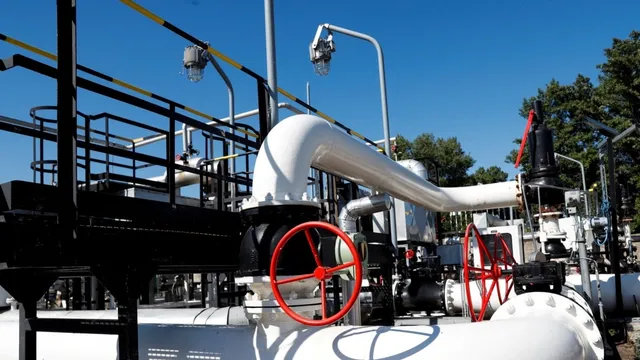
- The Druzhba pipeline, vital for transporting Russian oil to Hungary and Slovakia, was damaged in late January.
- Ukraine has been accused of delaying the oil flow restart to pressure Hungary regarding EU membership negotiations.
- Both Hungary and Slovakia possess sufficient reserve stocks for fuel supply, ensuring no short-term risks are present.
Story
In late January 2026, the Druzhba pipeline, which transports Russian oil to Hungary and Slovakia, was damaged, disrupting its oil supply. The European Commission confirmed on February 17, 2026, that they were in contact with Ukraine regarding the pipeline's repair timeline. Anna-Kaisa Itkonen, a European Commission spokeswoman, noted that the EU was prepared to convene an emergency coordination group with relevant stakeholders to discuss alternative fuel supply routes. Despite the disruption, both Hungary and Slovakia reportedly hold sufficient reserves to safeguard their fuel needs for the next 90 days. Tensions escalated between Ukraine and the EU member states of Hungary and Slovakia following assertions that a Russian drone strike was the cause of the pipeline damage. However, Slovak Prime Minister Robert Fico accused Ukraine of intentionally delaying the oil flow restart to coerce Hungary into easing its veto against Ukraine's bid for EU membership, labeling the situation as "political blackmail." This accusation amplified the already existing strains between the involved parties regarding energy security and geopolitical maneuvering. While the European Union imposed sanctions on Russian oil imports amid the ongoing war in Ukraine, Hungary and Slovakia were provided exemptions due to their landlocked geography. In light of the disruption of the Druzhba pipeline, Budapest has expressed urgency in utilizing a temporary exemption for importing Russian crude oil via the Adria pipeline from Croatia. Hungarian Foreign Minister Peter Szijjarto articulated the need for Croatia's cooperation in reestablishing Russian oil transport in light of their sanctions exemption. Croatia’s Economy Minister Ante Susnjar affirmed the country's readiness to support Central Europe's fuel supply but criticized Hungary and Slovakia for their insufficient diversification of energy sources. A report from the Center for the Study of Democracy (CSD) underlined that Hungary no longer relies on Russian oil due to ample alternative sources. The report contended that Hungary's ongoing reliance on Russian crude is a political decision undermining EU unity and diminishing the credibility of sanctions against Russia. The CSD asserted that transitioning away from Russian oil by the end of 2026 is both essential and feasible for Europe’s long-term energy security. This conflict highlights the complex interplay of energy dependency, geopolitical relations, and the broader implications for the European Union's cohesiveness.


