

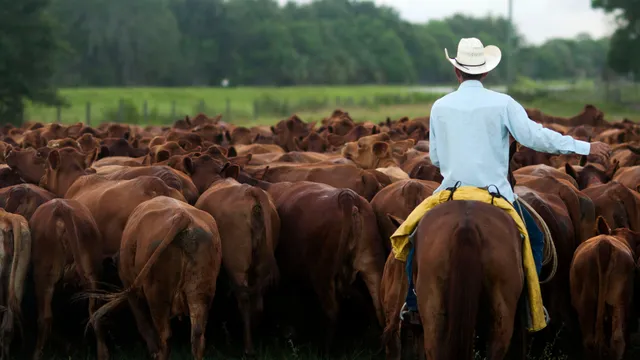
Chad Berger showcases the unseen labor of modern ranching in North Dakota
Chad Berger showcases the unseen labor of modern ranching in North Dakota
- Chad Berger and his crew moved 450 head of cattle on a drive in North Dakota.
- The special highlights the ongoing traditions and hard work of modern ranching.
- The lifestyle of cowboys, as illustrated in the documentary, is critical to preserving America's agricultural heritage.
Story
In the heart of North Dakota, a significant event unfolded as American cowboys, led by Chad Berger, undertook the traditional work of cattle ranching. This gathering highlighted the persistence of traditional ranching practices in a rapidly digitizing world, and it illustrated the hard, unseen efforts that contribute to America's beef supply. Senior correspondent Mike Tobin documented this journey in a special feature that aired on Fox Nation, emphasizing the early rising hours of cowboys who, unlike many who prioritize modern conveniences, started their day at dawn. Chad Berger, a third-generation rancher with deep roots in cattle culture, is central to this narrative. His lifelong commitment to ranching not only reflects a personal vocation but represents a cultural legacy he aims to pass down to his descendants. Berger's motto captures the essence of cowboy culture: a cowboy embodies respect, responsibility, and courtesy. This ethos drives him to involve his grandchildren in the cattle herding process, thus ensuring that the traditions of the prairie are preserved for future generations. In the special, the undertaking includes an impressive cattle drive where Berger and his crew moved approximately 450 head of cattle, showcasing the physical demands of the work. They navigated the rugged terrain of North Dakota during the twilight hours, forging a connection with the land and each other through their shared labor. As they worked, the absence of modern materialism highlighted the simplicity and dedication of ranching life, devoid of red carpets, but rich in generational wisdom. The film ultimately captures more than just a day's labor; it symbolizes the enduring spirit of ranchers like Chad Berger. As the American beef market faces challenges, including economic pressures and the encroachment of digital lifestyles, the importance of sustaining traditional ranching practices becomes ever more critical. The narrative offers a glimpse into a lifestyle that, while sometimes overlooked, remains vital not only to the livelihoods of those involved but also to America’s agricultural heritage.
Context
The impact of modern changes on traditional ranching has become a focal point for both environmentalists and agricultural economists, particularly as shifts in technology, climate, and market dynamics challenge longstanding practices. Traditional ranching has typically relied on time-honored methods passed down through generations, focusing on grazing livestock on expansive lands. However, contemporary ranchers increasingly face pressures to adopt more sustainable practices while remaining economically viable. Increased awareness around the environmental impacts of climate change has led to a reevaluation of grazing techniques, the integration of technology, and the need for diversification to ensure the long-term health of the land and the livestock that depend on it. The introduction of modern technologies, including precision agriculture and data analytics, is reshaping how ranchers manage their herds and resources. Innovations such as GPS tracking, drones for monitoring land use, and smart water systems allow ranchers to enhance productivity and minimize resource waste. While these technologies promise improved efficiency and profitability, they also risk alienating traditional ranching practices that emphasize a deep connection to the land and animal husbandry traditions. The challenge lies in finding a balance between utilizing these technologies to bolster ranching practices while preserving the cultural heritage and ecological wisdom that define traditional ranching. Climate change continues to pose a significant threat to ranching communities, impacting pasture growth patterns, water availability, and the overall health of the ecosystem. With shifting weather patterns leading to unpredictable droughts and floods, traditional grazing patterns may no longer be sustainable. As a result, ranchers are increasingly exploring adaptive grazing practices, such as rotational grazing, which can help improve soil health and resilience to climate variability. This shift requires a willingness to experiment with new methods, which can create tension within communities that have relied on traditional methods for generations. Market dynamics are also shifting as consumer preferences evolve towards ethically sourced and sustainably produced food, leading to increased demand for grass-fed and organic meats. This change represents an opportunity for traditional ranchers to engage with new market niches, leveraging their longstanding practices to meet consumer demand for traceable and sustainable food sources. However, access to these markets often requires overcoming barriers such as certification processes and the need for better marketing strategies. Thus, modern changes, including market pressures, climatic shifts, and technological advancements, are redefining the landscape of traditional ranching, necessitating a flexible approach that honors the past while embracing the future.


