

Trump administration withdraws 700 immigration agents from Minnesota
Trump administration withdraws 700 immigration agents from Minnesota
- The Trump administration announced the immediate withdrawal of 700 immigration agents from Minnesota due to community unrest following two fatal shootings by federal agents.
- This drawdown comes after discussions with local officials aimed at improving coordination between local jails and ICE.
- The remaining federal presence in Minnesota will focus on targeted actions rather than broad enforcement, although concerns about safety persist.
Story
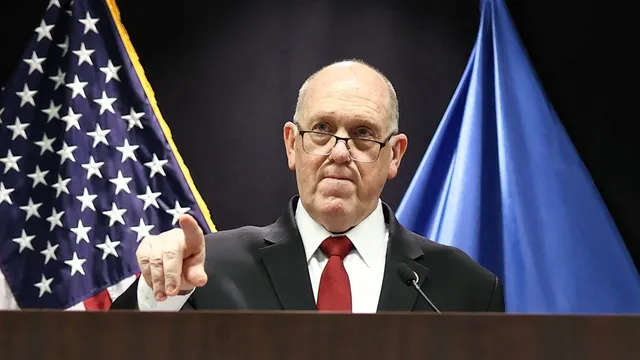
In the United States, a significant shift occurred regarding federal immigration enforcement in Minnesota. The Trump administration announced the withdrawal of 700 immigration agents, led by Border Czar Tom Homan, following a series of controversies and public outcry after fatal shootings of two U.S. citizens, Alex Pretti and Renee Good, by federal agents. The operation, known as Operation Metro Surge, initially saw a deployment of around 2,000 federal agents, including those from Immigration and Customs Enforcement (ICE) and Customs and Border Protection (CBP). The drawdown announcement came after productive discussions with local officials aimed at improving coordination and public safety. At the height of the operation, federal agents arrested approximately 3,000 undocumented immigrants in the Twin Cities. However, community frustrations were evident, particularly following the deaths of Pretti and Good during confrontations with agents. Homan emphasized the need for smarter, targeted enforcement rather than widespread operations that caused community unrest. The administration's strategy aims to return to a previous enforcement posture that relies on cooperation with local law enforcement while maintaining immigration enforcement efforts. While about 2,000 officers will remain in Minnesota, local leaders expressed concerns that federal presence still posed a significant threat to community safety. Minneapolis Mayor Jacob Frey indicated that despite the drawdown, the remaining forces did not represent true de-escalation. The adjustments in strategy reflect the administration's response to ongoing protests against violence and calls for reform in immigration enforcement practices. Trump admitted to adopting a 'softer touch' in response to escalating tensions, highlighting the necessity for clear policies and actions that prioritize community well-being without compromising security. The issue of immigration enforcement remains a polarizing topic, with advocates concerned about the implications for community relations and public safety. The administration's commitment to mass deportations persists, but the current situation appears to be a balancing act between enforcing immigration laws and addressing the legitimate concerns of residents impacted by these operations. Whether this represents a long-term change in strategy remains uncertain, as local interactions will dictate future federal presence and actions in Minneapolis.
Context
The impact of federal immigration agents on local communities in Minnesota has been a subject of significant concern and discussion, particularly in recent years. Various stakeholders, including community leaders, immigrant advocacy groups, and local law enforcement, have expressed their apprehensions about the presence and activities of federal immigration agents within their jurisdictions. This report aims to synthesize observations and findings related to these impacts, emphasizing both qualitative experiences shared by community members and quantitative data on the repercussions of immigration enforcement actions. One of the most notable effects is the climate of fear that federal immigration enforcement generates among immigrant communities. Reports suggest that many individuals, particularly undocumented immigrants, avoid interacting with local authorities, including police and healthcare providers, due to fears of deportation or detention. This withdrawal from essential services not only jeopardizes public safety but also public health, as individuals may forego medical attention or assistance during emergencies. Community leaders indicate that this heightened fear discourages cooperation with law enforcement, ultimately leading to a breakdown in trust and communications, which are vital for community cohesion. Moreover, the economic implications of federal immigration enforcement activities are profound. Local businesses heavily reliant on immigrant labor face challenges such as labor shortages when employees are apprehended or deported. This can lead to decreased productivity and economic instability in sectors like agriculture, construction, and hospitality, where immigrant workers are a significant part of the workforce. Furthermore, there is a recorded decrease in consumer spending in areas with heavy immigration enforcement presence, as fear drives individuals to limit their economic engagements. Lastly, a growing number of local governments are pushing back against federal immigration enforcement policies, viewing them as detrimental to their community’s well-being. Initiatives such as sanctuary city policies reflect a commitment to treating all residents fairly, regardless of their immigration status, and aim to safeguard community members from aggressive federal actions. These local responses demonstrate an essential resilience among communities and a collective effort to foster inclusivity, trust, and safety amidst an evolving national discourse on immigration. The ongoing conversation surrounding the role of federal immigration agents in Minnesota highlights a complex interplay of legal, social, and economic dimensions that continues to shape the fabric of local communities.


