

UK aid cuts threaten global women's rights achievements
UK aid cuts threaten global women's rights achievements
- The UK government has significantly reduced its official development assistance to a record low, affecting funding to international women's rights organizations.
- Amid rising global conflicts, the reduction in aid funding comes at a crucial time, with millions of women and girls facing increased violence and marginalization.
- Without substantial action and funding, the UK risks negating progress made in women's rights and gender equality on the world stage.
Story
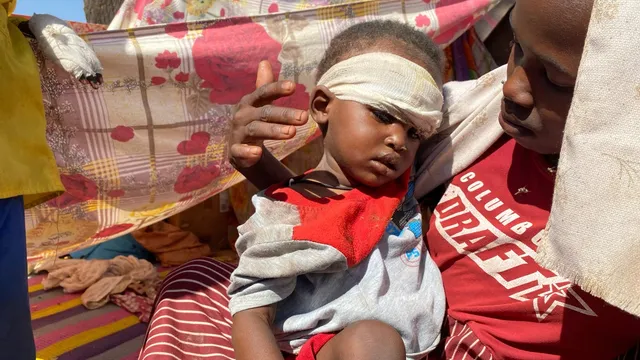
The UK has seen significant cuts to its official development assistance, reducing funding from 0.7 percent to 0.5 percent, and now to 0.3 percent of its Gross National Income (GNI), impacting aid to women and girls around the world. These cuts come at a critical time as global instability rises, and women and girls increasingly face violence and discrimination, particularly in conflict zones like Sudan where the situation is dire. As reported by the International Development Committee, the UK government’s commitment to the Women, Peace and Security (WPS) agenda appears to be fading, despite previous strong support and leadership in promoting gender equality globally. With the brutality of aid cuts, around 20 million women and girls are projected to lose benefits from UK-funded programs. As these women and girls face escalating threats, the government’s professed commitment to advancing their rights is increasingly disconnected from reality. The reduction in expertise within the Foreign, Commonwealth and Development Office, along with the failure to implement National Action Plan commitments, raises concerns about the UK’s ability to uphold its gender equality obligations on the international stage. Critics argue that the current mainstreaming approach to gender lacks the necessary funding and focus, risking visibility on the issue. The committee calls for transparency and dedicated funding to ensure support for women and girls remains a priority, pressing for a comprehensive refresh of the UK government’s strategy regarding gender issues as a litmus test for maintaining its leadership in women's rights globally.
Context
The Women, Peace and Security (WPS) agenda, established through United Nations Security Council Resolution 1325 in 2000, emphasizes the critical role women play in peace and security efforts worldwide. Recognizing that conflicts disproportionately affect women and girls, the WPS agenda seeks to integrate gender perspectives into all aspects of conflict prevention, resolution, and post-conflict reconstruction. Its significance transcends the mere inclusion of women; it reflects a broader understanding of how gender dynamics influence conflict and peace-building processes. This agenda positions women not just as victims of conflict but as essential agents of change, advocating for their inclusion in decision-making roles at all levels of governance, from grassroots initiatives to international forums. Recent data and case studies have reinforced the notion that peace processes are more successful and sustainable when women are actively engaged, leading to more comprehensive and representative outcomes. The implementation of the WPS agenda has demonstrated its importance across various contexts, with numerous countries adopting national action plans to translate the principles of UNSCR 1325 into concrete policies. Despite strides in many nations, challenges persist, including systemic barriers that limit women's access to political and economic power. The varied manifestations of conflict further complicate the implementation of the WPS agenda, as cultural, social, and economic factors shape women's experiences and roles within societies. Comprehensive training and advocacy efforts are necessary to dismantle these barriers, ensuring that women can participate freely in peace negotiations, post-conflict governance, and rebuilding efforts. Furthermore, meaningful involvement of women in these processes has been associated with addressing key issues such as gender-based violence, improving access to education, healthcare, and economic opportunities, thereby fostering holistic societal development. In recent years, the WPS agenda has gained traction within international policy discussions amidst a growing recognition of unresolved gender inequalities, particularly in conflict-affected areas. Global movements advocating for women's rights have called for governments to step up their commitments to implement the agenda fully. The significance of the WPS agenda is also underscored during crises, such as the COVID-19 pandemic, which has exacerbated existing challenges for women, including increased violence and economic insecurity. The pandemic highlighted the urgency of integrating gender perspectives into crisis response and recovery efforts, thus reinforcing the WPS's relevance in maintaining global peace and security. For the agenda to continue succeeding, it must adapt to evolving landscapes, ensuring a collaborative approach that includes civil society, local communities, and international organizations. Looking ahead, the need for sustained engagement and renewed commitments to the Women, Peace and Security agenda is paramount. Stakeholders must prioritize resource allocation for women's organizations and grassroots movements that promote peace and security initiatives. Building partnerships across sectors will be essential to leverage the collective strength of diverse stakeholders in advancing women's roles in peace and security. While progress has been made, the journey towards achieving gender equality in conflict resolution efforts remains challenging. However, through increased awareness, dedicated advocacy, and the integration of women’s voices in peace processes, the WPS agenda can fulfill its vision of a more inclusive and equitable global society.


