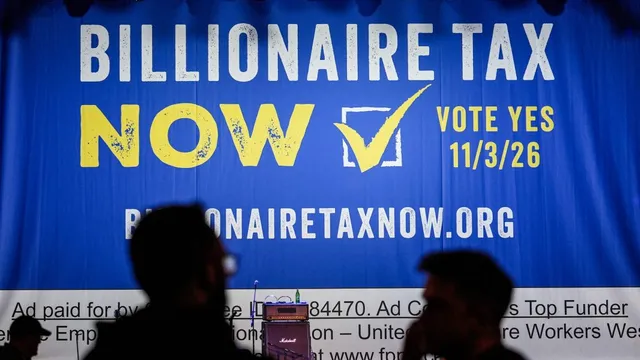
In California, a significant proposal backed by the Service Employees International Union Healthcare Workers West aims to impose a one-time 5% tax on billionaires residing in the state as of January 1, 2026. This initiative is designed to generate approximately $100 billion in revenue, primarily to support the state's Medicaid system following federal funding cuts. However, the proposal has faced substantial opposition, including from Governor Gavin Newsom and various traditional allies of the union, who argue that it represents a temporary solution to a persistent issue and could drive wealthy individuals out of the state, ultimately harming California's long-term tax base. The coalition opposing the tax includes healthcare, education, and housing groups, which have expressed concerns that the tax would destabilize vital funding for essential services. They argue that the tax would exacerbate California's existing challenges rather than provide a sustainable solution. The Legislative Analyst's Office has estimated that while the tax could generate significant revenue initially, it would lead to a decline in income tax revenues in subsequent years. Many billionaires in Silicon Valley have already begun relocating their assets to avoid potential taxation, further complicating the situation. In response to the backlash, the union proposed a scaled-back version of the tax, suggesting a 2% rate instead, but this was also rejected by Newsom's office. The political landscape surrounding this issue is particularly charged, as it reflects broader concerns about income inequality and the sustainability of California's revenue system. Newsom has also called for a national approach to wealth taxation, advocating for a minimum tax on individuals with a net worth exceeding $100 million and reforms to inheritance taxes. He emphasizes the need for a comprehensive federal tax policy rather than a piecemeal state-by-state approach, arguing that wealth is mobile and can easily relocate to states with lower taxes. This situation highlights the ongoing debate over wealth distribution and the role of taxation in addressing economic disparities in California and beyond.