

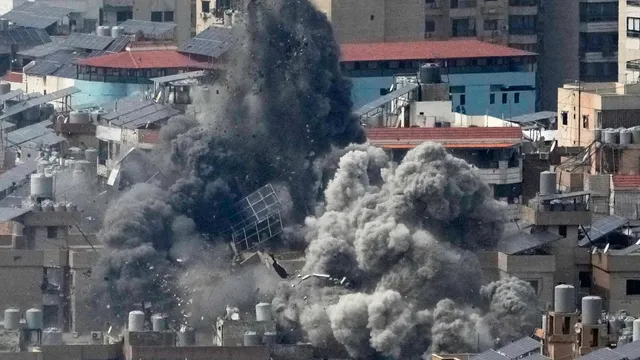
Iran escalates conflict with missile attack on Israel
Iran escalates conflict with missile attack on Israel
- Iran launched a missile attack on Israel as part of its ongoing war with the U.S.
- Regional stability is threatened as tensions rise with drone attacks on U.S. bases.
- The actions of the Iranian regime have contributed to rising global energy prices and potential economic turmoil.
Story
Iran has intensified regional conflicts, particularly marked by its missile attack on Israel, which came as part of the ongoing war with the United States. This attack on Israel represents a strategic move by Iran, demonstrating its military capabilities and willingness to confront its adversaries. Concurrently, a drone attack aimed at the largest U.S. base in the Middle East was foiled by Qatar, showcasing the threats posed to U.S. assets in the region. Global energy prices began to spike following another significant missile strike that targeted and damaged Bahrain's only oil refinery, further highlighting Iran's impact on global markets and regional stability. As a result of these aggressive actions, U.S. allies in the region are reportedly growing impatient with the Trump administration's handling of the escalating situation. Qatar's energy minister expressed concerns that the duration of this conflict could lead to an economic catastrophe, warning that the war could potentially disrupt the economies of the world. It is anticipated that if the current fighting persists, many oil exporters might be compelled to call force majeure, a legal clause that frees them from liability in situations beyond their control, indicating a worsening energy crisis. Strategically, the Iranian regime has adopted a chaos strategy, targeting not only U.S. and Israeli forces but also its neighboring countries. Their tactical approach in the ongoing confrontation appears to aim at destabilizing the entire region, thereby demonstrating their military reach and technological advancements. Reports indicate that Iranian forces are effectively utilizing missiles and drones to strike important infrastructure in the Gulf, which has raised considerable concerns among various countries regarding the safety and security of regional energy supplies. This latest surge in hostilities not only complicates diplomatic efforts but also raises the stakes for the global economy. Consequentially, energy prices have been fluctuating dramatically due to increased tensions and military actions, leaving market analysts to predict further instability in oil production and supply chains worldwide. As the conflict lingers, the ramifications of Iran's tactical operations are expected to echo through international relations, economic forecasts, and the approach of surrounding nations to combat these emerging threats.
Context
The recent fluctuations in global energy prices have been significantly influenced by the ongoing conflicts involving Iran. With Iran being one of the key players in the oil market, tensions in the region can cause immediate repercussions on supply and prices. Over the last few years, geopolitical events, particularly those related to Iran, have driven oil prices upward due to concerns over potential supply disruptions. This volatility has been felt worldwide, affecting not only oil prices but also natural gas and alternative energy markets as investors react to uncertainty in production levels and political stability in the region. The Iranian economy heavily relies on its oil exports, making it particularly sensitive to international sanctions and military action. In periods of escalated conflict, such as during heightened U.S.-Iran tensions, the global oil supply appears vulnerable, leading to panic buying and subsequent price hikes. For instance, when the U.S. re-imposed sanctions on Iran's oil sector, it resulted in a marked decrease in Iranian oil exports, which in turn tightened global supply chains. As a result, countries reliant on Iranian oil had to scramble for alternative sources, driving prices higher and creating market instability across numerous energy sectors. Moreover, the energy market is interconnected in ways that make it susceptible to rapid changes. Nations surrounding Iran, such as Iraq and Saudi Arabia, often find themselves entangled in the impact of Iranian conflicts. The market responds to potential military escalations or diplomatic negotiations, which can lead to dramatic shifts in investment and strategic planning by energy companies. Additionally, the price of oil sets a benchmark impacting broader economic conditions, as fluctuations can elevate costs for airlines, transportation, and everyday consumers, reinforcing the cycle of volatility. The role of renewable energy is also worthy of mention, as growing concerns over fossil fuels and environmental impacts encourage investments in alternative energy sources. However, during periods of instability, traditional energy sources such as oil and gas dominate markets. Governments and corporations must continually assess their energy strategies in light of the precariousness posed by the Iranian conflict. Thus, in analyzing global energy prices, it becomes essential to consider ongoing geopolitical conflicts, economic dependencies, and the broader implications of energy supply chains influenced by events surrounding Iran.


