

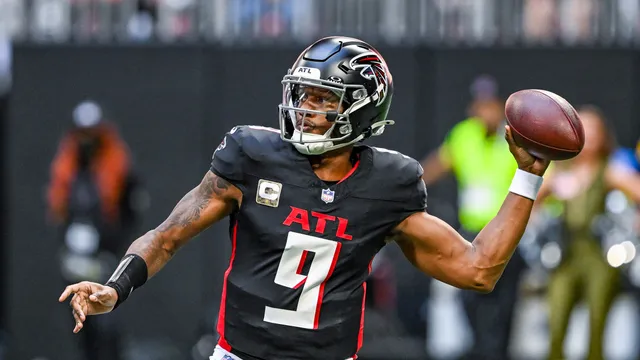
Michael Penix Jr. suffers severe knee injury during Falcons game
Michael Penix Jr. suffers severe knee injury during Falcons game
- Michael Penix Jr. exited the game against the Carolina Panthers in the third quarter due to a knee injury.
- Kirk Cousins replaced him but could not lead the team to victory, finishing with 48 passing yards.
- The Falcons now face a critical situation as Penix may miss significant time due to a potentially season-ending injury.
Story
In the United States, the Atlanta Falcons faced the Carolina Panthers on November 16, 2025, in a pivotal game amidst a challenging season. The Falcons were seeking to break a four-game losing streak and showed promise early in the game, leading 21-19 at the start of the fourth quarter. However, the situation took a concerning turn when quarterback Michael Penix Jr. exited the game due to a knee injury during a sack. He was attended to on the field, then walked to the medical tent for evaluation. Although he was reported to be 'questionable' to return, his absence was deeply felt as Kirk Cousins took over as quarterback. Cousins struggled to lead the team, completing just 6 of 14 passes for 48 yards. The game ended in disappointment for the Falcons, who fell to a 3-7 record after a nail-biting overtime loss of 30-27 to the Panthers. Following the game, concerns intensified regarding the severity of Penix's injury, with reports suggesting it could be season-ending. This injury marks a potentially significant setback for Penix, who had previously dealt with knee issues earlier in the season. He will seek further evaluation, but initial assessments point to aggravation of an earlier injury that had kept him sidelined before. The Falcons now face an uncertain future as they navigate their remaining games without their starting quarterback, and Kirk Cousins will be expected to fill the role in crucial matchups against the New Orleans Saints and the New York Jets. Atlanta must desperately secure wins to maintain competitiveness in the playoff hunt, which appears increasingly challenging given their recent performance and player injuries.
Context
In the realm of professional football, injuries are an unfortunate but ubiquitous aspect of the game. The impact of injuries on team performance has been a subject of extensive research, revealing a direct correlation between the health of key players and the overall success of a team during the season. Injuries, particularly to star players, can alter the dynamics of team performance, affecting not only the team's record but also its morale and strategic approaches to subsequent games. High-profile injuries often lead to a ripple effect, forcing teams to adjust their lineup, strategy, and practice methods to compensate for the absence of pivotal players. This necessitates not merely alterations to a single position but can require complex adjustments throughout the team's formation and playstyle, often resulting in diminished performance metrics. Statistical analyses have demonstrated that teams suffering from significant injuries tend to experience a decline in win percentages. For instance, during seasons where injuries to starting quarterbacks or star defensive players became prevalent, teams frequently showed a marked decrease in their offensive and defensive efficiencies. Game metrics such as points scored, yards gained, and turnovers can illustrate these effects vividly. In addition, there is a psychological component, where injuries can demoralize a squad, leading to decreased performance even in games where the injured player is not directly involved. Teams that cultivate a resilient culture, however, often manage to rally in the face of adversity, demonstrating the depth of their rosters and adaptability, which can mitigate the adverse effects of injuries. Moreover, the management of player health through rigorous training regimens, injury prevention strategies, and effective medical support systems has gained increased attention. Teams are investing in sports science to optimize player performance while minimizing injury risks. This proactive approach not only helps in mitigating the occurrence of injuries but also facilitates quicker recoveries when they do occur. The empowerment of players with knowledge about their bodies and conditioning techniques empowers teams to manage their rosters more effectively over a grueling season, ultimately influencing their performance outcomes. In conclusion, the effects of injuries on NFL team performance are multifaceted, impacting strategic game planning, player morale, and overall season success. While injuries are an innate challenge in football, teams that successfully address these challenges through competent injury management and adaptive strategies can leverage their depth and prepare for successful seasons. Continued research into injury patterns and their impacts will further illuminate pathways for teams to enhance their competitive edge even when faced with the inevitable fluctuations in player health.


