Brussels airport halts flights after drone sighting chaos
- Brussels Airport suspended air traffic for half an hour due to a suspected drone sighting on November 12, 2025.
- Several flights were diverted, causing delays and disrupting passenger travel plans.
- Repeated drone incidents at Brussels Airport may drive passengers to consider alternative airports.
Story
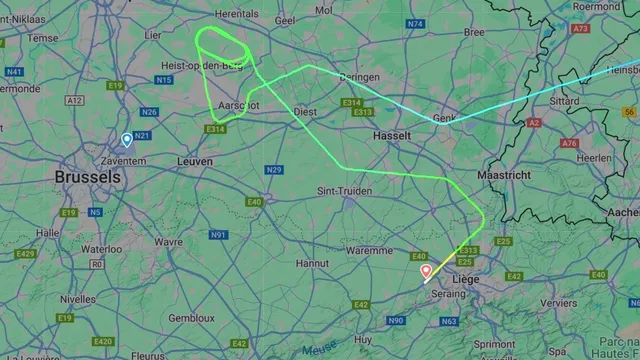
On November 12, 2025, Brussels Airport in Belgium was forced to stop all flight operations for half an hour due to a suspected drone sighting near the airport. This incident occurred just a few days after a similar occurrence, raising concerns about ongoing safety issues at the airport. The reported drone sighting necessitated a precautionary suspension of air traffic between 10:50 PM and 11:20 PM, despite the fact that no departing flights were scheduled after 10 PM. Nevertheless, several planes still arrived late, leading to diversions and significant travel disruptions. A Tui flight from Gran Canaria and a LOT Polish Airlines flight from Warsaw were rerouted to Liege, which is located 55 miles away from Brussels Airport. Fortunately, these diverted flights were able to return shortly after, although they caused delays and significant inconvenience to passengers. Additionally, a DHL cargo plane arriving from Toulouse was diverted to Cologne without proceeding on to its original destination. Such recurrent drone-related disruptions have been a source of growing concern among travelers and airlines alike, as many consider switching to alternative airports that do not face similar issues. Simon Calder, a travel correspondent for The Independent, emphasized that while only a few hundred passengers were affected this time, the frequency of diversions related to drone sightings could sway public trust. In light of these incidents, the head of the UK's armed forces, Air Chief Marshal Richard Knighton, stated that the United Kingdom has pledged support to help Belgium tackle these drone disturbances. He confirmed that UK personnel and resources have already started to arrive and assist Belgian authorities in addressing the issue. Drone-related disruptions at Brussels Airport have not been isolated; they mirror growing concerns at airports across Europe. Other significant incidents include several flights at Fuerteventura, a popular holiday destination in the Canary Islands, which were temporarily grounded due to a suspected drone sighting in both September and October. Similarly, Munich Airport faced flight cancellations and diversions affecting thousands of passengers, highlighting the broader implications of drone activities on air travel safety and the need for stringent regulations and effective countermeasures.
Context
The rapid evolution of drone technology has significantly impacted various sectors, prompting the need for comprehensive regulations, especially in Europe. As of today, November 13, 2025, European drone regulations have been shaped to ensure safety, privacy, and security while promoting innovation and commercial applications. The European Union has taken a leading role by establishing a framework that harmonizes drone laws across its member states, thereby simplifying regulatory compliance for users and manufacturers. This framework is aligned with the European Union Aviation Safety Agency (EASA), which has developed specific regulations governing the operation of unmanned aerial vehicles (UAVs). The primary regulatory structure is based on a risk-based approach that categorizes drone operations into three main categories: open, specific, and certified. The open category includes low-risk operations that do not require prior authorization, while the specific category encompasses medium-risk operations that require a risk assessment and operational authorization. The certified category is reserved for high-risk operations, similar to manned aviation standards. Each category has explicit operational limitations, such as maximum altitude, weight restrictions, and no-fly zones, which enhance safety and prevent accidents in busy airspaces. In addition to operational regulations, privacy laws also come into play, as drones are often equipped with cameras and sensing technology that can intrude on personal privacy. The General Data Protection Regulation (GDPR) has been instrumental in shaping how drone operators must handle data collected during their flights. Operators must be aware of legal boundaries and develop measures to protect individuals' privacy rights, especially in areas densely populated with people or sensitive sites. Furthermore, European drone regulations require operators to undergo training and certification to ensure they possess the necessary skills and knowledge to operate UAVs safely. This training is essential to fostering a culture of responsibility among drone users. As the drone sector continues to grow, ongoing dialogue among stakeholders, including authorities, manufacturers, and the public, is vital to adapt and refine regulations that can keep pace with technological advancements and societal needs, promoting a balance between innovation and safety.