

Nepal scraps Everest waste scheme after years of failure
Nepal scraps Everest waste scheme after years of failure
- A waste deposit scheme for climbers on Mount Everest was introduced over a decade ago, requiring a $4,000 deposit.
- Despite most climbers reclaiming their deposits, significant amounts of rubbish still remain at higher camps.
- Nepal is planning to implement a non-refundable clean-up fee to address the ongoing waste issue on Everest.
Story
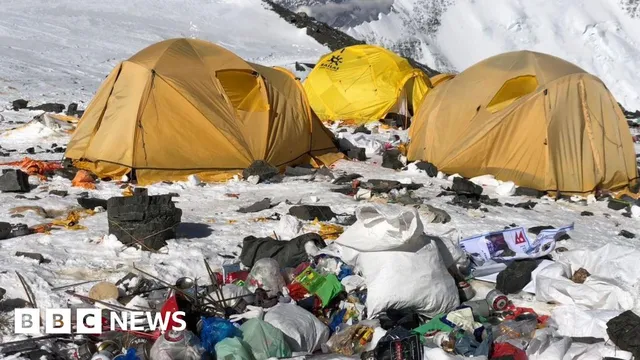
In a significant move by Nepalese authorities, the long-standing waste deposit scheme for climbers on Mount Everest has been scrapped due to its ineffectiveness in reducing the accumulation of rubbish on the mountain. The scheme was introduced over a decade ago, requiring climbers to pay a deposit of $4,000, which could be reclaimed if they brought back at least 8kg of waste. However, officials have realized that despite most climbers receiving their deposits back, the overall rubbish problem persists, particularly at higher camps where the most waste accumulates. According to Tshering Sherpa, chief executive of the Sagarmatha Pollution Control Committee, climbers tended to prioritize bringing back oxygen cylinders from high altitudes, leaving behind tents, food containers, and debris from lower camps. This resulted in limited progress regarding the intended goal of the scheme. Acknowledging their shortcomings, authorities indicated that lack of effective monitoring added to the problem, as oversight was primarily limited to one checkpoint above the Khumbu Icefall. The number of climbers has been increasing, averaging around 400 annually, alongside many more supporting staff members, significantly impacting the waste situation on the mountain. As a result, Nepal is the planning to introduce a new system that replaces the refundable deposit with a non-refundable clean-up fee, also set at $4,000, aimed at establishing better monitoring practices. This new measure is part of an action plan to address the pressing issue of waste on the mountain, with the government hoping it will create a more sustainable solution for climbers and the environment alike.


