

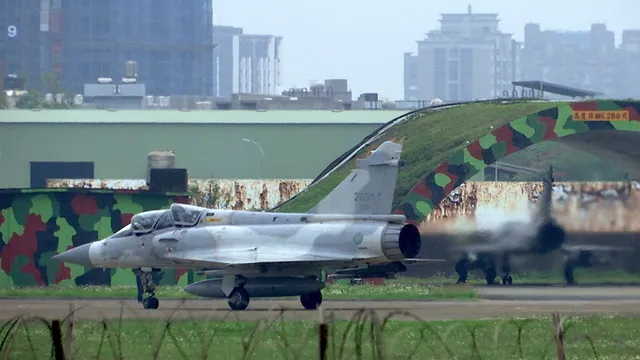
China cuts military flights near Taiwan, raising concerns
China cuts military flights near Taiwan, raising concerns
- China reduced its military flights near Taiwan significantly in early March 2026, with no flights detected from February 27 to March 5.
- This decline coincides with the annual meeting of China’s legislature, and military experts suggest it may signal changes in training strategy or a wish to ease tensions with the U.S.
- The unusual decrease raises concerns among analysts about China's military intentions in the region.
Story
In early March 2026, China saw a significant decline in military flights near Taiwan, with no detected flights in Taiwan’s Air Defense Identification Zone for a week from February 27 to March 5. This situation has been particularly puzzling to analysts, with speculation surrounding the Chinese military's motivations. After a few flights were recorded on March 6, the trend of low activity continued for the next four days. The sudden decrease in flights compared to the previous year's numbers, which were significantly higher during the same period, prompts questions about what China may be planning. The drop in military activity from China corresponds with the annual meeting of its legislature. Historically, there have been reductions in military flights during significant political events and public holidays. However, the extent of this year’s decline is markedly greater than previous occurrences. This unusual reduction could also stem from a strategic aim to ease tensions with the United States, especially given the upcoming visit of U.S. President Donald Trump to China from March 31 to April 2. Drew Thompson, a former U.S. defense official, expressed concern over the lack of clarity regarding China's intentions. This uncertainty could pose risks as various theories abound regarding China’s strategic objectives. Analysts are splitting their views, with some proposing that the decline in air operations might signify a new phase in China's military prowess, aimed at evolving their training methods to enhance collaboration among air, naval, and ground forces. Taiwan's military has insisted that it is maintaining its defense alertness despite the recent lull in Chinese warplane activities. Officials have stated that a singular observation like the absence of PLA aircraft cannot be relied upon to gauge overall threats, underscoring the importance of continuous monitoring of military movements in the region. They assert their commitment to safeguarding national security in the face of evolving dynamics in cross-strait relations.
Context
As of March 2026, the tensions between China and Taiwan continue to escalate, with both sides deeply entrenched in their positions. China regards Taiwan as a breakaway province that must be reunited with the mainland, while Taiwan views itself as a sovereign state with its own government and democratic institutions. The growing military presence of China near Taiwan, including frequent aerial incursions and naval exercises in the Taiwan Strait, has created a climate of fear and uncertainty for the Taiwanese people. These show of force tactics are seen as a clear message from Beijing, reinforcing its stance on its territorial claims. In response, Taiwan has been bolstering its defense capabilities and strengthening its alliances, particularly with the United States, which has reaffirmed its commitment to support Taiwan against potential aggression from China. The international community is increasingly concerned about the implications of this ongoing conflict, especially given the strategic importance of the Taiwan Strait for global trade. In recent years, Taiwan has been engaging in diplomatic efforts to counteract China's influence in the region. It has sought to cultivate relationships with other countries to gain support for its political status, while also participating in international forums that previously excluded it due to pressure from Beijing. The United States has played a critical role by enhancing military cooperation with Taiwan, and its recent arms sales have been viewed as a deterrent against Chinese military aggression. Economic factors also play a crucial role in the relationship between China and Taiwan. Taiwan's advanced technology sector, particularly in semiconductor manufacturing, is vital not only for the Taiwanese economy but also for global supply chains. China's ambition to assert control over this critical industry adds another layer of complexity to the situation. Additionally, the growing economic interdependencies between the two sides make the stakes higher for both parties: while Taiwan benefits from access to the Chinese market, it must also safeguard its technological edge and political sovereignty. Consequently, many analysts warn that any military conflict could have dire consequences beyond the two nations, affecting global economies and geopolitical dynamics. The path forward remains uncertain, with international observers watching closely as both sides navigate these rising tensions. The possibility of dialogue appears slim at present, as nationalistic sentiments on both sides intensify. However, some experts suggest that sustained diplomatic efforts could open avenues for negotiation, focusing on mutual interests such as trade and security. Until then, the tension between China and Taiwan represents an ongoing challenge for regional stability, with significant implications for global security.


