
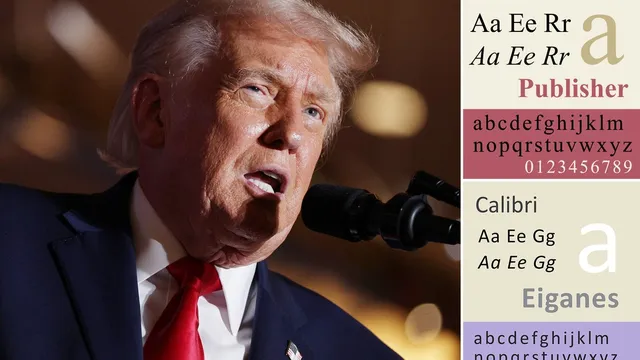
Marco Rubio orders state department to abandon Calibri font
- US Secretary of State Marco Rubio directed a return to Times New Roman font for official documents.
- This change reverses a previous initiative by Antony Blinken aimed at improving accessibility with Calibri font.
- The decision is part of a larger effort to eliminate 'woke' initiatives within the federal government.
Story
In the United States, effective December 10, 2025, Secretary of State Marco Rubio mandated a return to Times New Roman font for official documents, reversing a previous decision made by his predecessor, Antony Blinken. Blinken had transitioned to using Calibri in January 2023 as part of a diversity, equity, inclusion, and accessibility initiative aimed at making written communications more accessible for individuals with disabilities. The Calibri font was believed to be easier to read due to its simple design, which lacks the decorative features of serif fonts. Rubio's order to abandon Calibri, which he labeled a 'wasteful' diversity move, was framed as a step toward restoring professionalism and decorum in diplomatic communications. He argued that Times New Roman conveys formality and tradition, crucial for government correspondence. According to an internal memo, the change aligns with a broader strategy to eradicate perceived 'woke' ideologies and DEI programs from federal operations initiated by the Trump administration after Rubio took office. Rubio suggested that the switch to Calibri had not achieved its intended goal of enhancing accessibility and claimed it had led to additional costs for the department. He contended that typography significantly influences the perception of professionalism in official documents, indicating that Calibri resulted in a degraded standard of correspondence. He communicated that other branches of government also utilize serif fonts, reinforcing the value of tradition and credibility in governmental communications. The decision stirred a mix of reactions, reflecting the contentious political climate surrounding DEI policies in the U.S. Critics of Rubio's reversal viewed it as part of an ongoing campaign to dismantle initiatives that promote diversity and inclusion within the government. They expressed disappointment in abandoning a font designed with accessibility in mind, while supporters praised the return to Times New Roman as a restoration of tradition and dignity within the State Department's operations.
Context
The controversies surrounding Diversity, Equity, and Inclusion (DEI) policies in federal agencies have been a focal point of public discourse, highlighting significant debates over their implications, effectiveness, and the balance between promoting inclusivity and maintaining meritocracy. DEI initiatives have been implemented to address historical injustices and to foster an environment where individuals from diverse backgrounds can thrive. Proponents argue that these policies are essential for creating a workforce that reflects the nation’s demographics and that they contribute to enhanced problem-solving and innovation by integrating varied perspectives. However, the implementation and outcomes of DEI policies have sparked significant controversy, primarily due to perceptions of reverse discrimination and concerns regarding qualifications versus affirmative action in hiring practices. Critics of DEI initiatives often voice concerns that these programs may prioritize demographic characteristics over qualifications, potentially undermining merit-based systems. The debate intensifies when examining hiring and promotion practices in federal agencies, where some employees and lawmakers argue that DEI policies may lead to a quota-based approach rather than one that genuinely assesses merit. This perception of reverse discrimination has given rise to legislation in certain states aimed at curtailing DEI programming in state institutions. Supporters of these legislative moves argue that ensuring fairness and equal opportunity is paramount, while opponents contend that eliminating DEI efforts would exacerbate existing inequities and diminish the progress made in the pursuit of a more inclusive workplace. Another significant angle of the DEI controversy is the backlash that some federal agencies have faced as a result of their DEI initiatives. High-profile cases and incidents have caused public outcry, leading to a reconsideration of the mechanisms supporting these policies. In some instances, critiques focus on training programs that have been perceived as overly ideological or disconnected from workplace competencies. Employees have reported feelings of division rather than unity, suggesting that DEI training should be carefully curated to avoid fostering resentment rather than inclusivity. In navigating these complexities, federal agencies are tasked with balancing the goals of DEI policies against the genuine concerns of their workforce and the public. As we examine the future of DEI in federal agencies, it is clear that a nuanced approach is essential to address ongoing challenges. Federal agencies must strive to create an environment that values diversity while also ensuring that merit and qualifications remain at the forefront of hiring and promotion practices. Open dialogue among stakeholders, including employees, advocates, and policymakers, will be vital in shaping effective DEI strategies. Moreover, evaluations of current programs must focus on measurable outcomes to provide a clearer picture of their efficacy and to justify their continuation in the face of rising scrutiny. Ultimately, the success of DEI policies will depend on their ability to foster genuine inclusion and equity without compromising the core values of competence and fairness.
