

Starmer declares UK-Japan relations at their strongest in decades
Starmer declares UK-Japan relations at their strongest in decades
- Sir Keir Starmer visited Tokyo to discuss defence and economic partnerships with Japan.
- Both leaders emphasized the need for cooperation in response to global instabilities.
- Starmer stated that relations between Britain and Japan are at their strongest in decades.
Story
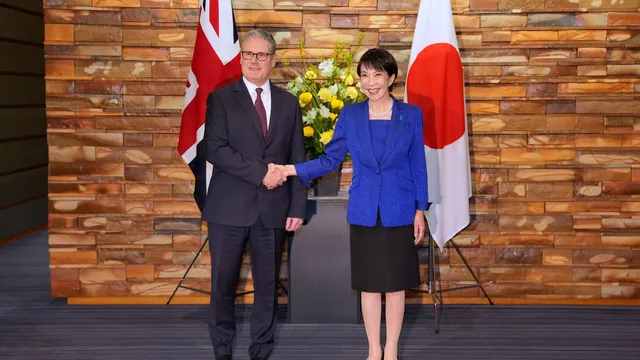
On January 31, 2026, the British Prime Minister Keir Starmer visited Tokyo, Japan, concluding a four-day trip to China. During his brief visit, he met with Japanese Prime Minister Sanae Takaichi to discuss strengthening defence and economic ties between their nations. Following the meeting, Starmer emphasized the need for both countries to respond to geopolitical instabilities with strength and clarity, highlighting the importance of collaboration on cybersecurity, critical minerals supply chains, and joint military efforts. This visit comes at a pivotal time as Japan approaches a snap general election on February 8, where Takaichi seeks to secure her position amidst growing political stakes. Both leaders acknowledged their mutual commitment to a free and open Indo-Pacific, as well as to enhancing their cooperation in security issues. Takaichi echoed Starmer's sentiments on the necessity to deepen mutual alliances, particularly in light of the increasing volatility in international relations. The discussions also touched upon ongoing global conflicts such as those in Ukraine and the Middle East, indicating a shared perspective on addressing these complex issues in collaboration. Starmer's trip to Japan was perceived as not only a diplomatic maneuver but also as a strategic balancing act following his interactions with China, as he attempts to recalibrate the UK’s foreign relations. While the UK aims to rebuild ties with China, Starmer’s strong declarations about the UK-Japan relationship suggest a commitment to ensuring regional security and reaffirming alliances amid rising tensions, especially with regard to China’s aggressive posturing in the Indo-Pacific. The meeting and Takaichi’s upcoming elections reflect the ongoing significance of UK-Japan relations against the backdrop of modern geopolitical challenges. As both nations navigate these dynamics, they are poised to collectively address emerging global threats and reinforce their strategic collaboration for mutual benefit.
Context
The relationship between the United Kingdom and Japan has significantly evolved, particularly in the realm of defense cooperation. As both nations navigate a complex global security landscape, characterized by rising tensions in the Indo-Pacific region and increasing global threats, their strategic partnership is becoming more pivotal. In 2026, the focus on defense cooperation has intensified, driven by shared interests in regional stability, security cooperation, and economic resilience. The UK and Japan are both committed to upholding a rules-based international order, which has led to enhanced collaboration on defense initiatives, joint military exercises, and information sharing. This partnership is not only a reflection of mutual security interests but also a proactive approach to counter emerging threats from state and non-state actors alike. The UK's Integrated Review and Japan's National Security Strategy underscore the importance of strong defense ties as both countries seek to bolster their military capabilities and readiness. In 2026, this partnership has led to the establishment of exercises and exchanges that cultivate interoperability between the British and Japanese armed forces. These joint exercises have not only increased preparedness but have also fostered closer ties among military personnel, ensuring a higher degree of cooperation during crisis situations. Furthermore, technological collaboration, especially in areas such as cyber defense and advanced weaponry, has emerged as a focal point, allowing both nations to leverage their strengths and foster innovation within the defense sector. Strengthening defense ties goes beyond military collaboration; it encompasses a broader approach to security that includes intelligence sharing and counter-terrorism efforts. Both the UK and Japan recognize the threats posed by terrorism and cyber-attacks, which necessitate a united front. The shared intelligence frameworks established between the two countries enable timely responses to threats, enhancing national security. Additionally, their cooperative efforts in securing maritime routes and addressing challenges in the South China Sea illustrate their commitment to ensuring freedom of navigation and protecting international trade, which is crucial to both economies. As the global geopolitical landscape continues to shift, the defense cooperation between the UK and Japan remains vital for regional and global stability. The convergence of interests in defense capabilities, economic relationships, and shared democratic values reinforces this partnership. In this context, the UK-Japan relationship is poised to evolve further, adapting to emerging threats and opportunities in the international arena. The commitment to these shared principles will play a crucial role in shaping future defense strategies, ensuring that both nations remain effective partners in addressing the challenges of the 21st century.


