
military conflicts
informative
controversial

Pakistan holds strong nuclear arsenal while Afghanistan is defenseless

Feb 27, 2026, 7:26 AM10
(Update: Feb 27, 2026, 7:26 AM)
sovereign state in South Asia
country in Central and South Asia

Pakistan holds strong nuclear arsenal while Afghanistan is defenseless

  • Pakistan's military comprises 660,000 active personnel and has a nuclear arsenal with 170 warheads.
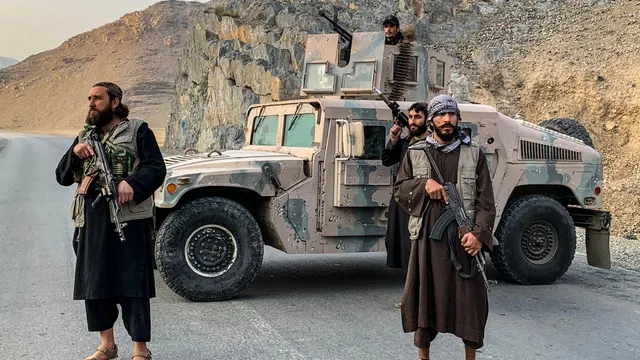
  • The Taliban in Afghanistan has a military personnel count of 172,000 with plans to increase to 200,000 but lacks modern equipment.
  • The stark difference in military strength raises concerns over ongoing security and geopolitical stability in South Asia.
Share your opinion
1

Story

In recent weeks, tensions have escalated between Pakistan and Afghanistan, leading to cross-border fighting. Both nations claim heavy losses, and the Pakistani defense minister has described the situation as an 'open war'. The Pakistani military is significantly stronger, with 660,000 active military personnel and a modern arsenal, including a nuclear capability with 170 warheads. Meanwhile, Afghanistan, under the rule of the Taliban, struggles with a declining military capacity, having only 172,000 active officials and no nuclear weapons whatsoever. The Taliban, which seized control of Afghanistan in 2021, aims to expand its forces to 200,000 personnel but lacks international recognition and support, which hampers its military modernization efforts. The disparity between the two nations' military capabilities highlights the ongoing security challenges in the region. Pakistan's military forces, which benefit from strong recruitment and substantial support from China, possess a vast array of equipment, including over 6,000 armored fighting vehicles and 465 combat aircraft. In contrast, the Afghan forces have an uncertain number of armored vehicles and a minimal air force, consisting of outdated helicopters and aircraft. The situation in Afghanistan is further complicated by the Taliban’s inability to maintain the foreign equipment it seized, indicating significant operational challenges. The lack of recognition from the international community undermines efforts to legitimize the Taliban's governing authority and further exacerbates the military's deficiencies. The current conflict illustrates a broader struggle for power and control in a region fraught with historical tensions. The Pakistani military's investment in modernization and strategic partnerships contrasts starkly with Afghanistan’s setbacks, emphasizing the vulnerability of the Taliban's regime and the challenges it faces in establishing a stable government. As of now, the ongoing violence and military preparations from both sides continue to raise concerns regarding the geopolitical stability in South Asia. Ultimately, the stark contrast between the military capabilities of Pakistan and Afghanistan not only reflects the immediate dangers faced by both nations but also highlights the repercussions for regional security. The ongoing conflict and the efforts by both military forces will have significant implications for the future stability in the region, making it a crucial focal point for international observers.

Context

The relationship between Pakistan and Afghanistan has a complex history shaped by cultural ties, geopolitical strategies, and conflicts. Both nations share a long border and have significant ethnic, linguistic, and historical connections, with Pashtuns being a key common demographic. Despite these cultural linkages, the two countries have struggled with mutual suspicion and hostility, primarily stemming from political instability, differing alliances, and external influences. The British colonial legacy, which defined the borders without regard for ethnic distribution, has compounded these tensions. The Durand Line, established in the late 19th century, remains a contentious issue, with Afghanistan historically rejecting it as the official boundary, leading to longstanding grievances and skirmishes along the border region. The period following Pakistan's independence in 1947 saw fluctuating relations influenced by the respective roles of the United States and the Soviet Union in the region. Both countries crafted their foreign policies based on alignment with superpowers, with Pakistan aligning more closely with the U.S. during the Cold War, while Afghanistan maintained a more ambivalent stance influenced by its relationships with the USSR. The 1979 Soviet invasion of Afghanistan was pivotal, transforming the Pakistani-Afghan dynamic and leading to Pakistan's support for the Afghan mujahideen. This engagement significantly affected the morphing of the Taliban, which later emerged in the 1990s, culminating in Afghanistan's complex internal political landscape. In the early 21st century, the U.S.-led invasion of Afghanistan in 2001 brought new challenges to Pakistan-Afghanistan relations. While Pakistan played a critical role in the war against terrorism, accusations of its support for the Taliban and other militant groups created significant friction. The subsequent years saw an increase in violent insurgencies and a refugee crisis that further complicated the relations between the two nations. Pakistan viewed the Afghan government and its ties with India, particularly after the latter's involvement in Afghanistan, as direct threats to its national security interests. Conversely, Afghanistan accused Pakistan of harboring Taliban leaders and interfering with its internal affairs, creating a deep sense of distrust. As of the mid-2020s, the geopolitical landscape continues to evolve, especially after the Taliban's return to power in Afghanistan in 2021, significantly altering the power dynamics in the region. Pakistan finds itself in a precarious position, attempting to leverage its influence over the Taliban to ensure stability along the border while managing international pressure regarding human rights issues within Afghanistan. Engaging with each other remains paramount for both countries to address shared challenges such as terrorism, regional trade, and border security. However, significant hurdles exist, and fostering a relationship based on cooperation rather than suspicion requires substantial diplomatic efforts. The future of Pakistan-Afghanistan relations hinges on both nations' ability to reconcile their historical grievances and chart a path towards mutual respect and collaboration.

2026 All rights reserved
