

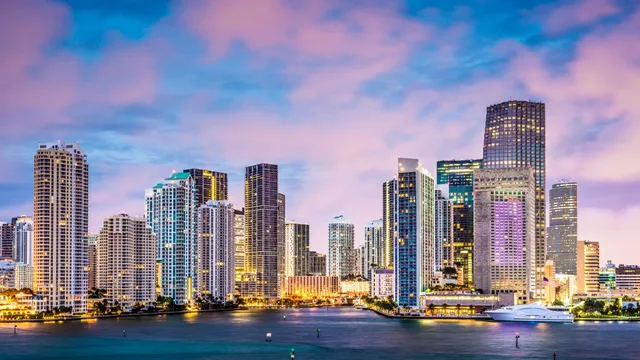
Miami leverages global trends to challenge New York's skyscraper supremacy
Miami leverages global trends to challenge New York's skyscraper supremacy
- Miami is undergoing a transformation in its architectural landscape with new innovative skyscraper projects.
- Demographic shifts are driving a demand for lifestyle-focused urban experiences in the city.
- While New York remains the skyscraper capital, Miami is redefining skyscraper design by prioritizing experience over density.
Story
In recent years, Miami has emerged as a serious contender in the skyscraper race, largely due to its innovative tower projects. A key development, the 100-story Waldorf Astoria Hotel & Residences Miami, is currently over two-thirds complete, marking the city's first supertall skyscraper. This transformation has positioned Miami, which has long been overshadowed by New York City, as a viable alternative for urban living in the United States. Architects and developers attribute this shift to a new demographic trend—highly mobile, internationally minded individuals seeking lifestyle destinations rather than mere economic necessity. The architectural landscape in Miami is evolving to meet the demands of this demographic, prioritizing wellness, experience, and identity over sheer density. Samuele Sordi, the chief architect officer at Pininfarina of America, points out that this new kind of global resident drives a transformation that emphasizes quality of life. Unlike in New York, where residents are often focused on work, those moving to Miami are inclined to prioritize an enjoyable urban experience. Consequently, the city is seeing an acceleration in development driven by these changing priorities. Miami's competitive edge over New York lies in several factors that favor developers in the Florida city. Developers can secure funding through pre-sales, making it easier to finance projects and shorten construction timelines. This flexibility allows for a faster response to market demands, which is often more challenging in the dense landscape of Manhattan. Furthermore, Miami has the advantage of available land for large-scale projects, particularly along its scenic waterfront, compared to the limited space in New York City. This land availability facilitates innovative and expressive architectural designs without the constraints found in more densely populated areas. Additionally, Miami is experiencing a significant influx of international capital and talent. This investment not only boosts the local economy but also introduces diverse design perspectives that attract global buyers. Miami's favorable tax environment, appealing lifestyle, and strategic geographic location contribute to its emergence as a hub for internationally driven development. While experts agree that New York will remain the skyscraper capital in the foreseeable future, the narrative surrounding innovation in urban design is shifting. In this evolving landscape, Miami is not just competing; it is redefining what a skyscraper city can be, focusing on creating enriching experiences rather than merely increasing the number of structures.


