

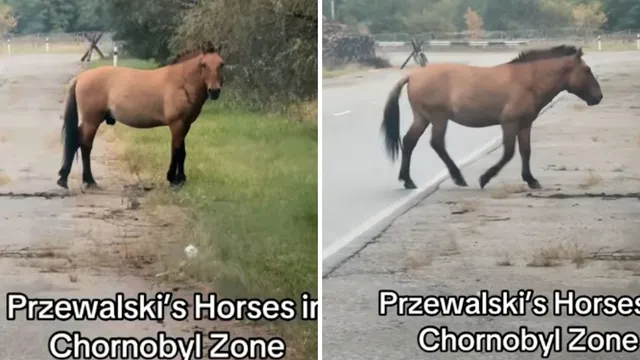
Przewalski's horses thrive in Chernobyl despite ongoing war
Przewalski's horses thrive in Chernobyl despite ongoing war
- Przewalski's horses thrive in the Chernobyl Exclusion Zone, despite being classified as critically endangered.
- The horses were introduced into the zone during a rewilding experiment between 1998 and 1999.
- The emergence of these horses highlights nature's resilience in a region once thought barren.
Story
In Ukraine, a remarkable sighting of Przewalski's horses was recently documented within the Chernobyl Exclusion Zone, a region that has become a symbol of the impact of nuclear disaster following the 1986 explosion. The sighting was made by the Dogs of Chernobyl team, part of the Clean Futures Fund, which is dedicated to supporting communities affected by nuclear catastrophes. This small herd of stocky horses, deemed 'critically endangered', was initially brought to the area in 1998 and 1999 as part of a rewilding initiative aimed at restoring wildlife in a landscape once thought desolate and contaminated. Over the years, these horses have adapted to the environment and thrived, with population estimates varying between 150 and 180 by 2021. However, accurate count has been complicated due to the ongoing conflict in Ukraine. The introduction of Przewalski’s horses marks a significant recovery effort, as the species was previously extinct in the wild, driven to near extinction by human activities and environmental changes. The recovery now seen in regions like Mongolia and Kazakhstan, alongside these surprising positive outcomes in the Exclusion Zone, illustrates nature's resilience even in areas plagued by human impact. The organization continues to monitor not only the horse population but also the dogs and cats abandoned in the area, demonstrating a commitment to animal welfare amidst the complexities of a nuclear disaster aftermath.


