

Crown Prince Mohammed bin Salman scales back Neom project amid challenges
Crown Prince Mohammed bin Salman scales back Neom project amid challenges
- The Neom project in Saudi Arabia is undergoing a significant redesign due to soaring costs and delays.
- Crown Prince Mohammed bin Salman is scaling down the project's scope in line with an internal review.
- This shift reflects broader challenges faced by the Vision 2030 initiative aimed at diversifying the country's economy.
Story
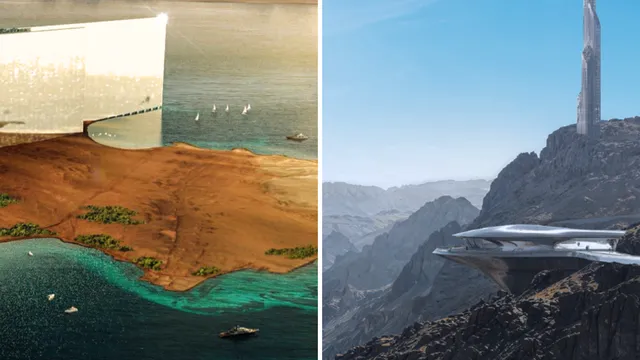
In Saudi Arabia, the ambitious Neom project has undergone significant reconsideration after facing severe delays and financial constraints. Initially envisioned as a multi-trillion-dollar urban revolution along the Red Sea coast, recent developments indicate a pivot away from its original utopian design. Under new CEO Aiman al-Mudaifer, an internal review has determined that many of the project’s grandiose elements will be scaled back substantially. This notable shift is part of Crown Prince Mohammed bin Salman’s broader Vision 2030 initiative, which seeks to diversify the kingdom’s economy away from oil dependence. The foundation of the Neom project was conceived nearly a decade ago, embodying futuristic concepts such as green energy, flying taxis, and smart living environments. However, experts have come to regard these ambitions as overly optimistic, suggesting that the strategies employed ignored fundamental engineering challenges and financial sustainability. Rather than the ambitious “city of the future” previously proposed, the re-evaluation calls for a more practical approach that focuses on feasible industrial and technological applications, particularly in the realm of artificial intelligence. Key components of the original design, including 'The Line'—a linear urban environment designed to house nine million people—are now set to be reduced in scale and complexity. Similarly, the envisioned Trojena ski resort has been deemed too grand for the current economic climate and will no longer even host its planned event, the Asian Winter Games. Other features, like Oxagon, the proposed floating industrial hub, remain uncertain in terms of scope and practicality. In light of the exacerbating financial indicators, including costs that have soared to nearly $9 trillion, officials have begrudgingly acknowledged the need for a more humble realization of the project’s goals. This has led to a considerable reevaluation, marking one of the most pivotal shifts in the implementation of Vision 2030 thus far. As constructions evolve under significant constraints, the grand dream of a sleek megacity emerging from the desert starts to merge into a more grounded strategy focused on achievable outcomes, highlighting the pressing need for a pragmatic recalibration in response to present challenges.
Context
Vision 2030 is a strategic framework aimed at reducing Saudi Arabia's dependence on oil, diversifying its economy, and developing public service sectors such as health, education, and tourism. Launched in April 2016 under the leadership of Crown Prince Mohammed bin Salman, Vision 2030 outlines various initiatives designed to transform the Kingdom into a global investment powerhouse while enhancing the quality of life for its citizens. The plan recognizes the need for sustainable development and aims to foster an environment conducive to innovation and entrepreneurialism. It envisions an economy that drives job creation and ensures the welfare of its population by harnessing skills and talents effectively. Central to Vision 2030 are several ambitious programs focusing on key sectors. The National Industrial Development and Logistics Program aims to boost the industrial sector, facilitating partnerships to bolster local industries, while the National Transformation Program seeks to enhance government effectiveness and transparency. Investments in renewable energy are prioritized, aligning with the global push for sustainable practices. The Kingdom is setting targets to generate 58.7 gigawatts of renewable energy by 2030, showcasing its commitment to environmental stewardship through projects like the Saudi Green Initiative. Tourism is positioned as a critical pillar in the Vision 2030 agenda. The introduction of initiatives such as the Saudi e-Visa program and the development of mega-projects like NEOM, a futuristic city that will utilize cutting-edge technologies, are designed to attract international tourists and investors. Saudi Arabia aims to increase the contribution of the tourism sector from 3% to 10% of GDP, providing millions of jobs and significantly improving economic engagement with the world. Events like the Future Investment Initiative and music festivals are part of the broader strategy to position the Kingdom as a vibrant cultural hub. As of 2026, progress on various aspects of Vision 2030 can be noted, with significant strides in women's empowerment and participation in the workforce, as well as increased efforts in promoting cultural heritage. Although challenges remain, including regional geopolitical tensions and socio-economic reforms, the government remains committed to its transformative path. Vision 2030 is not merely a plan but a comprehensive blueprint that embodies the country's aspirations and resilience in facing the future, fostering growth, and enhancing the well-being of its citizens.


