

Ukrainian forces reclaim significant territory from Russia in southern assault
Ukrainian forces reclaim significant territory from Russia in southern assault
- Ukrainian forces achieved control of 400 square kilometers and eight settlements since late January 2023.
- Russian forces maintain pressure through artillery and small assault groups, posing ongoing challenges.
- The situation reflects Ukraine's commitment to regaining territory while ensuring the safety of its defenders.
Story
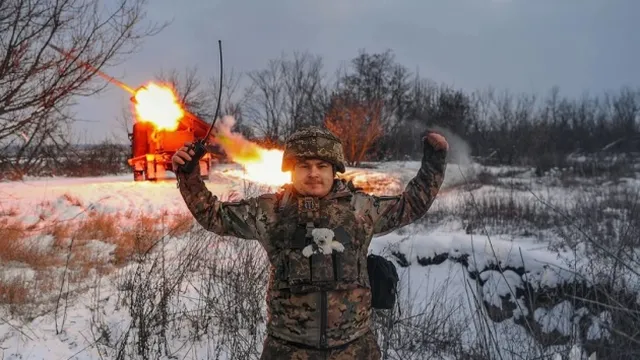
In January 2023, Ukrainian forces commenced an offensive operation in the southern operational zone known as the Oleksandrivka sector, recovering substantial territory from control of Russian forces. Commander-in-Chief Oleksandr Syrskyi announced that as a result of these operations, Ukrainian armed units had recaptured approximately 400 square kilometers and eight settlements, marking a pivotal moment in the ongoing conflict. The announcement followed Syrskyi's visit to frontline units catered to the evaluation of current operational statuses, challenges faced on the battlefield, and the logistics concerning their campaigns. The conflict has escalated due to ongoing Russian artillery strikes, drone attacks, and small assault groups attempting to infiltrate Ukrainian defensive positions. While Russian forces maintained their aggressive posturing, Ukrainian troops displayed resilience, executing both defensive strategies and launching counter-offensives. Commander Syrskyi acknowledged the complexity of the battlefield conditions and highlighted the necessity for effective supply chains to ensure sustained momentum in operations, emphasizing the critical nature of evacuation plans for injured soldiers, uninterrupted ammunition supply, and technical assistance for combat teams. Syksyi also lauded the courage and professionalism of the servicemen from the 82nd and 95th Air Assault Brigades during his frontline visit. Their performance under pressure demonstrated a high level of motivation among Ukrainian defenders. The focus of the Ukrainian command has been on protecting defendable positions while simultaneously working towards territorial gains. The assaults aim not only at territorial expansion but also at undermining Russian advancements in strategically significant areas, including Dnipropetrovsk and Zaporizhzhia regions. The reported territorial gains stand as one of the most significant advancements for Ukraine in recent months, indicating a potential shift in the operational dynamics of the conflict. Ukrainian operational plans remain committed to the effective execution of military missions while prioritizing the safety and well-being of their soldiers. Alongside this, there is an ongoing mission to build up defensive capabilities across all sectors of the front, bolstered by comprehensive meetings and discussions on strategic operations and real-time battlefield progress made by military leaders in Ukraine. Thus, continued growth in territorial control and tactical advantage reflects Ukraine's determination to maintain its sovereignty and territorial integrity against ongoing military threats.
Context
The history of the Ukraine-Russia conflict has evolved over several decades, marked by political, cultural, and territorial disputes. The roots of the conflict can be traced back to the dissolution of the Soviet Union in 1991, when Ukraine gained independence. While Ukraine sought to establish its sovereignty and forge closer ties with the West, Russia aimed to maintain its influence over the former Soviet territories. Tensions escalated in the early 2000s as Ukraine shifted towards pro-European policies, culminating in the 2014 Euromaidan protests which resulted in the ousting of President Viktor Yanukovych, a pro-Russian leader. In response, Russia annexed Crimea in March 2014, a move widely condemned by the international community and resulting in economic sanctions against Moscow. Following the annexation of Crimea, the conflict further intensified in Eastern Ukraine, where pro-Russian separatists declared independence in the Donetsk and Luhansk regions. The Ukrainian government viewed these actions as part of a broader aggression by Russia, leading to a protracted conflict often referred to as the War in Donbass. Various ceasefire agreements, including the Minsk Protocols, were attempted to quell violence and establish peace; however, violations occurred frequently, with neither side achieving a lasting resolution. Humanitarian concerns emerged as millions of people were displaced, and civilian casualties mounted due to ongoing military engagements. Throughout the years, diplomatic efforts have continued amidst the backdrop of military conflict. The Normandy format, involving Ukraine, Russia, Germany, and France, aimed to mediate peace talks, yet achieving a stable outcome proved challenging. The geopolitical implications of the conflict have extended beyond borders, drawing in NATO and the European Union, as the West sought to bolster Ukraine's security, while Russia perceived these actions as encroachment on its sphere of influence. This situation created a complex web of international relationships, with significant strategic ramifications for regional stability. As of February 2026, ongoing tensions remain a significant concern, with occasional flare-ups in violence and continued military posturing by Russia. While there are calls for renewed peace initiatives, the question of sovereignty and territorial integrity for Ukraine continues to be a point of contention. The resolution to the Ukraine-Russia conflict hinges not only on bilateral relations but also the overall geopolitical landscape, which influences the interests of other global powers. Understanding the historical context of these developments helps to elucidate the current state of affairs and the challenges that lie ahead in seeking a viable and peaceful resolution.


