

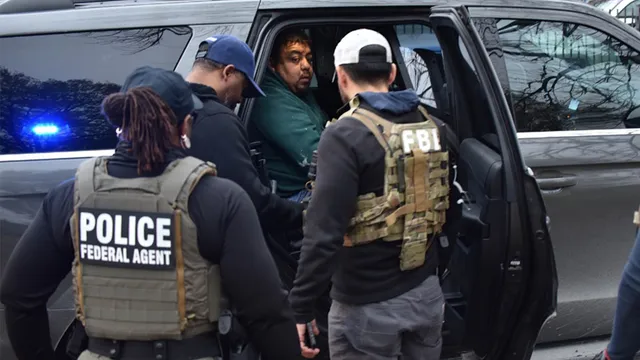
Trump administration vows to ignore Virginia governor's ICE order
Trump administration vows to ignore Virginia governor's ICE order
- Tom Homan criticized Governor Abigail Spanberger for halting ICE cooperation in Virginia.
- Former ICE director John Sandweg explained that sanctuary policies influence targeting decisions for enforcement actions.
- The Trump administration intends to continue deportation efforts despite local opposition, emphasizing public safety.
Story
In 2025, Tom Homan, the White House border czar under President Trump, declared that the administration would maintain its deportation activities in Virginia regarding illegal immigration, despite new obstacles posed by Governor Abigail Spanberger's executive order limiting cooperation with ICE (U.S. Immigration and Customs Enforcement). Homan criticized Spanberger for abandoning her past role as a law enforcement officer when she assumed office, implying a betrayal of her campaign pledges to support law enforcement. He emphasized the challenges that arise from her policies which hinder ICE's operations, specifically in coordinating efforts to detain individuals locked up in local jails who are in the country illegally. Homan vowed that the Trump administration would work around these restrictions and send additional resources to states like Virginia to bolster their enforcement of immigration laws, insisting that they would not allow such barriers to obstruct their mission of safeguarding public safety and pursuing illegal immigrants who pose a threat to communities. Furthermore, the former ICE director, John Sandweg, provided insights on how the agency decides where to allocate its resources, highlighting that cities with restrictive sanctuary laws tend to attract more federal enforcement efforts. Sandweg pointed out that jurisdictions with large immigrant populations and sanctuary policies create complex challenges for ICE, leading to increased targeting of these areas during enforcement operations. He explained that while some sanctuary jurisdictions may cooperate with ICE against individuals with serious criminal backgrounds, there are others that refuse to comply, exacerbating the difficulties ICE faces in capturing undocumented immigrants hiding in these communities. This situation may compel ICE to redirect additional resources and personnel towards these sanctuary jurisdictions in an effort to locate and apprehend targets who would traditionally be detained within the prison system but are released back into communities instead. During a discussion on the political implications of such actions, Homan rejected claims that the Trump administration was politicizing its enforcement strategy. He explained that the focus remains on public safety, asserting that the illegal immigration problem often escalates in areas where local governments refuse to cooperate with federal immigration authorities. The overall sentiment expressed by both Homan and Sandweg underscores the potential for tension between local, state, and federal law enforcement agencies as new policies are enacted, particularly in jurisdictions that adopt sanctuary measures designed to protect undocumented immigrants from deportation. This ongoing conflict highlights the difficulties faced by immigration enforcement agencies in achieving their objectives amidst shifting political landscapes and varying local practices regarding cooperation with ICE. As such, the ongoing discourse surrounding immigration enforcement underscores a significant divide in public opinion and government policy on how to address illegal immigration, with proponents of stricter enforcement advocating for the need to prioritize safety and security, while opponents seek to protect immigrant rights and promote sanctuary policies. This complicated landscape adds urgency to the conversation about how best to navigate the challenges posed by illegal immigration while also considering the humanitarian aspects of the individuals involved in the discussion.
Context
Sanctuary cities play a pivotal role in the contemporary dialogue surrounding immigration enforcement, particularly in relation to the operations of Immigration and Customs Enforcement (ICE). These cities limit their cooperation with federal immigration authorities, aiming to create an environment that encourages undocumented immigrants to engage with law enforcement without the fear of deportation. The impacts of sanctuary policies are multifaceted, affecting local communities, ICE operations, and the broader immigration framework in the United States. By reducing the collaboration between local law enforcement and ICE, these policies intend to foster trust within immigrant communities, thereby enhancing public safety and encouraging reporting of crimes without the fear of being detained or deported. This, in essence, encourages a cooperative dynamic between immigrant populations and local authorities, which is often absent in areas where collaboration with ICE is prevalent. The operational challenges posed to ICE in sanctuary cities cannot be understated. When local jurisdictions refuse to honor detainer requests or provide access to individuals in police custody, it complicates ICE’s ability to apprehend individuals who are identified as removable. Various studies and reports indicate that such policies contribute to a decline in the number of arrests made by ICE in these areas, which can lead to gaps in the agency's overall enforcement objectives. Sanctuary policies force ICE to adopt alternative strategies, such as undercover operations or surveillance, which may seem less efficient and potentially more invasive, further straining relationships between immigrants and the communities in which they reside. Moreover, the existence of sanctuary cities has triggered a broad range of responses from the federal government, including legal actions, funding cuts, and attempts to penalize cities that adopt these policies. This antagonistic stance can lead to a hostile environment for immigrants, irrespective of local efforts to protect their rights. Additionally, debates surrounding the merits and detriments of sanctuary policies often polarize communities, with proponents arguing that they protect vulnerable populations and opponents claiming they jeopardize public safety by providing safe haven to individuals with criminal records. This contention showcases the complexity of immigration politics, where the implications of such policies are not easily quantified but resonate profoundly across the socio-political landscape. In conclusion, the impact of sanctuary cities on ICE operations is emblematic of the broader conversation on immigration policy in the United States. These cities attempt to balance the enforcement of immigration laws with the need to protect their residents, particularly in vulnerable communities. While they may hinder ICE's operational capabilities in specific locales, they also serve as vital platforms for ongoing debates regarding justice, safety, and human rights within the immigration framework. As the national discourse evolves, understanding the nuanced interplay of sanctuary policies and federal immigration enforcement remains essential for determining the future landscape of immigration in America.


