

Steven Spielberg details his upcoming film Disclosure Day
Steven Spielberg details his upcoming film Disclosure Day
- Steven Spielberg has unveiled the trailer for his upcoming alien movie, set to release on June 12, 2026.
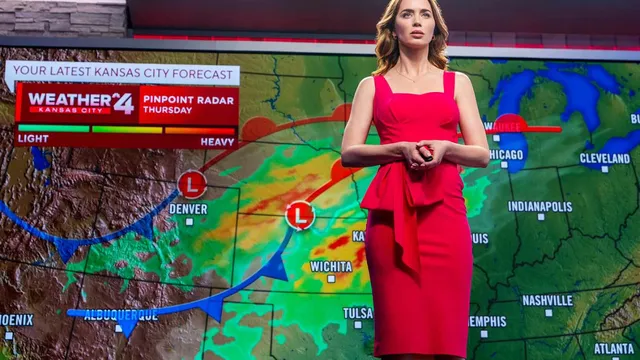
- Emily Blunt leads the cast as a television meteorologist, and the film explores themes of extraterrestrial life and truth.
- The trailer's release has ignited fascination, speculation, and excitement among fans of Spielberg's work.
Story
In December 2025, fans of Steven Spielberg reacted positively to the trailer unveiling of his new alien encounter film, Disclosure Day. This project, based on Spielberg's original idea and a screenplay by David Koepp, is scheduled for release on June 12, 2026. The cast features notable actors such as Emily Blunt, who plays a TV meteorologist, and Josh O’Connor, alongside Colin Firth, Eve Hewson, and Colman Domingo. The film seeks to explore themes surrounding UFOs and the truth about extraterrestrial life, raising questions about our understanding of the universe. Spielberg has built a legacy with many iconic films featuring alien encounters, including classics like Close Encounters of the Third Kind and E.T. the Extra-Terrestrial. The trailer has sparked significant conversation on social media, with some fans speculating about its connections to the current discourse surrounding unidentified aerial phenomena (UAPs) and government disclosures. One user noted the film may serve as a vehicle for addressing these hot-button topics under the guise of entertainment, showcasing Spielberg's continued relevance in cinematic storytelling. Public reaction to the trailer has been overwhelmingly enthusiastic, with fans expressing excitement at the prospect of Spielberg returning to science fiction themes. This project marks his first original sci-fi story in years, making it feel like a pivotal moment in current pop culture. The film's themes tap into societal fascination with UFOs and the question of whether humanity is alone in the universe, which resonates with a large audience diversity. As Spielberg continues to reshape the narrative surrounding UFOs in film, the anticipation builds for Disclosure Day, which promises to intertwine personal, societal, and existential themes. The excitement surrounding Spielberg reflects not only his own artistic journey but also the collective curiosity of a generation eager for answers about what lies beyond our world.
Context
Throughout cinematic history, the portrayal of alien encounters has evolved significantly, reflecting societal fears, technological advancements, and cultural narratives. Early films like "The Day the Earth Stood Still" (1951) introduced audiences to the idea of benevolent extraterrestrial beings who served as a cautionary voice against the hubris of humanity. These early portrayals often emphasized themes of peace, understanding, and the moral responsibility of humans on a global and cosmic scale. As the genre developed, the narrative surrounding aliens shifted from one of cooperation to one of conflict, with films like "War of the Worlds" (1953) showcasing humanity's struggle for survival against malevolent invaders, tapping into Cold War anxieties and fears of the unknown. The 1970s and 1980s marked a significant turning point in alien cinema, with the emergence of science fiction blockbusters that featured advanced special effects and complex storytelling. Movies such as "Close Encounters of the Third Kind" (1977) and "Alien" (1979) highlighted not only the possibilities of interaction with advanced extraterrestrial civilizations but also the darker implications of such encounters. These films began to explore complex themes such as fear of the unknown, the consequences of scientific exploration, and the existential considerations of humanity's place in the universe. The portrayal of aliens became more nuanced, ranging from terrifying monsters to enigmatic beings that challenged the perception of humanity's superiority. By the turn of the 21st century, the depiction of alien encounters in cinema continued to diversify. Films like "District 9" (2009) provided a commentary on social issues such as xenophobia and immigration, presenting aliens not simply as otherworldly beings but as reflections of real-world societal issues. This period saw an increase in the humanization of aliens, as seen in films like "E.T. the Extra-Terrestrial" (1982) and "Arrival" (2016), which portrayed extraterrestrials as complex entities with their own motivations and struggles. These representations encouraged audiences to question their understanding of 'the Other,' ultimately calling for greater empathy and understanding across cultural divides. In contemporary cinema, the portrayal of alien encounters has become both more speculative and more grounded, with filmmakers exploring potential future scenarios and the ethical implications of contact with alien life. Movies like "The Martian" (2015) focus on humanity's resilience and ingenuity in the face of challenges, while directors like Denis Villeneuve in "Arrival" continue to push boundaries by exploring themes of communication, time, and the fragility of human existence. As the genre evolves, the portrayal of alien encounters serves not merely as a form of entertainment but as a rich tapestry that reflects human concerns, aspirations, and the endless quest for understanding in a universe that remains largely mysterious. The ongoing exploration of these themes in cinema highlights the significant role that storytelling plays in shaping societal perceptions of the unknown.


