

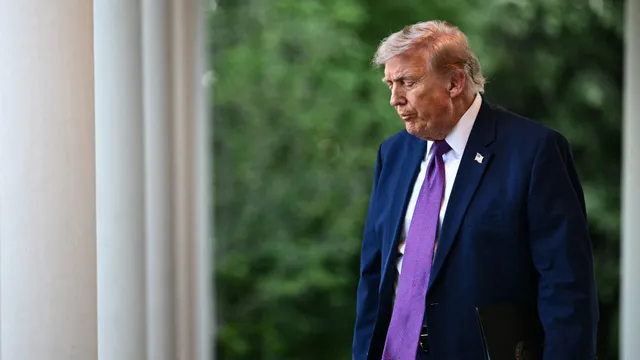
Trump neglects Americans' financial struggles in Iran negotiations
Trump neglects Americans' financial struggles in Iran negotiations
- Trump recently stated he is unconcerned about the financial conditions of Americans during discussions on Iran's nuclear armament.
- Democrats and critics have reacted strongly against Trump's remarks, emphasizing the pain many citizens are feeling due to rising living costs.
- These statements may have significant implications for Trump's popularity and support in upcoming elections.
Story
In a recent statement, President Donald Trump expressed that he is not concerned about the financial struggles faced by Americans while engaging in negotiations regarding Iran's nuclear capabilities. This remark has drawn significant backlash from prominent Democrats and others, highlighting the growing discontent over rising costs, including gas and groceries. Trump insisted that the primary focus of his discussions with Iran centers on preventing them from obtaining nuclear weapons, citing public support for this view. Critiques from Democratic leaders emphasized that Trump's policies have historically contributed to the economic difficulties many families are currently experiencing, underscoring a disparity between the administration's priorities and the citizens' lived realities. The atmosphere surrounding Trump's remarks indicates a heightened tension as inflation rates rise, particularly in travel expenses and gas prices, with families feeling the effects of these increases. The failure to address economic pain reflects a notable detachment from the everyday concerns of citizens, as the Democratic National Committee (DNC) points out that many Americans are struggling to make ends meet. In the context of an upcoming midterm election season, these financial burdens are likely to influence public sentiment and voting behavior as families adjust their summer travel plans amid rising costs. Furthermore, critical responses from lawmakers, like Senator Cory Booker, emphasize a perception that Trump is dismissive of the economic crises affecting a large segment of the population. Amid a public perception that their economic well-being is secondary to foreign policy, Democrats are using this sentiment to rally opposition against Trump’s administration. The situation outlines the delicate balance politicians must maintain between foreign diplomacy and domestic economic issues, especially as the nation heads towards pivotal electoral moments. The public's dissatisfaction comprises significant implications for Trump's presidency, particularly as his claims of economic prosperity come under scrutiny. As Americans face increasingly unattainable costs for travel and leisure due to ongoing inflation driven by factors including international conflicts and energy prices, the concern over who benefits from the economic policies enacted by the administration becomes a focal point of discussion. The mixed support among citizens for Trump's foreign policy dealings, juxtaposed with their experiences of financial strain, may present a critical challenge going forward, especially as these issues gain more visibility ahead of election cycles.
Context
The impact of Trump's economic policies on American families has been a subject of considerable debate and analysis. His administration's approach primarily focused on tax cuts, deregulation, and trade policies aimed at boosting economic growth. One of the flagship initiatives was the Tax Cuts and Jobs Act of 2017, which significantly reduced corporate tax rates and aimed to stimulate investment and job creation. Proponents argued that these cuts provided families with more disposable income and encouraged businesses to invest, which would benefit workers and the economy at large. Conversely, critics argued that the benefits primarily favored the wealthy and did little to address the struggles of middle and lower-income families, raising concerns about the widening income inequality during and after his presidency. Deregulation was another key aspect of Trump's economic strategy. The administration rolled back numerous regulations that impacted various sectors, including environmental protections and labor standards. Supporters claimed that deregulation would lead to job creation and lower costs for consumers, thus benefiting families. However, opponents contended that such measures often put workers at risk and compromised public safety and health, suggesting that the long-term ramifications could outweigh short-term economic benefits. The balance between economic growth and regulatory oversight remained a contentious issue during his time in office. Trade policies also played a significant role in shaping the economic landscape for American families. Trump's implementation of tariffs, particularly on imports from China, aimed to protect American manufacturing jobs but resulted in higher costs for certain consumer goods. While some sectors, like steel and aluminum, experienced a temporary boost, many families faced increased prices and uncertainty. The renegotiation of trade agreements, such as the USMCA (United States-Mexico-Canada Agreement), was designed to provide better terms for American workers, but its actual benefits for families are still debated among economists and analysts. As of now, the long-term effects of Trump's economic policies on American families continue to unfold. The pandemic's onset in 2020 further complicated the economic outcomes, with many families facing job losses and economic hardship. While some indicators showed recovery, the disparities in wealth and opportunity remained pronounced. Evaluating the overall impact requires a nuanced understanding of various factors at play, including labor market changes, inflation rates, and access to healthcare, among others. The complexity of the American economy and the differing experiences of families across regions make it challenging to draw definitive conclusions, but it is clear that Trump's economic policies have left a lasting imprint on American households.


