

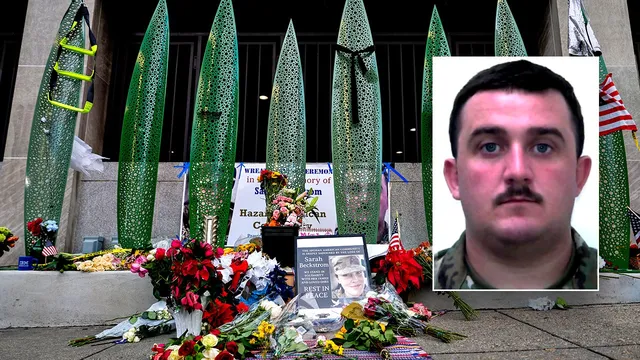
National Guardsman Andrew Wolfe fights for life after shooting in D.C
National Guardsman Andrew Wolfe fights for life after shooting in D.C
- Andrew Wolfe, a 24-year-old National Guardsman, is recovering in the hospital after being shot in Washington, D.C.
- Attorney General Pam Bondi described Wolfe's recovery as a miracle and noted he is surrounded by family during this challenging time.
- The Department of Justice is considering pursuing the death penalty for the shooter, raising discussions about immigration policies.
Story
In Washington, D.C., a National Guardsman named Andrew Wolfe, 24, is currently hospitalized after being severely injured in a shooting incident that occurred recently. According to Attorney General Pam Bondi, Wolfe is showing signs of recovery as he is now able to open both eyes, which she referred to as a miracle. Wolfe is undergoing treatment for serious injuries and has a long road ahead of him in terms of recovery as he receives support from his family, including his parents and siblings, who are by his side during this critical time. The circumstances surrounding the shooting have drawn significant attention, particularly concerning the shooter, who Bondi has criticized in relation to immigration policies. She stated that the perpetrator was allowed entry into the country under the current administration, highlighting concerns about lax vetting processes. Bondi’s remarks reflect a broader narrative regarding national security and immigration, linking the shooting to perceived flaws in current policies and governance. Wolfe's mother has remained positive throughout this ordeal, insisting on her son's survival. President Donald Trump has also commented on Wolfe's condition, acknowledging the young man's battle for life. In addition to Wolfe's health updates, the Department of Justice is reportedly considering pursuing the death penalty for the shooter involved in this incident, as it has reignited discussions about violence and safety within the country. The shooting incident and Wolfe’s injuries have spurred conversations surrounding the protection of public servants and the measures needed to ensure their safety. As investigations continue, both public and governmental responses to this event may pave the way for changes in policy regarding security and immigration as advocates seek justice for Wolfe and others impacted by similar acts of violence.
Context
insight trends insight strategic shift shift trends geopolitical policy geopolitical strategic analysis economic strategic analysis policy market global shift analysis global economic policy impact analysis strategic geopolitical geopolitical impact global shift geopolitical economic global market strategic global geopolitical global economic economic strategic economic data shift market global impact shift geopolitical strategic analysis shift geopolitical insight global geopolitical market shift impact analysis strategic market policy market analysis data geopolitical strategic analysis shift geopolitical shift economic impact shift trends insight strategic trends...


