

Tennessee judge halts National Guard deployment amid legal disputes
Tennessee judge halts National Guard deployment amid legal disputes
- A Tennessee judge has temporarily blocked the deployment of the National Guard in Memphis, stating that the governor's authority has limits.
- The ruling aligns with Democratic officials who argue that proper legal protocol was not followed regarding the National Guard's deployment.
- This decision may have long-lasting implications on how state military forces are utilized within local law enforcement contexts.
Story
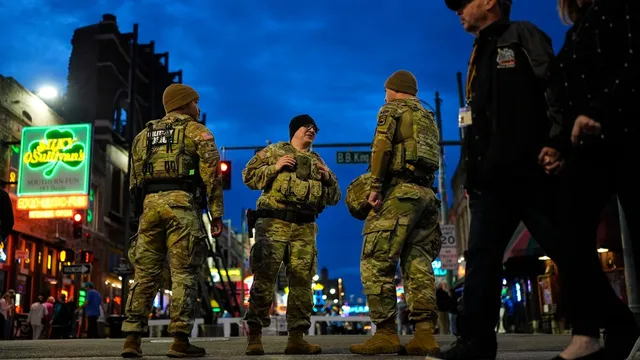
In Tennessee, a significant legal ruling occurred when a judge blocked the deployment of the National Guard in Memphis, asserting that Governor Bill Lee exceeded his authority. Davidson County Chancellor Patricia Head Moskal delivered her decision on a Monday evening, reinforcing the stance of local and state Democratic officials who contended that the governor can only send the National Guard in case of civil unrest, such as rebellion or invasion. Until the lawsuit is resolved, the order is put on hold to allow time for the government to appeal this ruling. The controversy began when President Donald Trump announced plans in September to deploy the National Guard to combat rising crime rates in Memphis. The deployment started on October 10, with troops patrolling neighborhoods and urban commercial areas, although they were unarmed and operating under federal task force orders. Local officials, including Shelby County Mayor Lee Harris, argued that the governor should not hold unilateral power over such military actions and expressed that the ruling safeguards the rule of law. The legal challenge was brought forth by state and local elected officials with a view that the deployment of troops requires both legislative authority and local government requests. They pointed to provisions in Tennessee law articulating that a governor's power to call upon the National Guard should only arise in serious circumstances involving breakdowns of law and order. In this case, Democratic officials have claimed that the current conditions do not meet such criteria. The National Guard members in Memphis were part of a larger federal task force that included various law enforcement agencies, emphasizing the collaborative response to the perceived uptick in crime. The court's ruling underscores a significant tension between state governors and the authority that both state law and local governance ascribe concerning the National Guard's deployment. During the hearing, Chancellor Moskal articulated that the governor's powers are not without limits and must adhere to legal stipulations that define when military assistance can be solicited. The developments have sparked a broader dialogue about military involvement in civil law enforcement and the appropriate checks and balances in such scenarios as cities grapple with crime rates amid public health crises and civil unrest. The outcome of the appeals process could set critical precedents concerning the deployment of state military forces in urban settings.


