

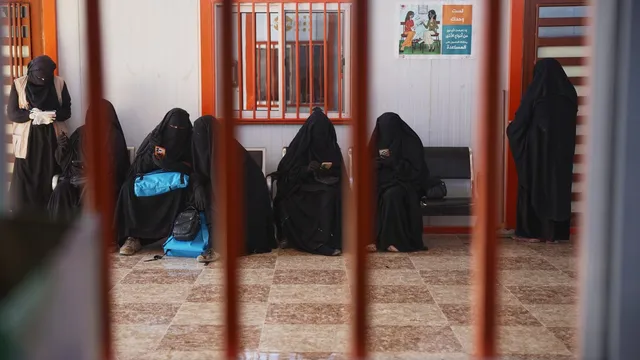
Syrian authorities relocate remaining families from al-Hol camp
Syrian authorities relocate remaining families from al-Hol camp
- The U.N. refugee agency reported a significant decrease in the population of al-Hol camp.
- Syrian authorities plan to relocate remaining families present in the camp to Akhtarin camp.
- This relocation marks a response to the ongoing humanitarian situation in al-Hol.
Story
In recent developments in Syria, the U.N. refugee agency reported a substantial decrease in the population of the al-Hol camp, which has been housing family members of suspected Islamic State group militants. Gonzalo Vargas Llosa, the UNHCR representative in Syria, announced that many residents have left the camp in large numbers, with a notable relocation plan from the Syrian authorities towards the Akhtarin camp in the Aleppo Governorate. The Syrian government has requested the UNHCR's assistance in this transition, which reflects an ongoing effort to integrate these individuals back into society. The al-Hol camp has seen fluctuating numbers since the fall of IS in 2019 when around 73,000 people were in residence. The current population is unclear, but a significant number of residents are believed to have escaped amid chaos when government forces captured the camp from the Kurdish-led Syrian Democratic Forces in January. The al-Hol camp, which had been running for a decade, was recently overtaken by the central Syrian government during a prolonged military offensive. Moreover, the camp's inhabitants primarily consist of women and children, many of whom are the wives or widows of IS fighters. Despite not being officially classified as prisoners, many have faced de facto detention in the heavily guarded facility. This relocation plan marks a critical step towards addressing the humanitarian situation at al-Hol and the plight of these families, who have been in limbo since the defeat of IS. In conjunction with the relocation of families, thousands of suspected IS militants detained in northeastern Syria have been transferred to Iraq to face legal proceedings. The U.S. military disclosed the completion of the transfer of over 5,700 adult male IS suspects to Iraqi authorities. This move has come as part of an agreement involving the U.S. and Iraq and emphasizes a broader effort to manage the aftermath of the IS presence in both countries. The National Center for International Judicial Cooperation in Iraq confirmed that these individuals are being interrogated, highlighting the complexities of dealing with the remnants of IS in the region.
Context
trends market geopolitical data economic market geopolitical global impact insight data data trends geopolitical market data policy data market policy shift strategic market economic shift strategic market shift analysis trends analysis analysis shift global economic analysis analysis data market policy strategic geopolitical policy global shift insight global economic economic shift geopolitical impact shift data shift economic analysis market insight strategic geopolitical shift data policy trends shift policy market global insight analysis impact policy global policy policy data policy insight impact...


