

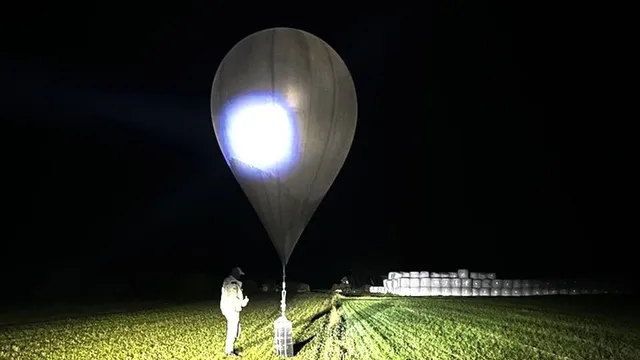
Lithuania blames Belarus for disruptive balloon incursions at airport
Lithuania blames Belarus for disruptive balloon incursions at airport
- Lithuania's main airport has faced multiple closures recently due to incursions of meteorological balloons from Belarus, stranding thousands of travelers.
- Lithuanian authorities suspect the balloon operations are deliberate acts of disruption tied to Belarus, escalating tensions between the two nations.
- The Lithuanian government is seeking technological solutions and new laws to counter these disruptions while maintaining security collaborations.
Story
Lithuania has experienced significant disruptions at its main airport, Vilnius Airport, due to repeated incursions of meteorological balloons allegedly originating from Belarus. These disturbances have forced multiple closures, stranding thousands of passengers in recent weeks. Lithuanian authorities reported that on one occasion, over 60 balloons were launched, causing an 11-hour suspension of airport operations. They suggest that the trajectory and timing of the balloons indicate a deliberate act of disruption likely orchestrated by Belarus, which is seen as a close ally of Russia amidst ongoing tensions in Eastern Europe. In response to these incursions, the Lithuanian government has stated that it perceives the use of balloons as a part of a broader hybrid attack strategy from Belarus. Lithuanian Prime Minister Inga Ruginienė has been vocal about the need for a coordinated response with strategic partners. The tensions have escalated to the point where Lithuania previously closed its borders to Belarus as a measure against the balloon operations. Although a temporary reopening occurred under pressure from logistics companies, the incidence of balloon flights continues to rise, prompting further precautionary measures. Authorities in Lithuania are exploring advanced defensive technologies, including artificial intelligence systems to predict balloon flight paths and potential countermeasures involving high-powered lasers. Legislative changes are also being considered to impose harsher penalties on actions linked to cigarette smuggling, as the balloons are suspected of assisting in this illicit trade. Despite Belarusian President Alexander Lukashenko’s suggestion of an apology contingent on proof of direct involvement in the balloon incidents, no conclusive evidence has yet been established. The international context surrounding these events is deeply intertwined with current geopolitical pressures, including Russia’s military actions in Ukraine and fears of further incursions into NATO airspace. With ongoing scrutiny and high alerta across Europe, the situation reflects the complexities of regional security dynamics and the increasing risks posed by hybrid warfare tactics employed by neighboring states. Lithuania's focus remains on ensuring the safety of its airspace while navigating its diplomatic relations with Belarus and maintaining the support of its strategic partners.


