
environment
tragic
impactful
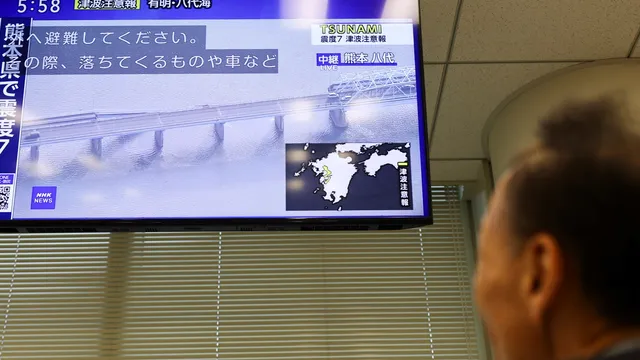
Magnitude 7.1 earthquake strikes southern Japan, triggering tsunami warnings
11
(Update: )
environment
tragic
impactful
Magnitude 7.1 earthquake strikes southern Japan, triggering tsunami warnings
- A magnitude 7.1 earthquake struck Kumamoto prefecture in southern Japan, causing widespread power outages and halting rail services.
- The Japan Meteorological Agency issued tsunami warnings for waves of up to 1 meter following the earthquake.
- Prime Minister Sanae Takaichi urged residents to remain vigilant for aftershocks as the government assesses the damage.