

Indiana wins first national title in dramatic championship against Miami
Indiana wins first national title in dramatic championship against Miami
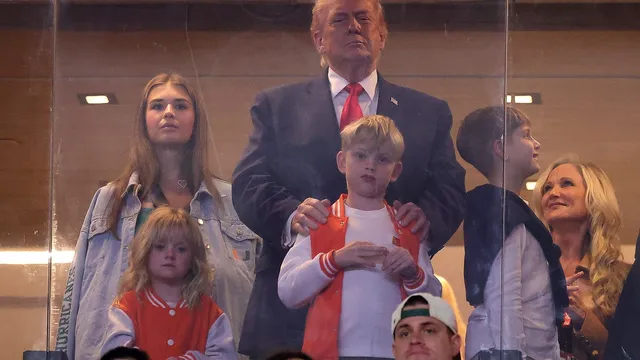
- President Donald Trump attended the College Football Playoff national championship game in Miami on January 23, 2026.
- The Indiana Hoosiers defeated the Miami Hurricanes 27-21, winning their first national title.
- Trump's attendance and the crowd reception highlighted his ongoing relationship with sports and America’s cultural values.
Story
On January 23, 2026, President Donald Trump attended the College Football Playoff national championship game at Hard Rock Stadium in Miami, Florida, where the Indiana Hoosiers faced off against the Miami Hurricanes. The Hoosiers were seeking their first-ever national title after an undefeated season, while the Hurricanes were looking for their sixth title. Alongside him were his eldest daughter, Ivanka Trump, and granddaughter, Kai Trump, who was seen with her arm in a sling following recent surgery on her wrist. Trump's presence at the game generated significant attention, as he received a loud reception from the over 70,000 attendees during the national anthem. Reports indicated that the crowd reacted with a mix of cheers and boos, reflecting the polarized political climate surrounding the former president. The Indiana Hoosiers claimed victory over Miami with a final score of 27-21, marking a historic moment for the program. Their coach, Curt Cignetti, had led the team to an impressive record of 26-2 over the past two seasons, including their perfect run this season. The broadcast of the game attracted an average of 30.1 million viewers, making it the second-most watched college football championship game on record. The matchup occurred at a time when Trump had been leveraging sports to showcase American values, reinforcing his connection to the fanbase. The night was significant not only for the teams involved but also for the ongoing dialogue surrounding Trump's appearances in public events as he continues to influence the discussion within the American sports scene and beyond.
Context
The College Football Playoff (CFP) national championship is a pivotal event in American college football, replacing the Bowl Championship Series (BCS) that had been in place since 1998. The CFP was established in 2014 to better determine the national champion, while addressing the growing criticisms of the BCS system, which was often seen as subjective and not fully representative of the top college teams. The initial format involves four teams selected by a committee, which takes into consideration numerous factors including wins, strength of schedule, and head-to-head results, leading to two semi-final games and a national championship game. This structure aims to increase competitiveness and give more teams a chance to compete for the title, an improvement over the previous system where only two teams competed in a single championship game. In the inaugural year of the College Football Playoff, the selection committee came under scrutiny for its rankings, with debates surrounding which teams deserved a spot in the playoff. The first championship match, held in AT&T Stadium in Arlington, Texas on January 12, 2015, featured the Ohio State Buckeyes defeating the Oregon Ducks, cementing Ohio State's place in college football history. Since its inception, the playoff has seen varied champions and has considerably influenced the recruiting landscape and the visibility of college football. The format has also sparked discussions about expanding the playoff field in the future to include more teams, reflecting the sport's growing popularity and the diversity of its talent. Following the first few years, the format has undergone discussions regarding expansion as the playoff system gained popularity among fans and stakeholders. The performance of teams like Clemson and Alabama over the years helped solidify an era of dominance, showcasing the competitive nature and elite quality available in college football. Events such as the national championship have not only drawn larger crowds but have also attracted significant media coverage, highlighting the impact of such games on the overall interest in college athletics. As of the current date, January 20, 2026, the College Football Playoff continues to evolve, being seen as a critical element of the college sports landscape with implications extending beyond the field, including financial impact on institutions and local economies. Critics of the playoff system argue that it still has a ways to go in representing the vast array of college football programs across the nation, as the traditional powers often dominate the top rankings. The ongoing discourse surrounding potential changes to the playoff format indicates a recognition of the need for inclusivity and fairness, providing opportunities for up-and-coming programs to compete for the national title. As the College Football Playoff moves forward, its history will reflect not only the competitive outcomes of games but also the broader cultural significance of college football in American society.


