
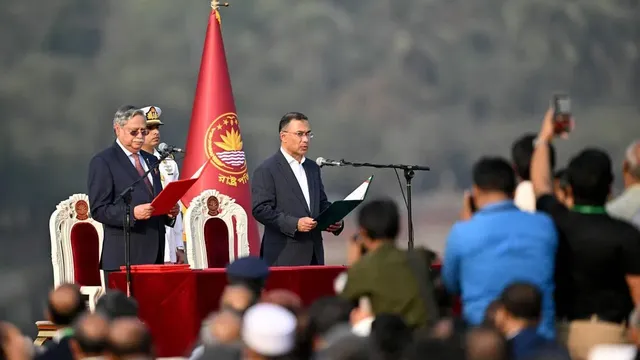
Tarique Rahman takes office as Bangladesh's prime minister amid challenges
- Tarique Rahman was sworn in as prime minister of Bangladesh on February 17, 2026.
- His party, the Bangladesh Nationalist Party, won a significant parliamentary majority after two decades.
- The new government faces urgent challenges in political stability, economic recovery, and governance reforms.
Story
On February 17, 2026, Bangladesh Nationalist Party leader Tarique Rahman was sworn in as prime minister, marking a significant political shift in Bangladesh post-turmoil. Having returned from 17 years of self-imposed exile, Rahman took office after his party secured two-thirds of the parliamentary seats in a recent election, which followed a transitional period under Nobel laureate Muhammad Yunus's interim administration. This election was a pivotal moment for the BNP, returning to power nearly two decades after losing it, amid a backdrop of political unrest and a Gen Z-led uprising that toppled the previous government. The swearing-in ceremony took place at the South Plaza of the national Parliament building, a break from tradition where such events typically occur at the president's official residence. President Mohammed Shahabuddin officiated at the ceremony, which was attended by various dignitaries, diplomats, and representatives from several countries, including China, India, and Pakistan. The new cabinet consists of both experienced leaders and new faces, indicating Rahman's intention to blend political experience with fresh expertise to tackle pressing national issues such as economic recovery, law and order, and governance reforms. Alongside the BNP's return to power, the Islamist party Jamaat-e-Islami and the National Citizen Party emerged as notable political players, forming the opposition after a long period of absence and contesting the elections for the first time since the lifting of a previous ban. Jamaat-e-Islami won a record 68 seats, but their participation was overshadowed by the absence of Awami League, which was barred from contesting due to the revocation of its registration. The opposition boycotted the swearing-in ceremony, protesting Rahman's party's rejection of their lawmakers' request to take an additional oath under the proposed Constitution Reform Council. This political climate reflects the ongoing tension and challenges Rahman faces as he assumes office. His first remarks urged the need for maintaining peace and law and order, stating, 'We will not tolerate any kind of chaos.' His ascent signifies a complex transition for Bangladesh as it seeks stability after years of political volatility, as challenges related to rebuilding investor confidence and reviving key industries, notably the garment sector, loom large on the new government.
