

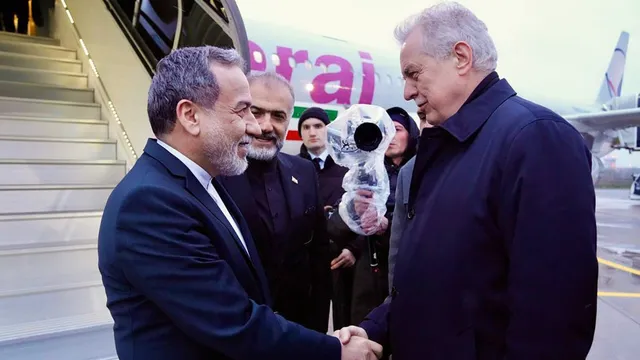
Iran's top diplomat arrives in Russia for critical talks amid tensions
Iran's top diplomat arrives in Russia for critical talks amid tensions
- Seyed Abbas Araghchi has arrived in Russia for high-level talks amidst escalating Middle Eastern tensions.
- The diplomatic trip follows discussions in Pakistan and Oman focusing on regional security and Iran's nuclear program.
- The outcome of Araghchi's discussions with Russian officials may significantly impact ongoing US-Iran relations.
Story
On April 27, 2026, Seyed Abbas Araghchi, Iran's Foreign Minister, arrived in St. Petersburg, Russia, as the final leg of his regional tour which included stops in Pakistan and Oman. His visits were part of a diplomatic effort to coordinate with partners concerning the ongoing conflict in the Middle East and the stalled negotiations with the United States. The Iranian delegation landed early in the morning, and Araghchi is set to meet with President Vladimir Putin and other Russian officials for discussions about the ceasefire and the broader situation surrounding the conflicts involving the US and Israel. During his tour, Araghchi highlighted Tehran's position on developing a viable framework to end hostilities, sharing insights with Pakistan's officials about Iran's stances and priorities. In Oman, the discussions included ensuring safe transit in the Strait of Hormuz. Additionally, Tehran pushed for lifting the US blockade of its ports as a precondition for engaging in further nuclear discussions, arguing that meaningful negotiations cannot occur under such pressures. The trip follows US President Donald Trump's assertions that Iran would need to abandon its nuclear ambitions before any meaningful talks could take place. Iran's rejection of direct negotiations with US representatives underscores the tensions still present in diplomatic channels, highlighting significant divides in expectations and openness to negotiation. With Russia and Iran facing common challenges from Western sanctions, they are seeking to strengthen their political and military alliance, positioning themselves in a united front against Western powers. The complexities in this geopolitical dance reflect a broader narrative of power struggles in the Middle East, stemming from historical entanglements and recent escalations in conflict, particularly in relation to Israel and the presence of Hezbollah in Lebanon.
Context
The long-standing conflicts in the Middle East have often been marked by cycles of violence and attempts at peace, with numerous ceasefire agreements attempted over the decades. Ceasefires are critical as they offer temporary cessation of hostilities, providing spaces where diplomacy and dialogue can take root. Historically, ceasefire agreements have been characterized by varying degrees of success, often influenced by the will of the parties involved, regional dynamics, and the role of international actors. Notably, agreements such as the Oslo Accords and the Camp David Accords represent significant efforts toward lasting peace, although the reality on the ground often falls short of these aspirations. One of the key factors influencing the effectiveness of ceasefire agreements in the region has been the presence of multiple stakeholders, including state and non-state actors, each with their own interests and agendas. For instance, in conflicts involving Israel and Palestinian groups, ceasefire negotiations often also entangle neighboring countries and international powers that may have competing interests. The intricate web of alliances and enmities complicates the implementation of ceasefires, as different factions may not honor agreements if they do not perceive them to be in their best interest. Moreover, local grievances and humanitarian concerns can quickly escalate tensions and negate the fragile calm that ceasefires seek to establish. The role of international organizations and mediators has also been pivotal in both facilitating ceasefire agreements and ensuring compliance. Organizations such as the United Nations and regional players like the Arab League have attempted to mediate conflicts, often proposing ceasefire terms intended to be acceptable to all sides. However, the effectiveness of these interventions can sometimes be undermined by a lack of trust among the involved parties. Additionally, historical precedents where ceasefires have been violated or undermined by unilateral actions contribute to skepticism regarding the commitment to future agreements. Thus, reinforcing the need for robust monitoring and verification mechanisms to ensure adherence to agreed terms and to build confidence among conflicting parties. In summary, ceasefire agreements in the Middle East represent both hope and a reflection of the enduring challenges faced in the pursuit of peace. While they provide essential pauses in conflict, their success is contingent upon the commitment of all parties involved and the support of international mediators. As political, social, and economic factors continue to evolve in the region, the pursuit of effective ceasefire agreements remains a crucial component in the broader strategy for achieving lasting peace. Understanding the intricacies of these agreements underscores the complexities and multi-dimensional nature of conflicts in the Middle East, highlighting the continued need for a nuanced approach to conflict resolution.


