politics
controversial
impactful

Danish veterans feel betrayed by U.S. threats over Greenland ownership

Jan 21, 2026, 10:22 AM20
(Update: Jan 23, 2026, 8:18 PM)
autonomous country within the Kingdom of Denmark on world's largest island by the same name
country primarily in North America
country in Northern Europe

Danish veterans feel betrayed by U.S. threats over Greenland ownership

  • Danish veterans express feelings of betrayal due to U.S. threats against Greenland, a part of Denmark.
  • Many veterans highlight their past service alongside U.S. forces following 9/11, emphasizing their commitment to NATO.
  • The threats have sparked significant concern about the future of NATO and the U.S.-Danish alliance.
Share opinion
Tip: Add insight, not just a reaction
2

Story

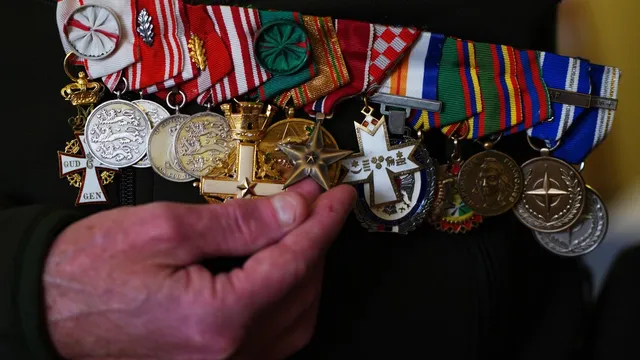
In recent months, tensions have escalated between the United States and Denmark regarding Greenland, a territory of Denmark. Danish veterans who served alongside U.S. troops in conflicts, such as those in Iraq and Afghanistan, have expressed feelings of betrayal over threats made by the U.S. to take territorial possession of Greenland. These veterans, having risked their lives to support the U.S. post-9/11, now feel that their loyalty is being disregarded by an ally they once trusted. Both Martin Tamm Andersen and Søren Knudsen, prominent Danish veterans, voiced their disappointment and surprise at the notion of an American takeover of Greenland, which they believe undermines the spirit of NATO mutual support. Andersen highlighted the chaos of past deployments, recalling the comradeship shared with American troops while serving in Afghanistan and Iraq. He noted that the U.S.’s threats to take over part of Denmark seem surreal, stating that such actions would represent a betrayal of their loyalty and cooperation in the NATO alliance. Similarly, Knudsen, who has kept his military honors tucked away in storage, expressed deep sorrow over the diminished respect and trust between the U.S. and Denmark. This shift in relations has caused significant unrest among Danish veterans, many of whom feel neglected and accused by the U.S. administration. As stated by Vice President JD Vance during a media appearance, Denmark was labeled as “not being a good ally,” igniting further resentment from Danish veterans who have historically stood shoulder-to-shoulder with American forces. The notion that the U.S. has valid ownership claims over Greenland is particularly distressing given Denmark's historical commitment to NATO and ongoing security support in the region. It has also been asserted by Denmark’s Prime Minister that such ambitions could jeopardize the NATO alliance's existence. Furthermore, the broader reactions encompass fears regarding Europe’s security landscape amid increasing tension and aggression, particularly from Russia. Danish veterans worry about the implications of a potential U.S. territorial ambition on their nation's sovereignty and the future of NATO. The sentiments shared by veterans like Andersen and Knudsen reflect a widespread unease amongst those who have sacrificed for both their country and their alliance with the U.S. They fear that any American invasion of Greenland could ultimately lead to irreversible damage to allied relationships, specifically the NATO alliance, that has been foundational for Western security for decades.

Context

The North Atlantic Treaty Organization (NATO) is a crucial military alliance established on April 4, 1949, with the primary aim of ensuring collective defense and maintaining security among its member states. Originally formed as a counterbalance to the Soviet Union during the Cold War, NATO has played a significant role in shaping the geopolitical landscape of Europe and North America. The principle of collective defense, enshrined in Article 5 of the NATO treaty, asserts that an armed attack against one member is considered an attack against all members, thus creating a security umbrella that enhances deterrence against potential aggressors. This principle has been instrumental in maintaining peace and stability within the region for decades, especially in the face of various threats ranging from regional conflicts to global terrorism. In the post-Cold War era, NATO has adapted its strategies and operations to address new security challenges, including cyber threats, hybrid warfare, and the proliferation of weapons of mass destruction. The alliance has engaged in various out-of-area operations, such as those in the Balkans, Afghanistan, and Libya, demonstrating its capability to operate beyond its traditional geographical boundaries. Additionally, NATO has fostered partnerships with non-member countries, enhancing cooperation through initiatives like the Partnership for Peace and the Mediterranean Dialogue. These partnerships enable NATO to project stability beyond its borders and contribute to international security. NATO's significance extends beyond military aspects; it serves as a political forum where member states can discuss and coordinate their defense and security policies. Regular meetings of heads of state and defense ministers allow for close consultation on global security issues, promoting a unified response to emerging threats. Moreover, NATO's focus on democratic values, individual liberty, and the rule of law strengthens its members' democratic institutions and enhances cooperation among allies. The organization's ability to adapt its strategic approach while upholding its foundational values has allowed it to remain relevant in a rapidly changing global environment. As new challenges continue to emerge, such as increased assertiveness from state actors and non-state threats, NATO's role is set to evolve further. The alliance is increasingly recognizing the importance of addressing climate change as a security issue and enhancing resilience against hybrid threats that blend conventional and unconventional tactics. Overall, NATO's ongoing commitment to collective defense, strategic adaptation, and international collaboration underscores its vital importance in ensuring the security and stability of its member nations and the broader international community.

2026 All rights reserved