

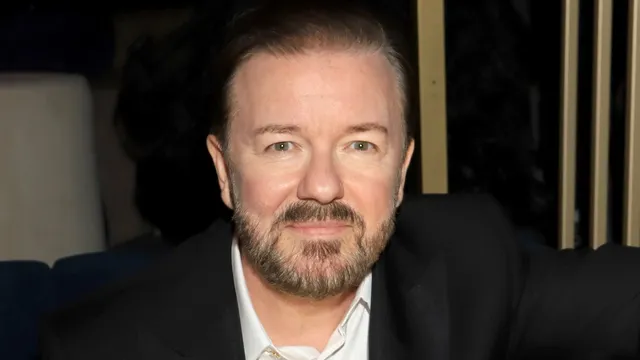
Ricky Gervais condemns Grammy winners for political speeches
Ricky Gervais condemns Grammy winners for political speeches
- Ricky Gervais has criticized celebrities for using acceptance speeches to make political statements.
- At the Grammy Awards, winners like Bad Bunny and Billie Eilish addressed issues related to ICE and immigration.
- Gervais concluded that celebrity political speeches show that they are still not listening to the public.
Story
In early February 2026, during the Grammy Awards, several celebrities took the stage to deliver political messages, particularly targeting U.S. Immigration and Customs Enforcement (ICE). Comedian Ricky Gervais publicly condemned this trend, as he has done in the past, specifically referencing his notable 2020 Golden Globes monologue, which criticized Hollywood figures for their political posturing. Gervais highlighted that many celebrities, while rich and famous, lack genuine understanding of real-world issues. At the awards, Bad Bunny expressed solidarity with individuals against ICE while accepting his Grammy, emphasizing the notion that they are humans and Americans needing dignity. Similarly, Billie Eilish made a bold statement against ICE, declaring, "Nobody is illegal on stolen land," which was met with applause from the audience. These remarks were framed in the ongoing discourse about immigration policies under the Trump administration and the actions of ICE. Trevor Noah, who hosted the event, also made jokes about Donald Trump, adding to the political flavor of the night.
Context
The Trump administration implemented a series of significant immigration policies that fundamentally altered the landscape of U.S. immigration. One of the administration's hallmark policies was the 'zero tolerance' immigration policy, which prioritized the prosecution of all individuals who illegally crossed the border. This led to widespread family separations, drawing intense public backlash and legal challenges. The policy, officially announced in April 2018, resulted in thousands of children being separated from their parents, prompting national and international outcry regarding human rights violations. The humanitarian crisis it produced forced the administration to pivot its approach, effectively ending the family separations by June 2018 after a federal court ruling sought to address the considerable backlash. In tandem with the zero tolerance policy, the Trump administration pursued the expansion of the border wall along the U.S.-Mexico border. This initiative aimed at curbing the flow of undocumented immigrants and enhancing border security, yet it faced criticism regarding the environmental impact, cost, and feasibility of the wall. The administration allocated billions of dollars towards wall construction, significantly pushing forward on a promise made during Trump's 2016 campaign. While sections of the wall were completed, debates around its effectiveness persisted, with critics arguing that it did little to address the systemic issues driving migration, such as violence, poverty, and political instability in Central America. Another critical area of focus for the Trump administration was the reform of legal immigration processes. The administration implemented measures to restrict refugee admissions, cutting the cap drastically to historically low levels. The Refugee Admissions Program was significantly curtailed, with annual admissions set below 30,000, moving away from the traditional commitment to provide refuge to those fleeing persecution. Additionally, programs such as Temporary Protected Status (TPS) were targeted, affecting individuals from countries experiencing humanitarian crises. These efforts were framed within a broader theme of 'America First,' emphasizing the administration's approach to prioritizing the interests of U.S. citizens over those of foreign nationals seeking immigration. The Trump administration's immigration policies sparked significant debate within the political sphere, leading to a polarized landscape. Advocates for stricter immigration enforcement argued that these policies were necessary for national security and public safety, while opponents highlighted the moral and ethical implications of separating families and limiting humanitarian assistance. The long-term impacts of these policies will continue to influence the U.S. immigration system, shaping the discourse around immigration reform and setting a foundation for future administrations to either build upon or dismantle.


