

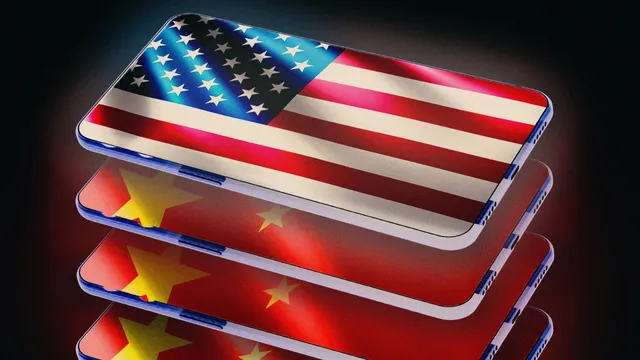
Silicon Valley races to rival China in AI innovation
Silicon Valley races to rival China in AI innovation
- Many American AI startups are increasingly relying on competitive, free Chinese AI models.
- Laskin's Reflection AI aims to counter this trend by providing an American open-source alternative.
- The reliance on Chinese models raises critical questions about the future of technology and innovation in the U.S.
Story
In recent months, many American AI startups have begun utilizing free Chinese AI models, which are increasingly competitive with U.S. counterparts. This shift presents a significant challenge to major American firms like OpenAI and Anthropic, who for years dominated the AI landscape. Misha Laskin, concerned about this trend, founded Reflection AI, now valued at $8 billion, to create an open-source alternative to the rising Chinese AI models that are gaining traction in Silicon Valley. With the performance of traditional American closed-source models stalling and newer Chinese models achieving faster advancements, the landscape of AI is becoming increasingly complex. Chinese companies such as DeepSeek and Alibaba are noteworthy, with Alibaba releasing new models roughly every 20 days, significantly outpacing American companies in terms of product launches. This rapid development demonstrates China's commitment to nurturing open-source technologies, which contrasts with the closed models championed by leading American tech firms. Industry experts, machine-learning engineers, and investors express that although American innovations have traditionally led the field, the cost-effectiveness, customization capabilities, and accessibility of open-source models from China are compelling U.S. companies to re-evaluate their strategies in developing AI applications. The market dynamics are changing as more American startups report that a considerable percentage of their user base is opting for open-source models. For instance, Jerry Liu, founder of Dayflow, reveals that around 40% of users favor open-source models, appreciating privacy benefits as these options allow for processing on individual devices rather than relying on cloud-based systems. This preference for local processing is fueling a growing demand for open-source solutions in various sectors, from productivity applications to coding assistive tools, indicating a significant shift in the AI development paradigm. As American firms navigate through this transformation, they face mounting pressure to innovate rapidly and effectively respond to the challenges posed by their Chinese counterparts. The U.S. government's AI Action Plan emphasizes the importance of encouraging open-source development, a shift that may redefine America's role within the global AI market. Ultimately, the competition with China's flourishing AI sector is prompting American companies to reconsider their approaches, striving to reclaim leadership or risk falling behind in the global technology race.
Context
The advancement of artificial intelligence (AI) has become a pivotal element in the global technology landscape, especially in the arena of competitive industry development. Over the past few years, Chinese AI models have begun to significantly influence the United States tech industry, prompting both innovative opportunities and challenges. With China investing heavily in its AI capabilities, including vast improvements in machine learning algorithms and model training infrastructure, its AI models have started to show not only capabilities but also a level of sophistication that rivals those emerging from the U.S. tech sector. This shift signals a changing dynamic in the technological race and raises crucial questions regarding intellectual property, data privacy, and national security for the United States. The competitive edge of Chinese AI models stems from several factors, including access to massive datasets, government support, and strategic investments from both national and private entities. This has enabled Chinese companies to develop AI solutions that are often tailored to specific consumer needs, thus allowing them to quickly adapt and evolve according to market demands. Furthermore, the growing collaboration between academia and industry in China has fostered an environment conducive to rapid innovation. Ultimately, this means that the U.S. tech industry must remain vigilant, as the capabilities of these models may establish new standards for AI development and application across different sectors. Moreover, the emergence of Chinese AI models poses risks for U.S. companies that may find themselves competing against systems backed by state resources. This competition has the potential to result in heightened tensions in trade relations and might lead to increased scrutiny over technology transfers and partnerships. The implications of these developments are profound not just for companies but also for consumers and policymakers who must balance the benefits of advanced technology with ethical considerations and the ramifications of foreign influence. Ensuring fairness and preserving competitive integrity may require renewed efforts to bolster domestic capabilities in AI. In conclusion, the impact of Chinese AI models on the U.S. tech industry demonstrates the need for comprehensive strategies that promote innovation while safeguarding domestic interests. U.S. companies should seek collaborative opportunities and invest in research and development to maintain a leadership position within the global tech ecosystem. As AI continues to evolve, the dialogue between nations about technological advancements will likely intensify, necessitating frameworks that foster both collaboration and healthy competition in the AI domain.


