

U.S. military showcases airlift of nuclear reactor to promote energy innovation
U.S. military showcases airlift of nuclear reactor to promote energy innovation
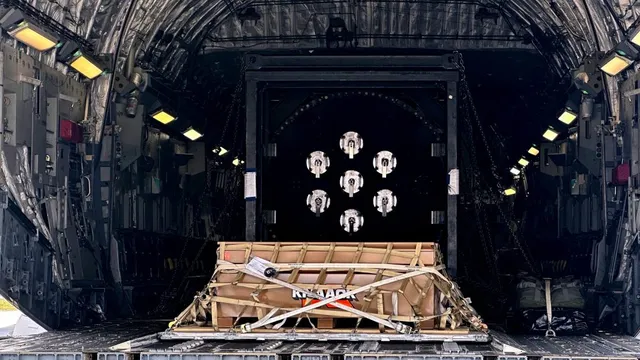
- A 5-megawatt microreactor was airlifted from California to Utah, showcasing military transportation capabilities.
- The event highlights the Trump administration's push to advance nuclear energy and meet growing energy demands.
- Concerns about safety and feasibility were raised by critics, indicating ongoing debates around the use of nuclear technology.
Story
In the United States, the military conducted a significant operation involving the transportation of a recently constructed 5-megawatt microreactor. This reactor was airlifted on February 15, 2026, from March Air Reserve Base in California to Hill Air Force Base in Utah, marking the first time a small nuclear reactor has been transported in this manner. The mission focused on demonstrating military capabilities while also advancing the Trump administration's efforts to promote nuclear energy in response to increasing power demands driven by data centers and artificial intelligence. Energy Secretary Chris Wright and Undersecretary of Defense Michael Duffey were on board the C-17 military aircraft, expressing their approval regarding the importance of this trip. They believe that the demonstration brings the U.S. closer to deploying nuclear power effectively wherever needed, especially for military purposes. Supporters of the initiative view this event as a breakthrough in the fast-tracking of commercial licensing for microreactors, which could potentially reshape the country's energy landscape. However, experts and critics have raised concerns about safety and feasibility. They argue that while the flight showcased the ability to transport military equipment, it failed to address essential questions about the secure transport and safety of microreactors once loaded with nuclear fuel. Edwin Lyman, a nuclear safety director at the Union of Concerned Scientists, described the event as superficial, referring to it as a "dog-and-pony show" that didn't tackle economic or safety viability for broader usage in military and public settings. This criticism highlights the ongoing debates surrounding the development of nuclear energy and the proposed advantages of advanced reactors. Additionally, although the government is in talks regarding nuclear waste disposal, many questions remain unanswered about the handling of nuclear fuel and the potential long-term implications of deploying these reactors. As the microreactor is expected to be one of at least three that could demonstrate operational viability by July 4, 2026, the future of this technology will likely hinge on resolving these critical concerns. The initiative reflects a broader strategy to utilize emerging technologies to meet energy demands, but also raises awareness of the trifecta of innovation, safety, and public opinion surrounding nuclear energy use and development.
Context
Microreactors have emerged as a significant innovation in the US energy landscape, presenting a new approach to nuclear power generation. These compact reactors, typically generating up to 10 megawatts of thermal power, are designed for safety, efficiency, and modularity. The development of microreactors began in earnest during the mid-20th century, influenced by advancements in nuclear technology and a growing need for reliable, low-carbon energy sources. The US government, recognizing the potential of these systems, has supported research and development initiatives to enhance their design and operational capabilities. This included funding through various agencies, such as the Department of Energy (DOE), as well as collaborations with private sector entities and national laboratories. These efforts have established a foundation for the successful integration of microreactors into the national energy grid, particularly for remote regions and specialized applications like military bases and disaster relief efforts. Throughout the 2000s and 2010s, several prototypes and designs for microreactors were developed, focusing on simple, scalable concepts that emphasize inherent safety features. Notable projects include the Oklo and the X-energy microreactors, both of which have garnered attention for their innovative technology and potential commercial viability. These systems leverage advancements in materials science and digital instrumentation, positioning them as frontrunners in the push for next-generation nuclear reactors. Furthermore, they require less regulatory oversight compared to traditional large-scale reactors, allowing for faster deployment and reduced costs associated with bringing new nuclear facilities online. This regulatory environment reflects a growing recognition of the need for diverse energy solutions in an era of climate change. The deployment of microreactors also aligns with the US's broader energy policy objectives, which aim to reduce greenhouse gas emissions while ensuring energy security. By providing a stable power source, microreactors can complement renewable energy technologies like wind and solar, addressing the intermittency issues commonly associated with these sources. Moreover, microreactors are highly adaptable, making them suitable for various applications, including supporting remote scientific research stations and providing backup power during natural disasters. Their ability to operate independently from larger grids offers a pathway for enhancing resilience in vulnerable communities. Looking toward the future, the prospects for microreactors in the United States appear promising. As the global energy landscape shifts toward more sustainable practices, the interest in microreactor technology will likely continue to grow. Continued investment in R&D, coupled with supportive regulatory frameworks and public acceptance, will be crucial in advancing these technologies. By promoting innovation and fostering collaboration among government, industry, and academia, the US can harness the potential of microreactors to play a significant role in a clean energy future, highlighting their importance as a cornerstone of a sustainable energy landscape.


