

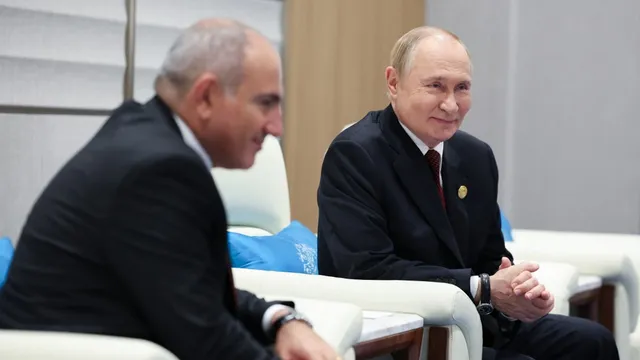
Armenia defies Russia as Pashinyan wins election
Armenia defies Russia as Pashinyan wins election
- Nikol Pashinyan's Civil Contract party won nearly 50 percent of the vote in Armenia's June 7 elections.
- Moscow's initial hopes for a different outcome led to claims of election illegitimacy and Western interference.
- The election results signify Armenia's desire for independence from Russian influence.
Story
In Armenia, the parliamentary elections held on June 7, 2026, resulted in a significant victory for Prime Minister Nikol Pashinyan's Civil Contract party, which secured nearly 50 percent of the vote. This outcome was unexpected for Moscow, which had hoped for a different result that would allow Armenia to return to Russia's political influence. Following the election, Russian officials, including Foreign Ministry spokeswoman Maria Zakharova, questioned the legitimacy of the vote, alleging repression and Western interference, despite the Organization for Security and Co-operation in Europe (OSCE) stating that the elections provided a genuine choice for voters. The Kremlin's reaction highlights a broader issue in its relations with former Soviet states, where Moscow has historically believed it holds special obligations to influence their political outcomes. The narrative that Russia could dictate the type of government its neighbors could have has been challenged by Armenia's recent electoral decision. Armenian Parliament Speaker Alen Simonyan emphasized that Armenia would not trade its freedom for economic benefits, symbolized by the phrase 'freedom over tomatoes.' This sentiment reflects a growing desire among some post-Soviet states to assert their independence from Russian influence. The election results have implications for Russia's standing in the region, as they reveal vulnerabilities in its ability to maintain control over its neighbors. The Kremlin's heavy investment in propaganda and attempts to sway public opinion in Armenia did not yield the desired results, leading to a shift in strategy where Moscow began to question the election's legitimacy rather than accept the outcome. This change in approach indicates a potential shift in how Russia may interact with Armenia moving forward, as it reassesses its interests in light of the election results. As the situation develops, it remains to be seen how Russia will respond to Armenia's pro-European stance and whether it will apply economic pressure or other forms of influence to regain its foothold in the country. The dynamics of this relationship are complex, as Russia balances its own interests against the aspirations of its neighbors, who are increasingly seeking to define their own political paths without Moscow's interference.


