

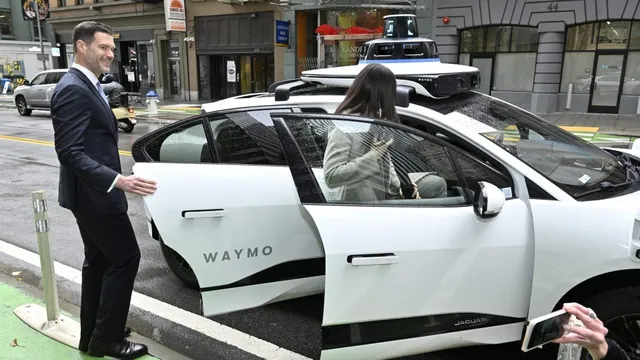
Waymo pays gig workers to close doors of its robotaxis
Waymo pays gig workers to close doors of its robotaxis
- Waymo's autonomous vehicles require human intervention to close doors, resulting in the company partnering with DoorDash.
- Gig workers are receiving payments for tasks related to closing the doors of Waymo vehicles.
- This partnership highlights the limitations of autonomous technology and has implications for the gig economy.
Story
In the United States, particularly in cities like Atlanta and Los Angeles, Waymo has been facing operational challenges with its autonomous taxi service. While the technology for self-driving vehicles has seen advancements, certain manual aspects, such as closing doors, have become a point of concern. To address this issue, Waymo announced a partnership with DoorDash, allowing gig workers to accept tasks to close the doors on its robotaxis. This partnership highlights the limitations of fully autonomous systems in real-world scenarios. Riders have been seen relying on these workers to complete tasks that the vehicles are unable to handle. In Downtown Atlanta, a Reddit user shared an experience in which a DoorDash driver received a gig offer specifically to close a Waymo door. The payment for this task was structured to provide an incentive for the gig workers, starting with an initial fee followed by a completion bonus. Reports indicate that payments for similar tasks in other cities could reach up to $24, which raises questions about operational efficiency and the effectiveness of fully autonomous services. As DoorDash gains additional revenue from this service, it may lead to a shift in the gig economy related to autonomous technologies. Additionally, Waymo has implemented other creative solutions to deal with door-related issues, such as using an app called Honk to contract towing companies for closing doors in Los Angeles. The necessity of these human interventions reflects the limitations of current robotic technology and emphasizes the need for enhancements to address everyday practicalities. While these practices aim to improve the customer experience, they underscore the challenges faced by the company in delivering a completely automated service. Moreover, issues such as power outages have brought to light the vulnerabilities of autonomous vehicles. During a recent incident in San Francisco, a widespread power outage affected traffic lights and, consequently, the operation of Waymo vehicles. The situation prompted the company to acknowledge the need for more robust emergency protocols to navigate unanticipated occurrences effectively. This call for improvement is a part of Waymo's ongoing effort to refine their approach to autonomous driving amidst various environmental and operational challenges.


