

UK military mobilizes in response to Iran threat
UK military mobilizes in response to Iran threat
- The British military has deployed aircraft in defense operations against Iran as part of a coordinated response.
- European countries have refrained from condemning US actions while urging diplomatic negotiations with Iran.
- Current tensions pose significant risks, prompting discussions on the need for congressional oversight regarding military actions.
Story
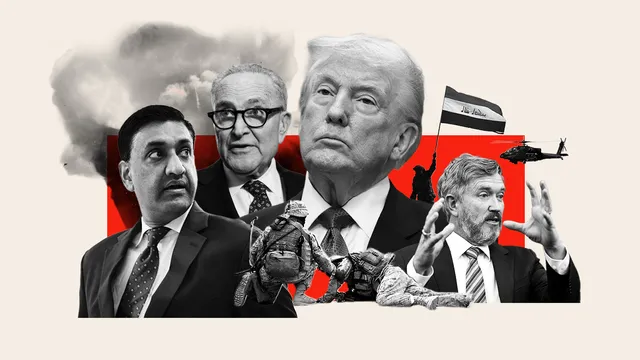
On February 28, 2026, the United Kingdom announced its military was engaged in defensive operations in response to escalating tensions with Iran. Sir Keir Starmer, the UK Prime Minister, stated that British aircraft were deployed in coordination with allies as part of a broader regional security strategy. This development reflects growing concerns about Iran's military capabilities and its potential to develop nuclear weapons, which has drawn international scrutiny. While the US and Israel have taken significant military action against Iran, European allies have mostly refrained from direct condemnation, instead emphasizing the need for diplomatic negotiations. The geopolitical landscape surrounding Iran has become increasingly divided, with longstanding US allies in NATO, like Germany, Britain, and France, being hesitant to openly criticize military actions taken by the United States yet not extending explicit condemnation of the US strikes. Instead, their foreign ministry statements suggested that the responsibility lies with Iran for escalating regional tensions through its ballistic missile program and nuclear ambitions. The muted response from Europe underscores a shift in the dynamics of international conflict, as countries appear more inclined to support US operations than to oppose them despite previous historical contexts. In contrast, countries like Russia have condemned the US military presence and the strikes, calling them unprovoked aggression against a sovereign nation. The Russian government indicated that such actions threaten to exacerbate humanitarian crises in the region and called for a return to diplomatic discussions. While some Middle Eastern nations have rallied against Iran following missile attacks, the global reaction remains largely fractured, revealing the complexities of international alliances and defense postures. As tensions rise, observers note the dangers of a renewed military engagement that could mirror past conflicts like the Iraq War. American lawmakers are pushing for congressional input on military actions, with a proposed war powers resolution aimed at re-establishing checks on presidential military authority. The scenario illustrates not only the current geopolitical challenges with Iran but also highlights the broader implications of military decisions and their potential to shape future international relations.
Context
The history of U.S. military interventions in the Middle East is complex and spans several decades, reflecting a mixture of geopolitical interests, economic considerations, and humanitarian concerns. Beginning in the mid-20th century, the United States became increasingly involved in the region, driven largely by the Cold War dynamics where it sought to contain Soviet influence, particularly after World War II. One of the earliest significant interventions occurred in Iran in 1953, when the U.S. played a key role in orchestrating a coup to overthrow Prime Minister Mohammad Mossadegh, reinstating the Shah. This event set a precedent for future U.S. involvement and fostered anti-American sentiment that would have long-lasting impacts in the region. The 1967 Six-Day War further solidified U.S. alliances, particularly with Israel, which was seen as a strategic partner in countering Soviet-backed Arab states. The 1970s were marked by the oil crisis and ongoing tensions in the Middle East, leading to military aid and interventions to protect U.S. interests. In 1979, the Iranian Revolution resulted in the establishment of an anti-Western regime, which prompted U.S. military support to Iraq during the Iran-Iraq War in the 1980s, viewing it as a counterbalance to Iran. The 1990 invasion of Kuwait by Iraq subsequently prompted a large-scale military intervention by a U.S.-led coalition in the Gulf War, showcasing the U.S.'s willingness to engage militarily to protect its economic interests and stabilize the region. This war not only underscored America's military capability but also solidified its role as a dominant power in Middle Eastern geopolitics. The events that unfolded in the years following the September 11 attacks in 2001 marked a significant change in U.S. military strategy. In response to terrorism and the perceived threat posed by regimes harboring terrorists, the U.S. launched wars in Afghanistan (2001) and Iraq (2003). The war in Iraq, justified by the belief that Saddam Hussein possessed weapons of mass destruction, became a long and contentious conflict that resulted in significant loss of life, destabilization of the region, and the eventual rise of extremist groups like ISIS. The withdrawal of U.S. troops in 2011 left a power vacuum that further complicated the security dynamics in the region. In recent years, U.S. military involvement has continued to evolve. The focus has shifted towards combating terrorism, with airstrikes and special operations being employed against groups such as ISIS in Iraq and Syria. The emergence of proxy conflicts, civil wars, and the influence of regional powers like Iran and Russia have complicated U.S. strategies. The complicated landscape of alliances and enmities in the Middle East remains a challenge for U.S. foreign policy, and ongoing debates about appropriate military responses reflect the contentious nature of U.S. interventions. As the region continues to experience turmoil and change, the legacy of U.S. military actions will undoubtedly shape its future.


