

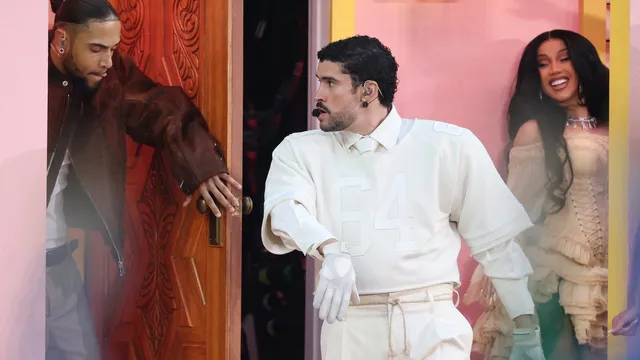
Bad Bunny makes history as first male solo Latin artist at Super Bowl halftime show
Bad Bunny makes history as first male solo Latin artist at Super Bowl halftime show
- Bad Bunny headlined the Super Bowl LX Halftime Show at Levi's Stadium on February 8, 2026.
- He brought a vibrant celebration of Latin culture with a high-energy performance and notable guest appearances.
- His appearance marks a historic moment in Super Bowl history, highlighting the growing influence of Latin artists in mainstream entertainment.
Story
On February 8, 2026, Bad Bunny performed at Levi's Stadium in Santa Clara, California, headlining the Apple Music Super Bowl LX Halftime Show. This marked his historic first appearance as a headliner on the Super Bowl stage, reinforcing his status as one of the most-streamed artists globally. The performance was a vibrant celebration of Latin culture, blending reggaeton, Latin trap, salsa, and pop influences. Bad Bunny's vibrant set included some of his biggest hits, alongside notable celebrity guest appearances, which contributed to a high-energy atmosphere. The electrifying performance began with the hit track 'Tití Me Preguntó,' from his Grammy-winning album, and featured a dynamic setlist that showcased his imaginative choreography and cultural nods. The halftime show included surprise appearances from A-list celebrities such as Lady Gaga and Ricky Martin, who added to the spectacle of the event with their unique collaborations. One of the highlights was a real wedding ceremony that took place live during the performance, reflecting Bad Bunny's ability to blend entertainment with cultural significance. As Bad Bunny marched across the field waving flags from various American countries, the catchphrase ‘Together, we are America’ inscribed on a football emphasized the themes of unity and celebration prevalent throughout the show. This historical moment sparked discussions around representation in the music industry and the broader cultural implications of a Latin artist taking such a prominent role in a traditionally American event like the Super Bowl. The halftime show proved to be more than just a musical performance; it served as a cultural milestone that resonated within Latino communities and beyond. Bad Bunny's electrifying presence and dedication to showcasing his Puerto Rican roots made the 2026 Super Bowl halftime show one of the most anticipated and talked-about performances in recent history. With enthusiastic crowds and viewership from around the world, the event successfully celebrated a fusion of cultures and musical genres, further elevating the significance of the halftime show in American pop culture.
Context
The impact of Latin artists in mainstream music has been profound and multifaceted, reshaping the sounds and narratives prevalent in popular culture. Over the past few decades, Latin music genres such as reggaeton, salsa, bachata, and Latin pop have surged in popularity, transcending language barriers and appealing to diverse audiences around the globe. This evolution reflects a significant cultural exchange, as Latin artists have cleverly fused traditional Latin rhythms with contemporary music styles, making their work more accessible to a wider population. The success of artists like Bad Bunny, J Balvin, and Shakira has not only dominated charts but also paved the way for more inclusive representations in mainstream media, contributing to a richer global music landscape. The chart performance of these artists reveals a seismic shift; for instance, Bad Bunny has broken various streaming records, demonstrating that Latin artists can lead in mainstream visibility and acceptance. In addition to chart success, Latin artists have harnessed the power of social media and digital platforms to enhance their reach and engagement with fans. Platforms like TikTok and YouTube have become vital tools for promoting Latin music, allowing artists to connect with a younger demographic while capitalizing on viral trends. This digital influence has further solidified the presence of Latin music in playlists and radio stations, contributing to its burgeoning popularity in non-Spanish speaking countries. The widespread remixes and collaborations between Latin artists and mainstream pop or hip-hop stars exemplify the blending of cultures and the mutual benefit that arises from such partnerships. When artists collaborate, they not only broaden their audience but also contribute to a greater appreciation and understanding of each other's musical traditions. Moreover, the economic impact of Latin artists on the global music industry cannot be overlooked. With the rise of Latin music, record labels and music executives are increasingly investing in Latin talent, recognizing the genre's commercial viability. This shift has led to opportunities for emerging Latin artists, who now have more resources at their disposal to produce and promote their music. Large-scale events such as Coachella and major award shows like the Latin Grammy Awards have also embraced Latin music, reflecting its importance in contemporary culture. The influx of Latin music into these high-profile venues signifies a growing acceptance and celebration of cultural diversity within the music industry, fostering an environment where Latin artists can thrive. In conclusion, the impact of Latin artists in mainstream music is undeniable and expansive, influencing everything from musical styles to cultural perceptions. As Latin music continues to gain traction, artists are increasingly being recognized for their contributions to the global music scene. The ongoing collaboration and integration of Latin sounds into mainstream genres suggest that this impact will continue to grow, elevating Latin culture and artistry in ways we have yet to fully realize. As we move forward, the importance of advocating for diverse voices in music becomes crucial for ensuring that the industry's representation reflects the rich tapestry of global culture.


