
military conflicts
controversial

Hezbollah threatens Lebanon as tensions rise with Israel

Mar 18, 2026, 8:27 PM10
(Update: Mar 18, 2026, 8:27 PM)
Lebanese Shia Islamist political party and militant group
combined military forces of Lebanon

Hezbollah threatens Lebanon as tensions rise with Israel

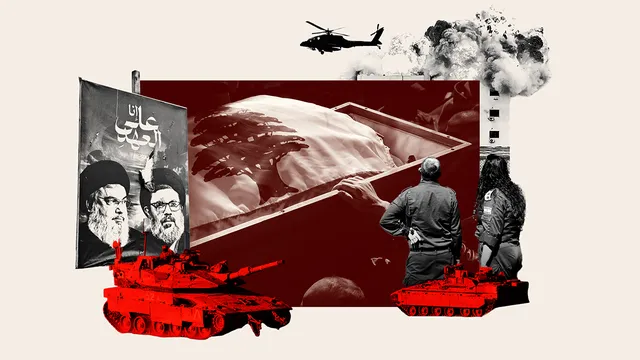
  • Lebanon is currently facing increased tensions as Hezbollah engages in military action supporting Iran.
  • The Israeli government pressures Lebanon to restrict Hezbollah's activities, complicating the Lebanese government's standing.
  • The LAF's hesitant approach to confronting Hezbollah highlights the internal divisions and risks of civil unrest in Lebanon.
Share your opinion
1

Story

Lebanon finds itself in a precarious situation amidst a prolonged conflict in the Middle East, with the Israel Defense Forces (IDF) ramping up military operations following renewed strikes from Hezbollah. This escalation began as Hezbollah supported its ally, Iran, leading Israel to intensify air and ground offensives against the group. The Lebanese government, pressured by both Israel and the United States to curb Hezbollah's military presence, is in a difficult position, as confronting Hezbollah risks fracturing the national unity amid fears of civil strife. The Lebanese Armed Forces (LAF) have historically avoided direct confrontations with Hezbollah, recognizing that the army's legitimacy could suffer, particularly in Shiite regions where Hezbollah has strong support. Many Lebanese openly back Hezbollah, complicating the government's stance. Despite calls for disarmament, experts like Sarit Zehavi argue it is unrealistic for the Lebanese government to initiate such actions against a powerful group that has grown militarily and politically within Lebanon. Any LAF engagement against Hezbollah could be perceived as facilitating Israeli occupation, heightening existing internal tensions. Heightened sectarian conflict concerns persist, although recent humanitarian crises may make such conflicts less likely to escalate. Nevertheless, the overarching objective remains the disarmament of Hezbollah in Lebanon, a task complicated by the group’s entrenched position and local support, which continues to pose a significant national security threat. The situation underscores the need for a coordinated response from the Lebanese government and armed forces, but the risks involved could exacerbate an already strained political landscape, leading to greater instability if not managed carefully.

Context

The history of Hezbollah's role in Lebanon is a complex narrative marked by ideological fervor, political turbulence, and military engagement. Hezbollah, or the "Party of God," emerged in the early 1980s amidst the Lebanese Civil War, primarily as a response to the Israeli invasion of Lebanon in 1982. This Shiite militant group was initially formed with the backing of Iran and sought to establish an Islamic state in Lebanon while resisting foreign intervention. Its military wing quickly gained notoriety through various operations against Israel and has played a significant role in shaping Lebanon's socio-political landscape. Over the years, Hezbollah has transformed from a guerrilla group into a significant political party, effectively participating in Lebanese politics since the mid-1990s and occupying various seats in parliament, thereby influencing domestic and regional policies. Throughout the 1990s and into the 2000s, Hezbollah's power and influence steadily grew, culminating in the culmination of its military campaign against Israel, which saw its forces significantly impacting events such as the 2006 Lebanon War. This 34-day conflict, initiated by an Israeli military operation, resulted in considerable destruction in Lebanon but ultimately solidified Hezbollah's status as a formidable resistance movement among many Lebanese. The war drew significant attention to the group's capabilities and underscored its role as a pivotal player in regional geopolitics, showcasing the complexities of sectarianism in Lebanon, where various factions vie for power amid foreign interventions and regional rivalries. As Lebanon grappled with the repercussions of its civil war and the subsequent clashes, Hezbollah adapted to the changing political landscape, gaining legitimacy as a social and political force. The group established an extensive social welfare network, providing education, healthcare, and other essential services to its constituents, particularly in impoverished Shiite areas, which bolstered its support base. In addition, Hezbollah has leveraged its military might to elicit a sense of protection among its supporters against perceived enemy threats, such as Israel and Sunni extremist groups. Consequently, it has presented itself as both a protector of the Shiite community and a defender of Lebanese sovereignty, navigating a delicate balance between military prowess and political pragmatism. In recent years, Hezbollah's involvement has extended beyond Lebanon's borders, embracing a proactive role in regional conflicts, particularly in Syria, where it has fought alongside the Assad regime. Its participation in the Syrian Civil War has drawn both praise and criticism, complicating its relationships with various Lebanese political factions while elevating its status as an integral player on the regional stage. These developments reflect the ongoing tensions within Lebanon, as Hezbollah's actions have polarized public opinion. Many view the group's military strategies as necessary for national defense, while others criticize its entanglement in external conflicts. The duality of Hezbollah's role—one as a political entity and another as a militant organization—furthers the intricate tapestry of Lebanon's past and present, raising questions about its future trajectory and the lasting implications of its actions on Lebanese unity and stability.

2026 All rights reserved
