

CIA Director delivers Trump's message to Cuba amid crisis
CIA Director delivers Trump's message to Cuba amid crisis
- CIA Director John Ratcliffe met with high-ranking Cuban officials to address tensions between the U.S. and Cuba.
- Discussions involved intelligence cooperation, economic stability, and potential U.S. engagement contingent on changes in Cuba.
- The meetings signify an ongoing contention over Cuba's status as a state sponsor of terrorism and the impact of U.S. sanctions.
Story
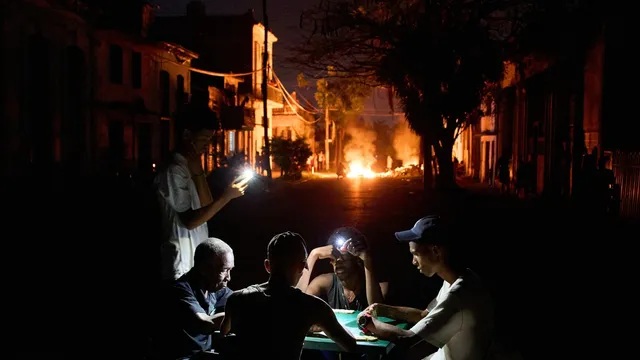
In Havana, Cuba, CIA Director John Ratcliffe held meetings with Cuban officials, including the interior minister and Raul Guillermo Rodríguez Castro, the grandson of former President Raúl Castro. These discussions were primarily focused on intelligence cooperation and economic stability, set against the backdrop of Cuba's ongoing energy crisis exacerbated by geopolitical tensions with Venezuela. Ratcliffe's visit aimed to deliver a message from U.S. President Donald Trump regarding the possibility of U.S.-Cuba engagement should fundamental changes occur within the Cuban government. The backdrop of these talks is complex, as U.S.-Cuba relations remain strained. The U.S. has maintained a long-standing embargo against Cuba, originally established during the Cold War. Despite a brief thaw in relations initiated under the Obama administration, many of these measures were rolled back by the Trump administration, which has emphasized a hardline stance against the Cuban government. The Cuban government, facing an energy crisis due to the U.S. military's activities in Venezuela, firmly believes it does not pose a threat to U.S. national security and has indicated its willingness to accept humanitarian aid under certain conditions. Cuba's energy challenges have heightened due to its reliance on Venezuelan oil, following the U.S. military operation that resulted in the arrest of Venezuelan President Nicolás Maduro. This situation has significantly impacted Cuba, which is grappling with shortages and a collapsed power grid. Dependency on oil imports from Venezuela has made Cuba vulnerable in the face of U.S. sanctions, with the nation's foreign minister publicly challenging the U.S. narrative regarding Cuba as a state sponsor of terrorism. The meetings in Havana come amid ongoing discussions between the U.S. and Cuban officials aimed at addressing mutual security and economic interests. However, the Cuban government has expressed skepticism about U.S. intentions, citing concerns over economic warfare and the various embargoes imposed by the U.S., which have led to severe economic hardships for the Cuban people. The U.S. has proposed humanitarian assistance, but the Cuban government has yet to accept it, suggesting that governmental distribution of aid remains a point of contention. Both sides continue to navigate a history of complex bilateral relations, marked by mistrust stemming from decades of diplomatic challenges and economic sanctions.
Context
The history of U.S.-Cuba relations is complex, marked by a series of significant events and policy changes that reflect broader geopolitical dynamics in the Western Hemisphere. The relationship began in the 19th century when the U.S. sought to expand its influence in the Caribbean and Latin America. This culminated in the Spanish-American War of 1898, which resulted in Cuba gaining independence from Spain but also led to a period of U.S. military governance and the establishment of the Platt Amendment in 1901. This amendment constrained Cuban sovereignty and allowed for U.S. intervention in Cuban affairs, marking a contentious beginning to formal relations. For much of the early 20th century, U.S. businesses invested heavily in Cuba, particularly in sugar production, which set the stage for both economic dependency and resentment among the Cuban populace. The relationship took a pivotal turn following the Cuban Revolution in 1959, when Fidel Castro came to power and established a socialist government characterized by its defiance of U.S. influence. The U.S. responded by imposing an economic embargo in 1960, citing human rights abuses and the nationalization of American-owned properties. Tensions escalated dramatically with the Bay of Pigs invasion in 1961 and the Cuban Missile Crisis in 1962, when the Soviet Union placed nuclear missiles on the island, leading to a near-nuclear confrontation with the U.S. These events entrenched hostilities between the two nations and led to decades of isolation for Cuba and strained relations, with the U.S. labeling Cuba as a state sponsor of terrorism in the subsequent years. In the 21st century, there were noteworthy attempts to thaw relations, particularly during Barack Obama's presidency, where diplomatic ties were restored in 2015 and travel restrictions were eased. This significant shift was marked by a mutual interest in addressing issues such as human rights and economic reforms, though it received mixed responses domestically within both countries. However, the brief period of rapprochement was complicated by the election of Donald Trump, who reinstated many of the restrictions against Cuba, viewing the regime as repressive. The change in administration in January 2021 brought new hopes for engagement, but the COVID-19 pandemic and the ongoing economic crisis in Cuba created additional complexities. As of May 2026, the relationship remains fragile, with continued debates over human rights in Cuba and the economic viability of the island being major points of contention. Both governments are at a crossroads—Cuba attempts to navigate its economic reforms while managing dissent, and the U.S. is reassessing its policy strategies in light of changing geopolitical influences in the region, including China's increasing presence. The future of U.S.-Cuba relations will depend heavily on how both nations address historical grievances and current realities, and whether they can create a framework for constructive dialogue moving forward.


