

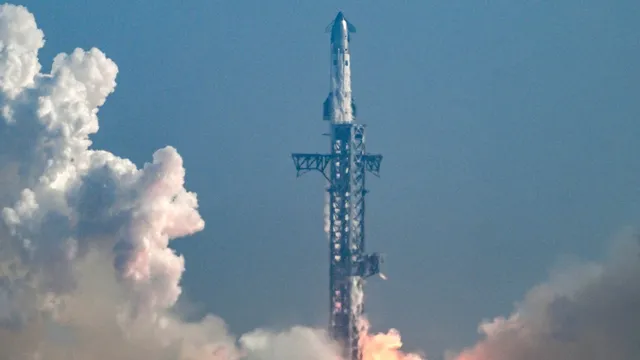
FAA demands SpaceX probe Starship booster crash in Gulf of Mexico
FAA demands SpaceX probe Starship booster crash in Gulf of Mexico
- The Federal Aviation Administration ordered an investigation into a mishap involving SpaceX's Starship booster.
- The mishap occurred during a test flight on May 22, 2026, leading to a crash in the Gulf of Mexico.
- The investigation aims to enhance public safety and prevent future incidents in spaceflight operations.
Story
On May 22, 2026, the U.S. Federal Aviation Administration issued an order for SpaceX to investigate a mishap that occurred with its Starship booster during a test flight. The crash took place in the Gulf of Mexico following the separation of the Super Heavy booster from the Starship. Although the mishap resulted in the crash of the booster, there were no reported injuries to the public or damage to public property, as confirmed by the FAA. This incident has prompted increased scrutiny over SpaceX's operations and safety measures. The FAA's decision to oversee the investigation reflects the agency's commitment to public safety in the realm of space exploration. In an effort to enhance safety protocols, the FAA will collaborate with SpaceX throughout the investigation process, ensuring that corrective measures are identified and implemented to prevent future mishaps. The agency must approve SpaceX’s final report, which will detail the investigation's findings and any recommended actions. This oversight is critical given the increasing frequency of commercial space flights and the potential risks they pose. SpaceX has not yet responded publicly to the FAA's order for the investigation. Such responses are important within the context of public transparency and accountability, especially in light of past incidents involving space vehicles. The mishap serves as a reminder of the inherent risks involved in spaceflight, particularly as commercial companies like SpaceX begin to take on more significant roles in transporting astronauts, scientists, and technology beyond Earth’s atmosphere. As space agencies and private companies continue to push the boundaries of aerospace technology, thorough investigations like this one can provide valuable insights. The FAA's role in ensuring safety will likely influence the future landscape of commercial space operations, as stakeholders must weigh ambitions against safety considerations. The process not only aims to uncover the causes behind the recent mishap but also reinforces the necessity of stringent safety protocols to protect both crew and the public during these pioneering ventures.
Context
The FAA regulations on commercial spaceflight safety are essential for ensuring the integrity and security of space travel. Since the inception of commercial space enterprises, the FAA has played a critical role in establishing and upholding safety standards. The primary aim of these regulations is to protect public safety while promoting the growth of a vibrant commercial space industry. The Federal Aviation Administration has a unique position that allows it to regulate not only the launch and reentry of spacecraft but also the operation of commercial spaceports. This multifaceted approach helps to mitigate risks involved in various phases of spaceflight, by ensuring that all responsible parties are adhering to standardized safety protocols. Central to these regulations is the requirement for rigorous safety assessments before any launch can occur. Spaceflight operators must obtain a launch license from the FAA, which necessitates demonstration of sufficient safety measures, risk management strategies, and a comprehensive understanding of potential hazards during the flight mission. The licensing process involves a thorough review, where the FAA evaluates the proposed operations, potential risks to public safety, and the environmental impact of the launch or reentry activities. Such evaluations ensure that each commercial spaceflight mission is grounded in practical safety considerations, minimizing risks to both crew and the public at large. Furthermore, the regulations emphasize the personnel qualifications and training of those involved in commercial spaceflight activities. Operators must ensure that all crew members and ground staff meet specific training standards and are well prepared to handle emergencies. Moreover, operators are required to utilize established best practices for equipment maintenance and remediation of any identified safety deficiencies. This comprehensive framework guarantees that only the most qualified personnel engage in the increasingly complex tasks associated with commercial space travel. As commercial spaceflight continues to evolve and expand, the FAA remains adaptable in its regulatory approach to address emerging technologies and innovative business models. These regulations are continually revisited and revised to ensure that safety remains paramount without stifling the entrepreneurial spirit of the sector. The FAA also collaborates with other organizations and international bodies to harmonize safety standards. This collaborative effort supports a more integrated approach to global spaceflight operations, ensuring that safety standards are not only comprehensive but also uniform across borders. In conclusion, the FAA regulations on commercial spaceflight safety serve as a critical foundation for the burgeoning commercial space industry, striking a balance between safety and innovation.


