
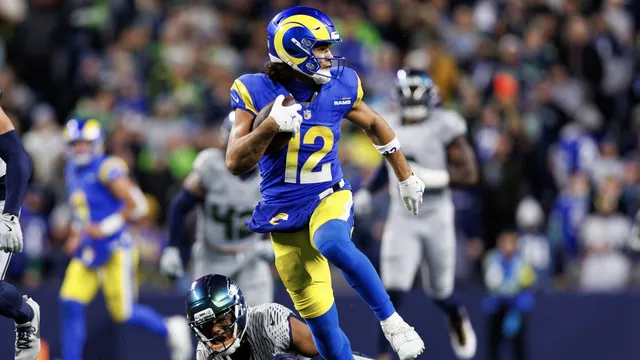
Seahawks host Rams for chance at Super Bowl berth
- The Seahawks and Rams meet for the third time this season, with each team having a win in the regular season.
- Both teams are top contenders, with Seattle earning the No. 1 seed and the Rams showcasing a high-scoring offense.
- The Championship Game will determine who advances to the Super Bowl LX, fueling rivalry and excitement.
Story
In January 2026, the Seattle Seahawks will face the Los Angeles Rams in the NFC Championship Game for an opportunity to play in Super Bowl LX. This matchup marks the third time the two teams have met this season, with the Rams winning their first encounter by a narrow margin and the Seahawks claiming victory in a dramatic overtime rematch. Both teams emerged as top contenders in the NFC, with the Seahawks securing the No. 1 seed and the Rams looking to continue their strong offensive performance that led the league in scoring. This Championship showdown promises to be intense, with strategic matchups like Rams coach Sean McVay against Seahawks defensive coordinator Macdonald taking center stage. The significance of this game is amplified by the stakes; the winner will advance to face their mutual rivals, the 49ers, in the Super Bowl. The game features talented players such as Seattle's quarterback Sam Darnold, who has faced challenges against the Rams defense, and the Rams' Matthew Stafford, who leads the league's top-scoring offense. Both teams are coming off impressive performances, with Seattle winning seven consecutive games and the Rams eager to build momentum from their successful playoff run. This contest highlights the fierce competition of the NFC West, showcasing the talent and capabilities of both teams as they vie for a spot in the championship. The narrative around the matchup is complex, considering the previous games have seen fluctuating fortunes for both teams. Seattle's win in their last encounter was characterized by resilience in coming from behind, while Los Angeles demonstrated their ability to outscore opponents, bringing into sharp focus their respective offensive and defensive strategies. Both coaching staffs are aware of the stakes and the historical significance of divisional rivals clashing for a shot at the Super Bowl, which adds another layer of intensity to the upcoming game. As the date for the Championship Game approaches, anticipation builds among fans and analysts alike. The game will take place at the Seahawks' home stadium, where they have an advantage playing in front of their supporters. With both teams at the top of their game and pride on the line, the NFC Championship Game is poised to be one of the most thrilling matchups of the season, as both the Rams and Seahawks aim to outmaneuver each other for a coveted opportunity in the Super Bowl.
Context
The NFL playoff format is a crucial aspect of the league's structure, determining how teams compete for the coveted Super Bowl title. Currently, the NFL features a 14-team playoff system, initiated in the 2020 season, which includes seven teams from each conference: the AFC and NFC. Each conference's playoff bracket consists of four division champions and three wild card teams. The top-seeded team in each conference receives a bye in the first round, allowing them to advance directly to the divisional playoffs, which serves as a reward for their superior performance during the regular season. The playoff structure is designed to create competitive matchups and maintain fan engagement throughout the postseason, culminating in the Super Bowl, where the champions of each conference battle for the championship title. This playoff format introduces various implications for how teams are constructed, emphasizing the importance of regular-season performance and strategic roster decisions. Winning a division is vital, as it secures a playoff spot, while the wild card teams must navigate through tougher competition. In recent seasons, there has been a noticeable trend toward building balanced rosters that can perform well under pressure, as the increased number of playoff teams allows more opportunities for lower-seeded teams to make deep runs. This environment encourages teams to invest in both offensive and defensive capabilities, ensuring they can compete at high levels in the postseason. Moreover, the playoff format incentivizes teams to strive for the top seed, as it provides a significant advantage, including the chance to host playoff games and the critical bye week. Broadcasting and scheduling are also significantly impacted by the playoff format, as the NFL capitalizes on its postseason games to maximize viewership and revenue. The increased number of playoff games has generated greater interest among fans, leading to higher television ratings and more extensive coverage across various media platforms. As the NFL recognizes the potential for financial growth through playoff expansion, the league continues to assess how changes might impact competitive integrity and fan engagement. Balancing these interests is crucial as the NFL moves forward, prioritizing both profitability and the overall quality of play during the postseason. As teams prepare for the playoffs, they must navigate the challenges and opportunities presented by this unique format. The emphasis on divisional success and wild card competition invites varied strategies from franchises as they enter the playoff race. Additionally, the implications of player health, coaching decisions, and adaptability become more pressing since the stakes increase dramatically during this period. Understanding the intricacies of the playoff format and the broader ramifications it has on team dynamics serves not only to enhance fan enjoyment but also to elevate the overall quality of the NFL product, culminating in one of the biggest sporting events globally, the Super Bowl.
