

America's largest aquifer faces critical depletion
America's largest aquifer faces critical depletion
- Groundwater levels in the Ogallala aquifer are plummeting due to agricultural extraction.
- Climate change is exacerbating the depletion of vital water resources in the Great Plains.
- If these trends continue, the agricultural landscape and food supply in the U.S. will face significant challenges.
Story
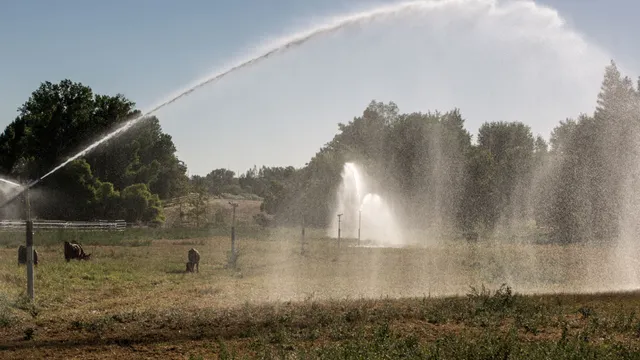
In the United States, water levels in the High Plains aquifer, informed by a NASA Earthdata analysis, have been declining for decades due to extensive agricultural pumping. The Ogallala aquifer, vital for farming in the Great Plains, supports major crops like corn, wheat, and cotton, and its resources are becoming critically low. As agricultural practices increasingly rely on this groundwater source, the gap between supply and demand for water is widening. Over time, climate pressures are expected to compound these challenges, raising concerns about long-term agricultural sustainability and food security in the region. Researchers warn that if the depletion continues at the current rate, significant parts of the southern Ogallala could become unable to support irrigated farming within decades. With projections indicating a possible loss of up to 40 percent of the aquifer’s capacity to sustain agriculture, farmers may have to transition away from water-intensive crops or abandon farming altogether. This looming crisis poses serious implications not only for agricultural productivity but also for food prices and rural economies across the American Midwest. As the situation unfolds, postdoctoral researcher Chris Bowen emphasizes the visibility of these impacts, especially in areas with high levels of water use and limited natural recharge. Farmers may not immediately react by spreading less water over the same expanse of land, as this would diminish crop yields. Instead, Bowen predicts a gradual adaptation in water usage as farmers begin to face the reality of diminishing resources. One of the most significant hurdles in addressing this issue lies in accurately measuring groundwater extraction. Experts agree that effective management of depletion requires better monitoring practices, as current data often lack reliability at the farm level. The increasing adoption of new technologies may help to bridge this gap, as stakeholders seek to devise effective policies for water use and conservation in the face of a dwindling aquifer. As these dynamics unfold, the need for immediate and informed action is critical to safeguard water resources for future generations.


