

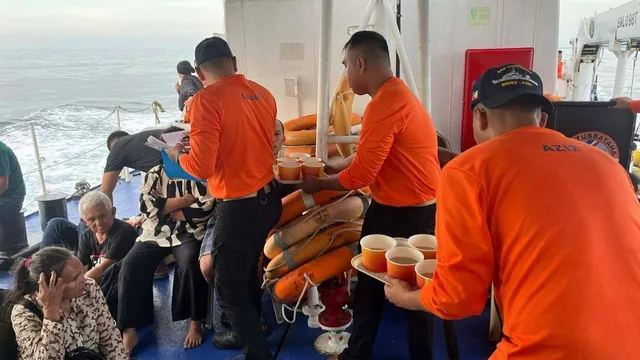
Ferry tragedy strikes Philippines as multiple passengers go missing
Ferry tragedy strikes Philippines as multiple passengers go missing
- The M/V Trisha Kerstin 3 sank shortly after midnight, carrying 332 passengers and 27 crew members.
- At least 15 deaths have been confirmed, while 28 passengers remain missing amid ongoing rescue operations.
- Authorities are investigating the cause of the sinking, highlighting the need for improved maritime safety standards.
Story
In the southern Philippines, the M/V Trisha Kerstin 3, an inter-island ferry, sank after encountering technical issues while traveling from Zamboanga City to Jolo Island during the night. The incident occurred just after midnight, with the vessel carrying 332 passengers and 27 crew members onboard at the time of the accident. Search and rescue operations commenced soon after the ferry sent out a distress call, resulting in the rescue of at least 316 individuals. Tragically, 15 confirmed fatalities have been reported, with 28 passengers still unaccounted for as authorities continue their search efforts. This maritime disaster highlights the ongoing risks associated with ferry travel in the archipelagic nation. The Philippine Coast Guard has indicated that the ferry was operating within its legal passenger capacity prior to sinking, and investigations are being launched to determine the precise circumstances that led to this tragedy. Several survivors managed to relay their harrowing experiences, illustrating the panic and urgency during the sinking. It is noteworthy that conditions were reportedly calm in the area at the time of the incident, further complicating the understanding of how the ferry capsized. Ferry accidents are not uncommon in the Philippines due to various reasons, including overcrowding, poorly maintained vessels, and inconsistent enforcement of safety regulations. Historical contexts surrounding maritime travel in the region reveal a pattern of recurrent sea disasters that have led to significant loss of life, with past incidents often raising concerns about safety standards and emergency preparedness. The local government, represented by Basilan Governor Mujiv Hataman, has faced challenges related to the influx of survivors at medical facilities, demonstrating the immediate human toll of such disasters. Concerned families are awaiting news of their loved ones as rescue teams work diligently to account for those still missing. As the investigation progresses, there is an urgent need for measures to improve safety protocols and passenger awareness when it comes to inter-island travel in the Philippines. Officials have urged stricter compliance with maritime safety regulations to prevent future incidents of this nature, emphasizing the importance of safeguarding the lives of those who rely on ferries as a primary means of transport within the archipelago.
Context
The history of ferry accidents in the Philippines is a stark reminder of the importance of maritime safety in the archipelago, which consists of over 7,000 islands connected primarily by sea transport. The Philippines has a rich maritime tradition, but it is also marked by a number of significant ferry disasters that have resulted in the loss of hundreds of lives. These incidents often stem from a combination of factors, including overcrowding, poor maintenance, lack of safety regulations, and the challenges posed by the country's frequently rough waters and unpredictable weather. High-profile accidents such as the Doña Paz tragedy in 1987, which resulted in the deaths of over 4,000 people after a collision with an oil tanker, exemplify the urgent need for stringent safety measures and regulations in the ferry industry to protect passengers and crew alike. Additionally, the 2008 sinking of MV Princess of the Stars, which further contributed to the growing concerns surrounding maritime safety in the Philippines, demonstrated the catastrophic consequences that can arise from lax enforcement of safety protocols and regulatory oversight. While the government has attempted to address these issues through the establishment of the Maritime Industry Authority (MARINA) and the implementation of various safety laws and guidelines, enforcement has remained inconsistent. The Philippine Coast Guard plays a vital role in ensuring compliance with safety standards; however, the agency often faces challenges related to resource constraints and insufficient personnel. Thus, the integration of technology, such as the use of modern navigation systems and safety equipment, alongside regular training and assessment for ferry operators and crew, is essential in reducing accidents. Moreover, the involvement of private ferry operators and the need for accountability in their fleet management practices must be emphasized to foster a culture of safety throughout the maritime sector. The impact of ferry accidents extends beyond immediate casualties, with long-lasting effects on families and communities, economic repercussions for the maritime industry, and a general public perception of fear regarding maritime travel. In response, there have been efforts to enhance educational campaigns aimed at increasing public awareness of maritime safety protocols and the importance of adhering to regulations to prevent overcrowding and ensure the safe operation of vessels. Collaboration between the government, maritime authorities, and the private sector is crucial in creating a comprehensive safety net that prioritizes the protection of passengers while also addressing the unique challenges faced by the ferry system within the diverse maritime landscape of the Philippines. Ultimately, the history of ferry accidents in the Philippines serves as a critical learning opportunity, highlighting the imperative of continued vigilance in safety standards and regulations as well as the necessity for innovation in maritime practices. The commitment to improving safety measures must be a collective effort to ensure that the tragedy of the past does not repeat itself, thereby fostering a secure and reliable environment for all who travel by sea.


