

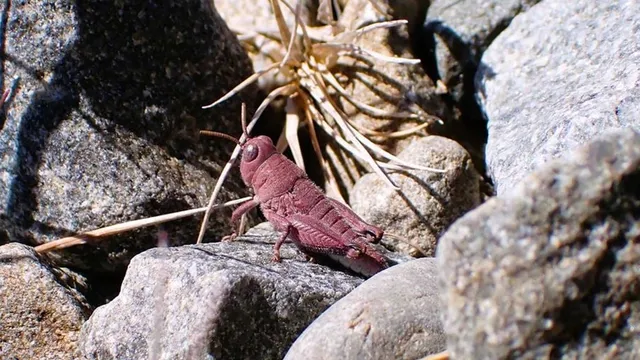
Rare pink grasshopper discovered in New Zealand
Rare pink grasshopper discovered in New Zealand
- Researchers documented an exceptionally rare pink grasshopper in New Zealand near a lake, contributing to the understanding of color-related mutations in insects.
- The Sigaus robustus species is typically grey or brown, blending into their natural habitat, which helps protect them from predators.
- The pink coloration, while fascinating, poses increased risks of predation, highlighting both the uniqueness and vulnerability of this grasshopper.
Story
In a remarkable discovery, researchers spotted an exceptionally rare pink grasshopper near a lake in New Zealand. This finding offers new insights into colour-related mutations among insects. The grasshopper, scientifically known as Sigaus robustus, is among New Zealand's largest grasshoppers, typically found in shades of grey or brown. They usually inhabit the edges of the country's rivers within specialized ecosystems rich in stones and boulders. This species has been documented extensively, as it adapts its color to blend into its habitat, ensuring a higher chance of survival against predators. Ms. Schori, a zoologist who has dedicated years to studying Sigaus robustus, expressed her thrill at witnessing a pink variant after hearing rumors about its existence for a long time. According to her, pink grasshoppers are exceptionally rare. While this unique coloration intrigues researchers and enthusiasts alike, it poses a severe disadvantage for the individual grasshopper. The bright pink hue could increase visibility to predators, making survival more difficult. The unique sighting underscores both the beauty and vulnerability of this species, which has been subjected to various threats from animals such as hedgehogs, cats, and birds. To protect these endangered grasshoppers, rangers established a predator exclusion fence in 2018, believed to be the first of its kind globally focusing on insect preservation. However, the recently spotted pink grasshopper was located outside this protective barrier, leaving it to fend for itself against predators. Despite the challenges it faces in the wild, there is hope that it may breed and produce more pink grasshoppers in the future, potentially creating a new opportunity for research and conservation efforts. Ms. Schori noted the distinct size difference between the sexes, with females being notably larger than males, which may play a role in their ability to survive and reproduce. The discovery of the pink grasshopper not only highlights the ongoing evolutionary processes in nature but also raises questions about the genetic factors contributing to such rare mutations. Enthusiasm from the scientific community is likely to encourage more studies on these fascinating insects, especially regarding their adaptations to changing environments and threats from invasive species. The pink grasshopper represents a valuable case study in the complexities of insect biology and ecology, reminding us of the need for ongoing conservation efforts to protect vulnerable species in their natural habitats.


