

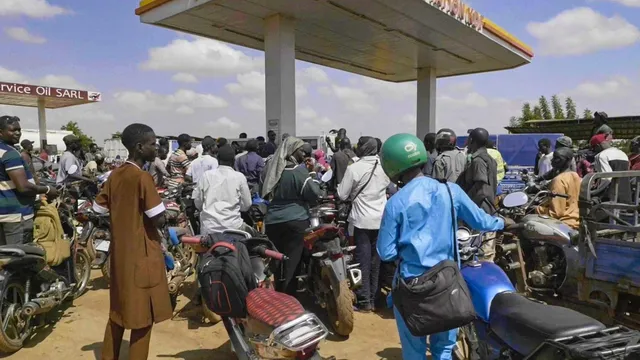
Mali imposes fuel rationing to tackle severe shortages amid militant attacks
Mali imposes fuel rationing to tackle severe shortages amid militant attacks
- Mali's government has announced fuel rationing due to severe fuel shortages caused by militant attacks.
- Al-Qaida-linked groups have increasingly targeted fuel trucks, significantly reducing supply.
- The rationing aims to ensure equitable distribution and is likely a response to popular discontent.
Story
Mali, a landlocked country in West Africa, has recently decided to implement fuel rationing due to significant shortages that have emerged from ongoing attacks by armed groups linked to al-Qaida. This decision was publicly announced by government officials who emphasized the need for reduced wait times at gas stations, especially with the onset of the Muslim holy month of Ramadan approaching. The new rationing measures aim to ensure a fair distribution of the limited fuel supply among residents. While the exact start date of the rationing remains unclear, the government insists that these new regulations will help mitigate the impact of the current fuel crisis. In recent months, the situation has escalated, leading to increased violence against fuel supply trucks across the country. The fuel importers' union reported a stark decrease in the number of tanker trucks entering Mali, with only around 2,000 arriving this year compared to up to 6,000 per month before the surge in attacks. Armed groups have burned more than a hundred trucks, crippling the import and distribution of fuel. Russian troops from the Africa Corps have begun escorting tankers to safeguard fuel transportation from militant attacks, introducing a foreign military presence into the complex security dynamics of Mali. Mali’s military government, which took power in May 2021, has been seeking alternatives to Western support in addressing the threat of militant groups such as al-Qaida and the Islamic State. This shift in alliances towards Russia reflects a broader trend within the Sahel region as neighboring countries like Burkina Faso and Niger are also turning to Moscow for assistance in combating insurgency. Officials from Mali's trade and industry ministry stated that the rationing system will allow better monitoring of fuel sales and distribution at gas stations, claiming that this initiative aims to exert greater control over the process and prevent shortages. Despite the intention to regulate fuel supplies, the measures have raised concerns among the population, particularly among transportation workers like taxi drivers who rely heavily on fuel for their livelihoods. The prolonged scarcity of fuel has led to heightened public discontent, prompting analysts to suggest that the government’s move towards rationing may stem from fears of unrest amid ongoing economic strain. Experts remain cautious, predicting that issues with fuel supply routes due to ongoing militant activity will continue to challenge transportation and accessibility in the region for the foreseeable future.


