

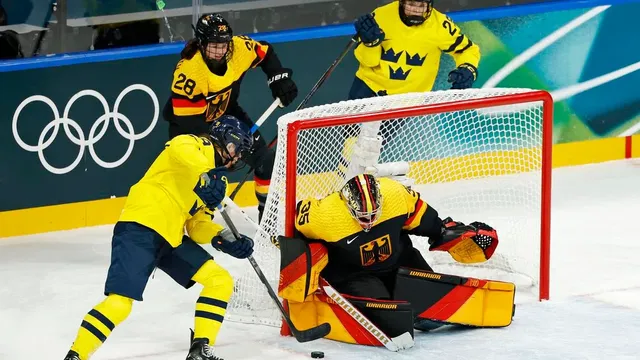
Sweden secures victory over Germany in Olympic women's hockey opener
Sweden secures victory over Germany in Olympic women's hockey opener
- Sweden initially fell behind in the game after a power play goal from Germany.
- Lina Ljungblom scored two goals, leading Sweden to a comeback victory.
- This win positions Sweden favorably to aim for a top finish in Group B.
Story
On February 5, 2026, in Milan, Italy, women's Olympic ice hockey kicked off with Sweden facing Germany in their Group B game at the Milano Rho Ice Hockey Arena. The game began with Germany taking an early lead, thanks to Katarina Jobst-Smith who scored a power play goal just over eight minutes into the first period. Despite trailing, Sweden's performance improved as the game progressed, outshooting Germany significantly, with 37 shots to Germany's 16. The momentum shifted when Lina Ljungblom scored Sweden's first goal after a scramble in the crease in the 12th minute, marking her initial Olympic goal and awakening the Swedish team's offensive strategy. Ljungblom's second goal on a power play in the second period further solidified Sweden's dominance, followed by a goal from Mira Jungaker just before the end of the period, putting Sweden ahead solidly. The atmosphere in the arena was lively, with Swedish and German fans creating a vibrant experience despite a significant number of empty seats. Sweden's victory sets them on a favorable path to potentially top Group B, which is crucial for their quarterfinal seeding. This match was particularly significant as it marked Germany's return to the Olympics after an absence since 2014. Sweden, aiming for their first Olympic medal in two decades, now appears in better shape to achieve their goal with this successful opening match. The success not only boosts the team's confidence but also raises hopes for their quest to break the historical dominance of Canada and the United States in women's ice hockey. As the tournament proceeds, Sweden's next match will be watched closely as they strive to maintain their form and secure advancement in the competition.
Context
Women's Olympic ice hockey has a relatively short but impactful history, reflecting the broader trends of gender equality and the growth of women's sports. The journey began in 1992 when women's ice hockey was included as a demonstration sport at the Winter Olympics held in Albertville, France. Although the competition featured only four teams—Canada, the United States, Sweden, and Finland—the event laid the groundwork for the sport's expansion and solidified the push for women's inclusion in international competitions. The excitement surrounding this inaugural event sparked interest and prompted further development of women's ice hockey at the national and global levels. In 1998, women’s ice hockey achieved a significant milestone when it was officially included as a medal event at the Nagano Winter Olympics. The competition showcased eight teams and was a major impetus for the growth of female participation in ice hockey both recreationally and competitively. The United States made history by winning the first gold medal in women's ice hockey, defeating Canada in a thrilling final, which set the stage for a fierce rivalry that continues to define the sport today. This initial Olympic tournament was critical in raising awareness and providing a platform for women's ice hockey, contributing to the development of national leagues and programs across various countries. Over the following years, the women's ice hockey tournament at the Winter Olympics has continued to evolve. The competition increased in intensity and skill level, with teams like Canada and the U.S. dominating the podium. The inclusion of powerhouse teams from other countries, such as Sweden and Finland, has enriched the competitive landscape, leading to thrilling matches. Each Olympic cycle has seen improvements in athletes’ performance, training methodologies, and support structures, allowing participants to compete at the highest levels. The passion displayed during matches has captivated audiences, leading to increasing viewership and support from sponsors and organizations committed to promoting women's sports. The significance of women's ice hockey in the Olympic Games extends beyond the ice rink; it serves as a symbol of progress for female athletes worldwide. The sport empowers women, encouraging participation in what was traditionally a male-dominated arena. Although challenges remain in achieving parity in funding and opportunities compared to men's ice hockey, the continued success and visibility of women's Olympic ice hockey is fostering a new generation of female athletes. As the sport grows in popularity and support, its future on the Olympic stage appears bright, promising to inspire and elevate women’s sports for years to come.


