

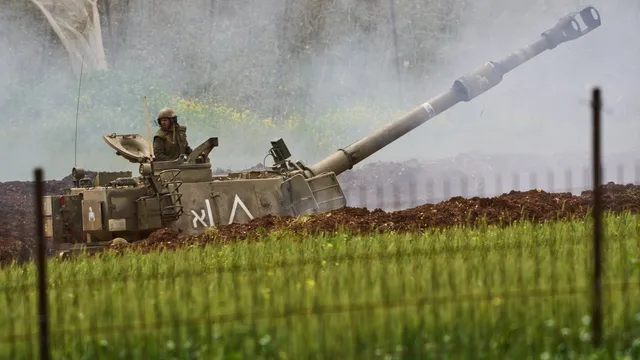
Israeli military kills four medics in Lebanon strikes
Israeli military kills four medics in Lebanon strikes
- Israeli military conducted targeted strikes resulting in the deaths of four Lebanese medics.
- The attacks exemplify the severe humanitarian impact of the ongoing Israel-Hezbollah conflict.
- The Lebanese Health Ministry condemned the strikes as violations of international law, amplifying the humanitarian crisis.
Story
In recent days, a sequence of Israeli strikes targeted ambulance teams in southern Lebanon, leading to the deaths of four Lebanese medics and injuries to another six. These attacks, which took place on a Wednesday, highlight the ongoing military campaign against Hezbollah. The first strike targeted a team from Lebanon's Islamic Health Committee, resulting in two fatalities among the paramedics. A second strike followed as another team arrived to provide aid, hitting them as well. The Lebanese Health Ministry condemned the actions as blatant violations of international law, emphasizing the protection afforded to medical personnel during conflicts. Since the onset of the Israel-Hezbollah war on March 2, the humanitarian toll has been staggering, with the Lebanese Health Ministry reporting at least 91 medical workers killed by Israeli forces. The humanitarian crisis in Lebanon is exacerbated by the conflict, as over one million people have been displaced from their homes due to the ongoing air and ground assaults. As the Israeli military continues its strikes, they are simultaneously engaging in diplomatic negotiations with the Lebanese government, attempting to disarm Hezbollah and establish what they describe as a sustainable peace. Media coverage reflects stark realities for those living near the border, where towns have been transformed into scenes of chaos and devastation. Many residents report feelings of insecurity, with the specter of violence looming large in daily life. The recent targeting of medics, coupled with ongoing aerial assaults, underscores the shifting nature of these frontline communities, which once thrived but now feel abandoned amid the conflict. Opinions within Lebanon are deeply divided; as the government engages with Israel in Washington talks, many citizens express their fears and frustrations. Continuous exposure to violence has sparked significant debate within Lebanon regarding Hezbollah’s role and the actions of the government. Reports indicate that many Lebanese support Hezbollah amidst the attacks, further complicating peace efforts. The situation remains fluid as both military campaigns and political negotiations unfold, creating a complex and dangerous environment for the population caught in between.
Context
International law plays a crucial role in protecting medical personnel during armed conflicts. The Geneva Conventions, particularly the Fourth Geneva Convention, establish specific protections for medical staff, including doctors, nurses, and other health care providers, ensuring they can deliver essential services without fear of attack or harassment. These protections apply not only to those working in hospitals but also to individuals providing medical assistance in combat zones, emphasizing the obligation of all parties involved in a conflict to respect and safeguard medical personnel and facilities. This legal framework fosters the fundamental principle of respect for the wounded and sick, ensuring their access to care irrespective of their affiliation in the conflict. Despite these well-established protections, violations against medical personnel in conflict zones remain alarmingly frequent. Reports indicate that attacks on healthcare workers have increased in various conflicts, reflecting a disturbing trend where medical teams become targets rather than protected entities. These attacks can take many forms, including direct assaults, abductions, and the bombing of medical facilities, severely hindering the ability of health professionals to provide necessary care and exacerbating health crises in conflict-affected areas. The implications of such violations are profound, leading to increased morbidity and mortality rates among the civilian population, who rely heavily on the availability of medical services during and after conflict. To combat these violations, international organizations, including the World Health Organization (WHO) and the International Committee of the Red Cross (ICRC), work tirelessly to advocate for the enforcement of existing laws and to raise awareness about the critical importance of protecting medical personnel in conflict. Efforts include training for medical staff on how to operate in conflict zones safely, campaigns for accountability for violators of international law, and fostering dialogue between warring parties to respect the sanctity of medical missions. Enhancing the legal and ethical standards surrounding the protection of healthcare in conflict is an ongoing process that necessitates commitment at various levels, including national governments and international bodies, to reinforce the need for compliance with humanitarian law. Ultimately, ensuring the protection of medical personnel in conflict situations is essential not only for the immediate provision of care but also for the long-term stability of affected regions. By safeguarding medical staff, the international community contributes to the broader goals of humanitarian law, which seeks to minimize suffering amid armed conflicts and promote respect for human dignity. Ongoing education and advocacy are imperative to reinforce the message that healthcare should never be a casualty of war, and that all efforts must be made to ensure the safety and effectiveness of medical interventions during the darkest times.


