

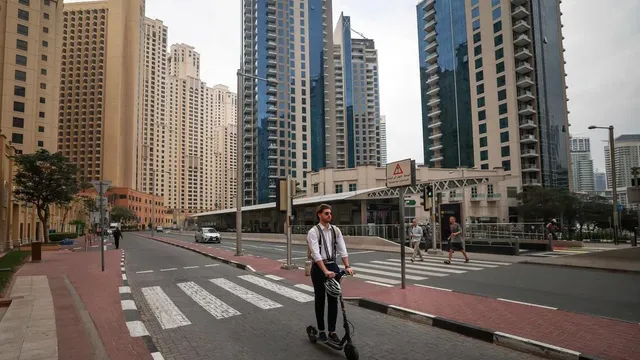
Expats remain hopeful and confident despite missile threats in Dubai
Expats remain hopeful and confident despite missile threats in Dubai
- Many expatriates in Dubai report feeling safe despite the frequent missile threats from Iran.
- Local authorities are managing the security situation, instilling confidence among residents.
- Most expats express a desire to remain in Dubai and hope for a peaceful resolution soon.
Story
The ongoing conflict involving Iran has prompted a mix of unease and resilience among expatriates living in Dubai, United Arab Emirates. Their sense of security appears shaken due to frequent missile and drone launches, affecting various aspects of life in the region. Despite the alarming situation, many expats have chosen to stay, believing that the local authorities are managing the crisis effectively. One such individual, Maria Palmou, a Greece-native lawyer who has resided in Dubai for a decade, noted that while military activity is prevalent, daily life continues with people frequenting parks, shopping, and moving through the city center. In an atmosphere marked by vigilance, residents are adapting to work-from-home procedures as attacks increasingly target residential zones, airports, and embassies. Bruno de Champris, a French director living in Dubai since 2005, conveyed that although peace of mind eludes him due to the fear of blasts at night, he also trusts the UAE's military capabilities in providing safety. He has suspended film shoots; however, expats are continuing their daily routines, striving to maintain normalcy amid uncertain conditions. This collective experience highlights both a commitment to their lives in Dubai and the broader anxieties stemming from ongoing hostilities in the region. Others shared their perspectives on the situation. A US citizen residing in Doha mentioned receiving offers from the embassy to facilitate their departure, yet he expressed a desire to stay in the area for now, provided his family's safety is not compromised. The situation encourages remote work as parents juggle their jobs while staying close to home, navigating the complexities of parenting amidst security concerns. Overall, the local sentiment is one of cautious optimism, with many residents hoping for swift resolution to the conflict, allowing them to resume their previous lifestyles without fear. Despite the noise of alerts and the unsettling atmosphere created by military engagements, the community remains resilient, reflecting a blend of anxiety and determination to persevere in their adopted home.
Context
The ongoing Iranian conflict has significant repercussions for expatriates residing in the UAE, an increasingly important regional hub for international businesses and communities. The proximity to Iran, coupled with fluctuating geopolitical dynamics, has created a complex environment for both Iranian nationals and other expatriates. As tensions escalate, concerns regarding safety, economic stability, and social interactions are paramount. Expatriates in the UAE—many of whom work in diverse sectors, including finance, technology, and trade—must navigate uncertainties that may affect their livelihoods and day-to-day living. The UAE government's policies towards expatriates are generally supportive, yet the regional instability can generate anxiety and affect the expatriate community's overall sentiment towards living and working in the Emirates. Economic ramifications stemming from the Iranian conflict also pose threats to expatriates, especially in the realms of employment and investment. As regional instability often leads to economic sanctions and strained trade relations, potential ripple effects could involve reduced job opportunities, particularly in sectors reliant on cross-border commerce. Expatriates may face concerns over job security and market volatility due to potential retaliatory measures or sanctions impacting businesses with regional ties. Additionally, expatriates associated with industries that have Iranian links or interests might experience heightened scrutiny or operational challenges, a situation that could profoundly impact their employment stability and overall economic wellbeing. Social implications arising from the Iranian conflict further complicate the realities for expatriates in the UAE. Cultural tensions may surface as communities react to news events, leading to increased scrutiny of Iranian expatriates, which can strain relationships among diverse groups within the UAE. The social fabric of expatriate life in the UAE is rooted in multiculturalism; however, conflict-driven polarization might lead to isolation or discrimination against certain nationalities. Maintaining harmonious coexistence while addressing growing tensions necessitates proactive engagement and understanding among expatriates, local Emiratis, and government authorities to foster resilience and unity amidst uncertainty and fear. In summary, while the UAE offers a favorable environment for expatriates, the effects of the Iranian conflict are undeniable and multifaceted. As expatriates navigate their professional, economic, and social landscapes, it is vital for them to remain informed and engaged with ongoing developments. The ability of the UAE to maintain stability amidst its geopolitical challenges depends not only on government policy response but also on the expatriate community's resilience and adaptability in facing potential threats to their safety, employment, and social bonds. Ongoing research and dialogue are crucial to ensure that the needs and concerns of expatriates are considered in discussions around regional stability and conflict resolution.


